

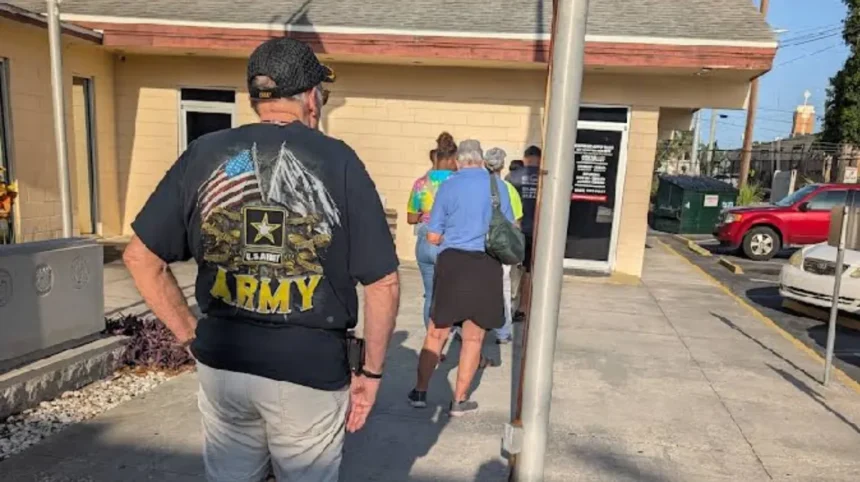
The Department of Motor Vehicles Lake Wales Florida office is a regional state-authorized administrative facility operating under the jurisdiction of the Polk County Tax Collector. The branch processes driver testing, credential identification issuance, vessel registration, and commercial licensing operations for state motorists.
- How does the Department of Motor Vehicles Lake Wales Florida office process driver licenses?
- What motor vehicle and vessel transactions occur at this branch?
- How does the appointment system handle scheduling and visitor traffic?
- What specialized credentials and regulatory services does this office manage?
- What fiscal responsibilities and payment protocols guide the facility?
- FAQs About Department of Motor Vehicles Lake Wales Florida
- How do I book an appointment at the Lake Wales DMV office?
- What documents do I need for a Real ID at the Lake Wales branch?
- Can I renew my vehicle registration at a self-service kiosk in Lake Wales?
- Does the Lake Wales office conduct commercial driver license (CDL) road tests?
- What forms of payment are accepted at the Lake Wales office, and are there extra fees?
The administrative architecture of motorist services within the state of Florida relies on a decentralized partnership between the Florida Department of Highway Safety and Motor Vehicles and local county tax collectors. The Florida Department of Highway Safety and Motor Vehicles maintains structural oversight, regulatory compliance enforcement, and the centralized database infrastructure for all registered operators and vehicles. The Tax Collector for Polk County serves as the direct operational agent within local municipalities, managing the physical infrastructure and public service staff at the regional branch level. The Lake Wales branch operates specifically to execute these state-mandated protocols for the population of southeastern Polk County. This systemic layout ensures that state regulatory statutes conform strictly with localized administrative access.
Historically, the structural delegation of motorist services to county tax collectors occurred to optimize administrative efficiency and reduce municipal operating overhead. The integration of the Lake Wales service center into the Polk County Tax Collector system concentrated diverse public transactions into a single physical location, minimizing state budgetary expenditures. This structural consolidation enables municipal residents to complete distinct fiscal duties, such as paying tangible property taxes and updating vehicle compliance records, simultaneously. The organizational model continues to adapt to federal mandates and population growth inside the central Florida corridor. Modern operations rely extensively on automated scheduling applications and digital processing networks to handle the rising volume of resident transactions.
How does the Department of Motor Vehicles Lake Wales Florida office process driver licenses?
The facility issues driver licenses by verifying identity documents, conducting vision assessments, administering computer exams, and orchestrating closed-course driving examinations. Motorists must submit validated verification papers to fulfill federal compliance guidelines prior to credential printing.
The processing of an original credential requires compliance with the Real ID Act of 2005, a federal security standard establishing specific documentation protocols for state identifications. Applicants must present one primary identity document, such as a certified United States birth certificate or a valid United States passport, to prove lawful presence. Candidates must additionally provide proof of a Social Security number via an original social security card or a formal internal revenue service documentation form. The protocol mandates the presentation of two distinct documents verifying residential addresses, including utility statements, mortgage contracts, or lease agreements dated within the prior sixty days. The system rejects photocopies, digital reproductions, and documents containing unverified residential post office boxes.
The testing mechanism consists of two distinct evaluation phases designed to measure basic operator competency and anatomical fitness. The first phase evaluates physical visibility standards through a specialized optical screening apparatus measuring visual acuity and peripheral capacity. The second phase utilizes an electronic terminal to administer the Class E Knowledge Exam, which tests understanding of traffic laws and structural traffic control devices. The automated examination contains fifty multiple-choice questions extracted from the official state driver handbook, requiring a minimum score of eighty percent to pass. Applicants under eighteen years of age may complete this testing phase through certified online third-party administrators rather than checking into the local physical branch.
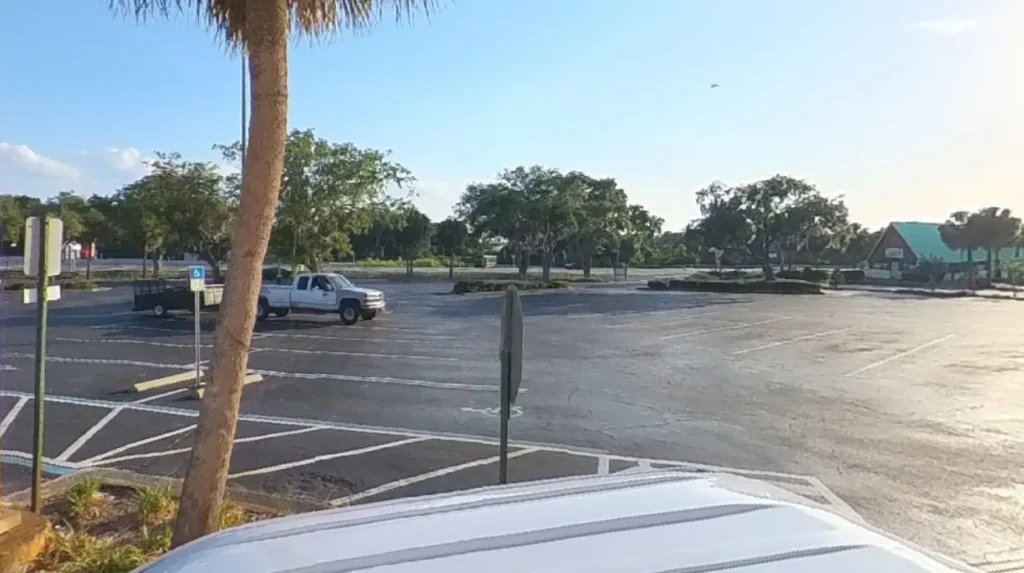
The final operational step involves the practical Class E Skills Test, which requires a pre-scheduled appointment and an inspection-ready operating vehicle. The field evaluator verifies the mechanical viability of the applicant vehicle by testing structural components, including directional turn signals, brake illumination fixtures, windshield wipers, and horn assemblies. The practical evaluation occurs on a standardized test route designed to observe specific operational behaviors, such as three-point turn execution, intersection navigation, and reverse parking accuracy. The branch prohibits the use of automated parking assist features during the exam process to confirm the independent mechanical capabilities of the operator. If an operator fails the practical evaluation, state guidelines require a mandatory waiting period and a retesting administrative fee before a subsequent attempt occurs.
What motor vehicle and vessel transactions occur at this branch?
The office processes motor vehicle and vessel transactions by verifying ownership titles, generating license plates, distributing validation decals, and recording financial lien designations. Motorists must submit verified manufacturing statements or out-of-state certificates to establish legal asset registration.
The processing of a Certificate of Title requires the submission of an assigned manufacturer certificate of origin or a validated out-of-state title certificate. The applicant must provide a verified odometer disclosure statement alongside a completed application for certificate of title with a registration form. If the vehicle possesses an active financing agreement, the office records the financial institution details as an official electronic lien within the state database system. The administrative layout transitions the ownership record into a secure electronic ledger, mitigating the risk of physical document destruction or unauthorized fraudulent alteration. The branch prints physical paper paper titles exclusively upon the explicit request of the property owner and after the collection of specific state processing fees.
The generation of license plates and validation decals depends on the precise classification, empty weight, and registration period of the specific motor vehicle. The branch dispenses standard aluminum license plates containing numeric configurations alongside specialized alphanumeric combinations assigned to unique plate series, including university designs, environmental causes, and military branch recognitions. The validation decal attaches to the upper right corner of the license plate, displaying the exact expiration month and year of the registration period. The processing system issues these registration certificates for either a twelve-month or a twenty-four-month period, expiring on the birthdate of the primary registered owner. The office manages specialized registration protocols for commercial fleets, requiring custom weight verifications and corporate tax classification inputs.
Vessel title and registration transactions apply to all motorized watercraft operating on public waterways, adhering to distinct state revenue collection schedules. The branch evaluates watercraft based on overall structural length, categorizing vessels into distinct classes that dictate the corresponding registration pricing layout. The applicant must submit a valid bill of sale alongside the prior registration certificate to verify the hull identification number stamped onto the transom of the vessel. The office distributes a customized registration certificate and a pair of validation decals that operators must display on the forward half of the watercraft hull. The administrative framework exempts non-motorized vessels under sixteen feet in length from these registration mandates, keeping paddles and canoes clear of standard registration guidelines.
How does the appointment system handle scheduling and visitor traffic?
The branch operates an online reservation network that allocates distinct time slots for high-priority identity services while providing walk-in processing for standard asset transactions. The database tracks regional resident metrics to prevent excessive waiting room congestion.
Von Rommell Fernandes
The digital reservation system functions via an online portal managed by the Polk County Tax Collector, requiring validation of county residency before securing an allocation slot. The administrative policy restricts all driver license operations, identity card creations, and commercial driver license examinations exclusively to pre-scheduled appointment windows. The scheduling application requests specific biographical data, vehicle identification numbers, and requested service types to determine the exact time duration necessary for the transaction. The database issues a unique alpha-numeric confirmation code via electronic mail or short message service networks to validate the user queue designation. The branch system automatically cancels reservations if the applicant fails to arrive within fifteen minutes of the designated check-in window.
Walk-in processing remains accessible for lower-priority administrative tasks that do not require deep biometric validations or complex physical testing protocols. Motorists can access walk-in queues for standard motor vehicle tag renewals, vessel decal acquisitions, parking placard drop-offs, and localized tangible property tax collections. The office entrance utilizes an automated digital kiosk that separates incoming visitors into specialized queues based on their requested administrative tasks. The kiosk dispenses a physical paper ticket containing a sequential tracking number that corresponds to live digital display boards mounted throughout the waiting facility. The administrative staff dynamically alters station assignments based on queue length data to accelerate overall visitor processing times.
The branch integrates high-speed self-service registration renewal kiosks within the physical lobby to divert simple transactional traffic away from human counter stations. The self-service terminal features a touchscreen interface, a barcode scanning module, a credit card processing terminal, and a high-capacity validation decal thermal printer. Motorists scan the renewal notice barcode or input the vehicle registration number alongside the date of birth of the primary owner to initiate the process. The terminal queries the central state database instantly to verify active insurance coverages and screen for outstanding toll violations or child support administrative holds. The hardware generates a fresh registration certificate and an official validation decal within ninety seconds of financial transaction approval.
What specialized credentials and regulatory services does this office manage?
The facility administers commercial operator testing, registers military specialty designations, issues disabled parking access permits, and processes concealed weapon license applications. The administrative staff cross-references national databases to maintain regulatory security compliance.
The commercial driver license testing track requires strict adherence to federal motor carrier safety administration rules, utilizing specialized testing software to monitor candidate testing profiles. The branch evaluates commercial operators through comprehensive endorsement exams, including combinations, air brakes, passenger transport, tank structures, and hazardous materials protocols. The hazardous materials endorsement requires candidates to complete a federal transportation security administration background check and submit biometric fingerprint scans at an authorized collection station. The office verifies medical examiner certificates within the state system to ensure commercial operators meet physical fitness criteria before credential validation. The facility does not conduct commercial practical field tests, redirecting large multi-axle vehicles to designated regional commercial testing fields outside the municipality.
The administrative framework incorporates custom veterans service protocols that allow qualified former military personnel to apply for distinct licensing benefits. Applicants must present a United States department of defense discharge documentation paper, commonly labeled as a form DD-214, confirming an honorable separation status. The branch adds a structural veteran designation to the front face of the driver license or identification card, eliminating the need to carry separate military status documents. The designation waives specific administrative processing fees for original or renewed identification credentials under state statutory updates. The facility coordinates with the state vehicle agency to supply specialized military plates, including Purple Heart recognitions, Bronze Star designations, and unique wartime service insignia.
The office distributes temporary and permanent disabled person parking placards in accordance with specific medical eligibility rules established by state lawmakers. Applicants must submit a completed form HSMV 83039, signed by an authorized licensed physician, advanced practice registered nurse, or physician assistant specializing in mobility impairments. The medical statement must document specific physical conditions, including severe cardiac limitations, restrictive respiratory illnesses, or dependency on mechanical mobility apparatuses. The branch enters the medical certification details into the motorist profile and issues a high-visibility plastic placard designed to hang from a rearview mirror assembly. The permanent placard remains valid for a maximum period of four years, requiring a fresh medical attestation if an extension is requested past the initial expiration date.
What fiscal responsibilities and payment protocols guide the facility?
The branch acts as a municipal revenue collection point by calculating ad valorem property taxes, collecting state sales taxes, and enforcing strict service fee frameworks. The processing systems handle financial transfers through authorized banking interfaces.
The office operates as the primary processing location for county ad valorem real estate and tangible personal property tax collections inside the local district. The fiscal system calculates property obligations based on assessed property valuations provided annually by the county property appraiser office. The branch processes these financial collections from November through the subsequent March, applying structured statutory discounts for early payments made prior to the final deadline. The administrative network transfers collected property funds directly into local public accounts to sustain public school systems, municipal infrastructure projects, and county law enforcement budgets. The system issues automated delinquent notices and processes tax certificate sales if real estate accounts remain unpaid past the close of the fiscal cycle.
The facility enforces state sales tax collection laws during the transfer of ownership titles for motor vehicles, vessels, and mobile home structures. The system imposes a baseline six percent state sales tax alongside a localized county discretionary sales surtax on the total purchase price of the asset. The office requires an original bill of sale signed by both contracting parties to verify the accuracy of the self-reported purchase valuation. If the reported asset price drops more than twenty percent below fair market value guides, the office demands an affidavit of familiar transfer or a structural explanation form. The branch routes collected sales revenues directly to the state department of revenue via an automated electronic financial transfer system.
The operational budget of the local branch relies on a structured service fee framework added to all physical motorist transactions. The tax collector service charge applies to county-sponsored service centers to cover branch administrative overhead, physical facility upkeep, and public staff salary expenditures. The system implements a processing convenience fee on all transactions settled via credit card or debit card networks to offset third-party bank clearing charges. Motorists can avoid these convenience fees by settling balances using physical cash, personal checks, or certified bank drafts during counter operations. The fiscal system generates immutable digital receipts for every transaction, securing the accounting ledger against internal errors or external financial discrepancies.
FAQs About Department of Motor Vehicles Lake Wales Florida
How do I book an appointment at the Lake Wales DMV office?
You can secure an appointment online through the official Polk County Tax Collector portal. Booking a slot is mandatory for high-priority identity services like first-time driver licenses, CDL exams, and Real ID updates. Walk-ins are typically reserved for quicker transactions like simple tag or registration renewals.
What documents do I need for a Real ID at the Lake Wales branch?
To get a Real ID, you must bring one primary identity document like a certified US birth certificate or valid passport, along with proof of your Social Security number. Additionally, you need two distinct documents verifying your physical Florida residency, such as utility bills or lease agreements dated within the last 60 days.
Can I renew my vehicle registration at a self-service kiosk in Lake Wales?
Yes, the Lake Wales branch features a high-speed self-service registration renewal kiosk in its physical lobby. By scanning your renewal notice barcode and swiping a credit card, the terminal automatically verifies your insurance status and prints a fresh registration certificate and validation decal in under two minutes.
Does the Lake Wales office conduct commercial driver license (CDL) road tests?
No, the Lake Wales facility only administers the written knowledge exams and endorsement tests for commercial driver licenses. For the practical Class A, B, or C skills and road evaluations, candidates are redirected to specialized regional commercial testing fields located outside the municipality.
What forms of payment are accepted at the Lake Wales office, and are there extra fees?
The branch accepts physical cash, personal checks, money orders, and major credit or debit cards. However, checking out with a credit or debit card triggers a processing convenience fee charged by third-party banks; you can completely avoid this extra charge by paying with cash or a personal check.