
Key Points
- The Bangor-on-Dee Bridge in Wrexham will be closed to traffic for the time being.
- According to Wrexham County Borough Council, more damage had been caused to the bridge in two separate instances.
- Apparently, neither of the two vehicles that were in the accident bothered to report.
- One part of the old parapet wall of the bridge collapsed into the River Dee.
- The section is so badly damaged that it would be impossible to restore it.
- A temporary barrier has been put up to cover the gap.
- Parts of the parapet walls have been found to be “in a very fragile state”.
- There is a plan to work with Cadw and the conservation officers on the issue.
- It might be decided to employ technical experts to examine the bridge if funds allow.
- The council is exploring the possibility of traffic management for improved movement and turning of vehicles.
Bangor (Wales Times ) August 18, 2026 — will remain closed to vehicular traffic after repeated damage to its historic parapet walls, uk/local/wrexham/">Wrexham County Borough Council has confirmed.
- Key Points
- What damage has the bridge suffered?
- What has Wrexham Council said about the closure?
- How will the bridge be assessed?
- Could traffic restrictions be introduced?
- Why is the bridge historically important?
- What will happen while the bridge is closed?
- What are the main challenges facing the council?
- What is the background to the Bangor-on-Dee bridge closure?
- How could the closure affect local residents and visitors?
The Grade I listed medieval bridge, which carries traffic across the River Dee in the centre of Bangor-on-Dee, has been closed since March. The council said the closure would continue while the structure is assessed, repair options are examined and measures are considered to prevent further damage.
According to the report published by LeaderLive, the bridge’s fragile parapet walls were damaged in two recent incidents. In both cases, the vehicles involved reportedly left the scene without reporting the collisions.
The council said public safety and the long-term preservation of the historic structure had to take priority. Until the bridge can be made safe, it will remain closed to vehicles.
What damage has the bridge suffered?
Council officers believe a small vehicle, possibly a car or van, struck the parapet wall during the first incident. The impact dislodged part of the structure.
In the second incident, an LGV reportedly misjudged its route while leaving the village. The vehicle is said to have struck part of the bridge wall while attempting to turn around near the church.
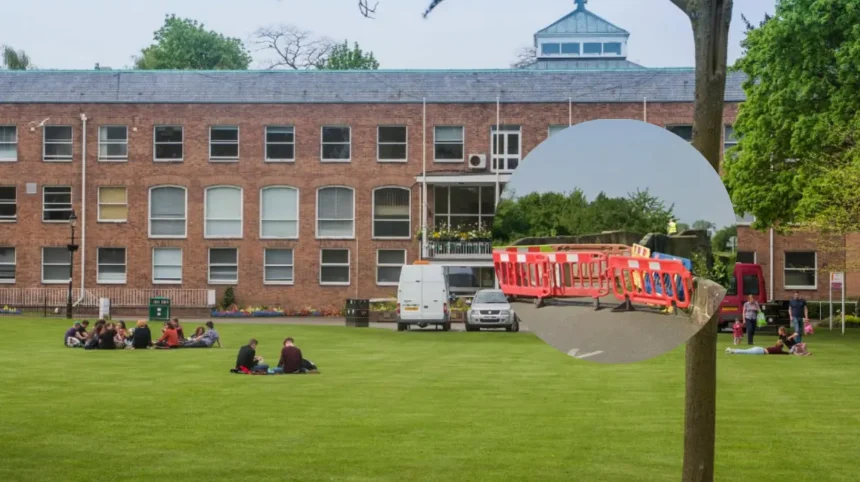
One section of the parapet fell into the River Dee after the recent collisions. The council said that section was damaged beyond repair. A temporary barrier has since been installed to protect the gap and reduce the immediate risk to people using the bridge.
The damage has raised concerns because the parapet walls were already considered vulnerable. The walls consist of individual stone sections measuring approximately 600mm to 700mm in height. The council said they had become increasingly thin over time and were in a “very fragile state”.
What has Wrexham Council said about the closure?
In a letter to Bangor-on-Dee Community Council, Darren Williams, Wrexham County Borough Council’s Chief Officer for Environment and Technical, said the authority’s priority was to protect the public and preserve the medieval bridge.
The council has not provided a date for reopening the bridge to vehicles. Instead, it has said the closure will remain in place until the structure is considered safe.
The authority’s position reflects the difficulty of repairing a protected historic bridge while also ensuring that it can withstand modern traffic. Any intervention must address the immediate safety problem without damaging the character or historic fabric of the structure.
How will the bridge be assessed?
Wrexham County Borough Council is working with Cadw and conservation officers to determine whether repairs can be carried out and what restrictions may be necessary in the future.
Technical experts will be asked to assess the condition of the bridge, subject to funding being available. The council is also carrying out limited assessment and surveying work within its existing budgets.
The authority is investigating possible sources of funding. However, it warned that the costs of assessing the bridge and completing any subsequent repairs are expected to be significant.
Because the vehicles involved have not been identified, the council said it would have to meet the cost of the assessment work and any repairs that follow. The lack of information about the collisions may also make it more difficult to recover expenses from those responsible.
Could traffic restrictions be introduced?
The council is examining traffic-management measures intended to improve vehicle movements through Bangor-on-Dee and discourage drivers from turning around at the eastern end of the bridge.
The reported LGV collision occurred while the vehicle was attempting to turn near the church. That incident has prompted the authority to consider whether changes to traffic arrangements could reduce the risk of large vehicles becoming trapped or making unsafe manoeuvres.
Any future measures could form part of a wider plan to protect the bridge from additional impacts. The council has not yet confirmed which restrictions will be introduced, how they would operate or when a final decision will be made.
The review may need to balance several competing concerns, including access for residents, businesses, emergency services and other road users, alongside the need to protect the listed structure.
Why is the bridge historically important?
The Bangor-on-Dee bridge is a medieval crossing over the River Dee and is a prominent feature in the village. Its Grade I listed status indicates that it is considered to be of exceptional historic or architectural interest.
The bridge has experienced a number of incidents over the years. Repeated impacts have placed additional pressure on parapet sections that were already weakened by age and gradual deterioration.
The council’s reference to the walls’ fragile condition suggests that the recent collisions were not isolated maintenance concerns. Instead, they exposed a longer-term challenge involving the strength, thickness and protective function of the parapets.
The closure therefore concerns more than replacing a single damaged stone section. Engineers and conservation officers must determine the condition of the wider structure, identify suitable repair methods and consider how future traffic can be managed safely.
What will happen while the bridge is closed?
The bridge will remain closed to vehicular traffic while investigations and surveys continue. The temporary barrier at the damaged section is intended to protect the gap created when part of the parapet fell into the river.
The council has not announced a reopening timetable. A decision will depend on the results of technical and conservation assessments, the availability of funding and the completion of any work needed to make the crossing safe.
Residents and visitors may therefore face continued disruption in and around the village. The effect will depend on the alternative routes available and on how long the closure remains in place.
The authority has said it will continue to investigate funding opportunities while carrying out work that can be supported from existing budgets.
What are the main challenges facing the council?
The council faces three immediate challenges: establishing the bridge’s structural condition, securing the money required for repairs and reducing the chance of further vehicle damage.
The first challenge is technical. The recent incidents damaged the parapets, but the authority must also establish whether the impacts affected other parts of the bridge.
The second challenge is financial. Wrexham Council expects the costs of assessment and repair to be substantial. Since the vehicles have not been identified, the authority says it will have to cover the work unless other funding can be found.
The third challenge concerns future traffic. Even if the damaged wall is repaired, similar incidents could occur unless vehicle movements through the village are improved and unsafe turning is discouraged.
Working with Cadw and conservation officers will be important because the bridge’s historic status may limit the materials, techniques and alterations that can be used.
What is the background to the Bangor-on-Dee bridge closure?
The Bangor-on-Dee bridge has been closed to vehicles since March. The closure followed concerns about the condition of the historic crossing and damage to its parapet walls.
The latest incidents involved two vehicles that reportedly failed to remain at the scene or report the collisions. Council officers believe one incident involved a small vehicle, while the other involved an LGV attempting to turn near the church.
The parapet walls are formed from individual stone sections, some of which measure around 600mm to 700mm high. Wrexham County Borough Council said the sections had become thin and fragile over time.
After one section fell into the River Dee, the council installed a temporary barrier to protect the opening. It is now consulting Cadw and conservation officers about possible repairs and future restrictions.
The authority has not set out a confirmed reopening date. It has said the bridge will remain closed until it can be made safe for vehicular use.
How could the closure affect local residents and visitors?
The continued closure is likely to affect people who use the bridge as a vehicle route through Bangor-on-Dee. Residents, businesses, delivery operators and visitors may need to use alternative routes while technical assessments and repair planning continue.
The effect on larger vehicles could be particularly important because the council is examining turning movements and the risk posed by vehicles attempting to manoeuvre near the eastern side of the bridge.
For the local community, the length of the closure will depend on funding, the complexity of conservation-approved repairs and the traffic-management decisions eventually made by Wrexham County Borough Council.
The development does not establish when the bridge will reopen or what final repair scheme will be selected. Those details are expected to depend on the findings of the technical assessments and discussions with conservation authorities.