
Key Points
- A landmark Welsh dragon meant to welcome motorists to Wales has disappeared from view after becoming hidden by grass and bush.
- The dragon, along with a lion on the opposite side of the road, was first installed in 2009 at a cost believed to be about £20,000.
- There are now plans to restore the designs cut into the banks alongside the A494 dual-carriageway as motorists enter Flintshire from England.
- National Highways, who are responsible for the road and the grass verge, confirmed it would be clearing the weeds and vegetation.
- A councillor has welcomed the news and suggested a group be set up to keep the designs in good condition once they are restored to their former glory.
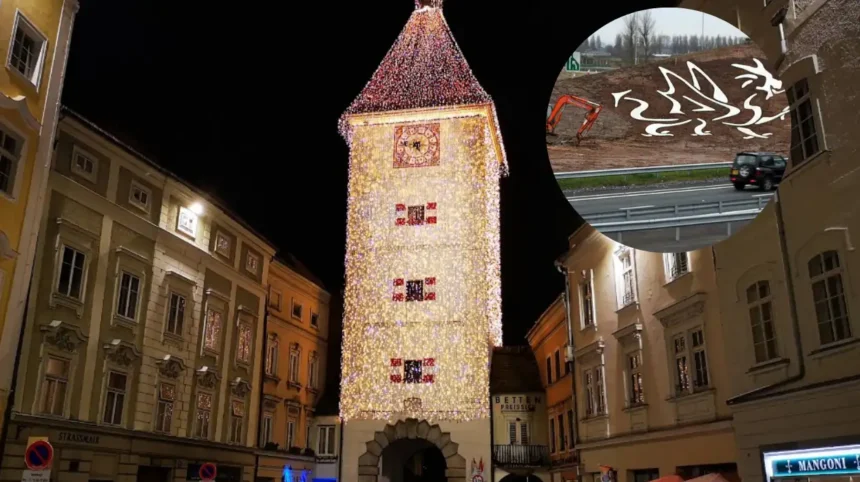
- The dragon and lion shapes are cut into slightly sloping banks with white stone infill used to make them stand out against the grass they sit on.
- Bob James, who sits as an independent on Sealand Community Council in Flintshire, said the dragon “used to be quite prominent years ago” and is “a big significant thing for the Deeside Industrial Park.”
- The dragon has since been covered by long grass and weeds, making it difficult for drivers to see unless they are already familiar with its location.
- There was some criticism when the dragon was first installed because it faces the wrong way for the traditional Welsh dragon, looking left to right rather than right to left.
- Bob James argued the direction makes sense artistically, saying the traffic looks like it is “running with it.”
- The dragon sits on the English side of the border and is the responsibility of National Highways, which took over from the former English Highways Agency.
- A spokesperson for National Highways said the artworks are important local landmarks and that weeding and vegetation clearance will be carried out as soon as possible as part of seasonal maintenance.
Wales (Wales Times) July 09, 2026 – A landmark Welsh dragon meant to welcome motorists to Wales has disappeared from view after becoming hidden by grass and bush, according to local reports and statements from National Highways. The dragon, along with a lion on the opposite side of the road, was first installed in 2009 at a cost believed to be about £20,000. There are now plans to restore the designs cut into the banks alongside the A494 dual-carriageway as motorists enter Flintshire from England.
- Key Points
- Why Has the Dragon Been Overgrown for So Long?
- Will National Highways Restore the Dragon and Lion?
- How Do Local Residents and Officials See the Issue?
- Why Did Some People Criticise the Dragon’s Direction?
- How Will the Restoration Affect Motorists and the Local Area?
- Background: How the A494 Dragon and Lion Were Created
- Prediction: How This Development Can Affect Motorists, Businesses, and the Community
- Impact on Motorists and Road Users
- Impact on Local Businesses and the Deeside Industrial Park
- Impact on the Wider Community and Regional Image
National Highways, who are responsible for the road and the grass verge, confirmed it would be clearing the weeds and vegetation. A councillor has welcomed the news and suggested a group be set up to keep the designs in good condition once they are restored to their former glory. The dragon and lion shapes are cut into slightly sloping banks with white stone infill used to make them stand out against the grass they sit on.
Why Has the Dragon Been Overgrown for So Long?
Bob James, who sits as an independent on Sealand Community Council in Flintshire, said: “It’s something that used to be quite prominent years ago.” “It is a big significant thing for the Deeside Industrial Park. It is quite a landmark. It didn’t just disappear overnight. It’s one of those things that’s crept in and people haven’t noticed,” he told local media. The dragon has since been covered by long grass and weeds, making it difficult for drivers to see unless they are already familiar with its location.
According to reporting by the Wales News Service via the Daily Post, the lack of maintenance has caused both the white dragon and the white lion on the other side of the road to be grown over. In late 2013, following a public backlash against poor maintenance, National Highways promised action “by the end of the month”, yet in a five-year review of the £61m gateway scheme, the agency conceded the £20,000 artworks “do not appear to have received recent maintenance to ensure the visibility and definition of the features is maintained”.
Will National Highways Restore the Dragon and Lion?
A spokesperson for National Highways said: “We recognise these artworks are important local landmarks and need maintenance. To reduce disruption and protect nature at the roadside, we will carry out weeding and clear vegetation as soon as possible as part of our seasonal maintenance programme,” according to statements cited by national and Welsh media. The dragon actually sits on the English side of the border and is the responsibility of National Highways, the body which took over from the English Highways Agency which installed it, along with the lion on the opposite carriageway.
The planned work is described as part of a seasonal maintenance programme designed to balance roadside safety, driver visibility, and protection of roadside nature. While exact timing has not been specified in public statements, the agency has indicated that the weeding and vegetation clearance will be carried out “as soon as possible”.
How Do Local Residents and Officials See the Issue?
As reported by Bob James of Sealand Community Council, the dragon and lion are “quite a landmark” and “a big significant thing for the Deeside Industrial Park”. James welcomed the news of planned maintenance and suggested that a group be set up to keep the designs in good condition once they are restored to their former glory. Online commenters and readers have expressed concern, with one stating: “It’s such a shame,” and another arguing: “I think we should resurrect it. How about we get together, embarrass our council and get it redone? Make it look good again,” according to comments cited by the Telegraph.
Why Did Some People Criticise the Dragon’s Direction?
There was some criticism when the dragon was first installed because it faces the wrong way for the traditional Welsh dragon, looking left to right, rather than right to left, as noted in reports by the Telegraph and other outlets covering the issue. The choice of a white dragon rather than the traditional red was also criticised, with some observers questioning why the design did not follow the more familiar red dragon associated with Wales.
But James said he believed the design made sense. “It’s a bit of an artistic thing because the direction of traffic looks like it’s running with it. If it was facing the other way, it wouldn’t have the same effect,” he said, offering a local perspective on the artistic reasoning behind the orientation.
How Will the Restoration Affect Motorists and the Local Area?
The restoration of the dragon and lion is expected to re-establish a visible landmark for motorists entering Flintshire from England, potentially improving the sense of place and identity at this key entry point to Wales. Local officials and community members have described the features as important not only for tourism and regional image but also for the Deeside Industrial Park, which relies on clear access routes and a distinct local identity.
If the vegetation is cleared and the white stone infill is refreshed, the dragon and lion should become clearly visible again, helping drivers to recognise the transition from England to Wales and reinforcing the “Welcome to Wales” message embedded in the original 2009 project.
Background: How the A494 Dragon and Lion Were Created
The dragon and lion designs were installed in 2009 as part of a wider “Welcome to Wales” gateway scheme along the A494 near Shotwick, with an estimated cost of about £20,000 for the artworks themselves. The designs were inspired by the centuries-old white horse carvings etched into the Wiltshire hills, using 400 metres of steel edging filled with 10 tons of white marble pebbles to create the visible shapes.
The artworks sit on slightly sloping banks with white stone infill to make them stand out against the grass, and they are positioned on the English side of the border, meaning they fall under the responsibility of National Highways rather than any Welsh authority. The broader gateway scheme was linked to a £61m investment in improvements along the A494 corridor, of which the dragon and lion were intended to be visible symbolic elements.
Prediction: How This Development Can Affect Motorists, Businesses, and the Community
Impact on Motorists and Road Users
For motorists entering Flintshire from England, the disappearance of the dragon and lion has gradually reduced a once-prominent visual cue that marked the border and the “Welcome to Wales” message. Restoration of the designs is likely to restore that visual marker, making the transition more noticeable and potentially improving driver awareness of the area. Clearer visibility of the dragon and lion may also help reduce confusion for unfamiliar drivers and support local tourism branding along the A494 corridor.
Impact on Local Businesses and the Deeside Industrial Park
As highlighted by Bob James, the dragon is “a big significant thing for the Deeside Industrial Park” and acts as a landmark for businesses and visitors in the area. A restored and well-maintained dragon and lion could strengthen the identity of the industrial park, potentially supporting marketing efforts and making the area more memorable for clients, suppliers, and employees. If a local group is established to maintain the features, as suggested by James, this could also foster community engagement and provide a visible example of local stewardship alongside national infrastructure management.
Impact on the Wider Community and Regional Image
The overgrown dragon and lion have become a symbol of neglected public art, with some residents describing the situation as a “shame” and calling for the designs to be “resurrected”. Successful restoration, combined with ongoing maintenance, could help repair that perception and demonstrate that local landmarks can be valued and protected over time. For the wider community in Flintshire and Deeside, this could strengthen pride in local identity and serve as a case study for how gateway art can be integrated into long-term roadside management plans.