
Key Points
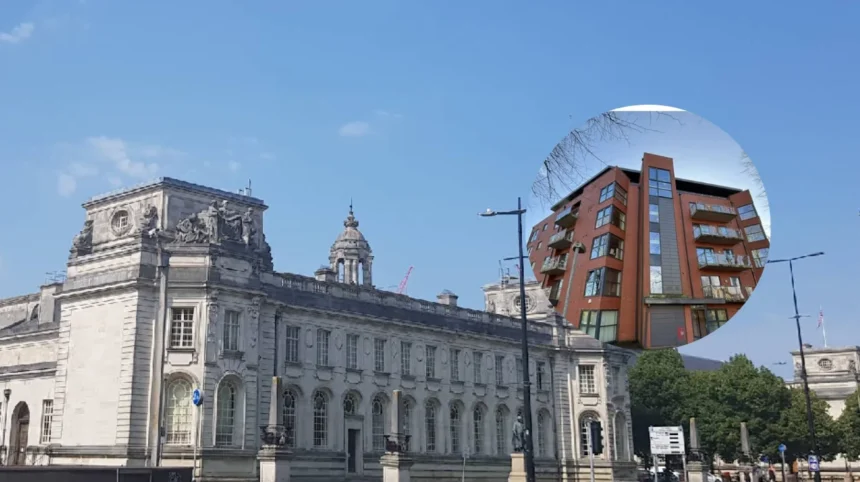
- Cardiff Council has bought Lime Tree Mansions, a 40-apartments building located on Whitchurch Road, Maindy, in order to provide additional temporary accommodation for those who are facing homelessness.
- The multi-million pound acquisition by the local authority from seller JCPS Homes has been made and is valued though the exact cost is not known. According to Cllr Lynda Thorne, the council’s cabinet member for Housing and Communities, the decision was made to address “significant housing and homelessness pressures.”
- As a matter of fact, the apartments were empty, but they will be used by the council within their homelessness strategy.
- According to Hugh James partners, Kylie Underhill and Caroline O’Flaherty, the transaction had a strong public-sector element which required meeting strict deadlines.
- It is worth noting that this acquisition is another step after similar council actions in acquiring additional accommodation such as a former hotel conversion and others which are designed for individuals and families.
Cardiff Council (Wales Times) September 25, 2026 – It has completed the purchase of Lime Tree Mansions, a 40‑apartment scheme on Whitchurch Road in the Maindy area, as part of efforts to tackle homelessness in the city. In a multi‑million‑pound deal, the exact value of which has not been disclosed, the authority bought the building from developer JCPS Homes, with law firm Hugh James acting for the council on the transaction. The apartments are currently vacant and will be deployed to provide additional temporary accommodation for households in need, the council said.
- Key Points
- Why was Lime Tree Mansions chosen for temporary accommodation?
- How will the 40 flats be managed and funded?
- What other homelessness housing moves has Cardiff Council made recently?
- Background to Cardiff’s homelessness accommodation strategy
- Prediction: how could this development affect homeless households and local residents?
As reported by the Business Live property desk, the council described the acquisition as part of its homelessness support strategy and an “important investment” to improve housing outcomes across uk/local/cardiff/">Cardiff. Cllr Lynda Thorne, Cardiff Council’s Cabinet Member for Housing and Communities, said: “Cardiff continues to face significant housing and homelessness pressures, which is why we have been exploring a wider range of delivery options alongside our new‑build programme to help meet the urgent need for affordable housing.” She added:
“The acquisition of Lime Tree Mansions represents an important investment that will enable us to provide additional temporary accommodation for households in need, while supporting our wider efforts to improve housing outcomes across the city.”
Hugh James, which advised on the deal, said the transaction required a “focused and collaborative approach to meet the required timeframe”. Kylie Underhill, senior associate in the firm’s commercial property team, said:
“We are proud to have supported Cardiff Council on the acquisition of Lime Tree Mansions… It is always rewarding to support public sector clients on acquisitions which have the potential to deliver real benefit to local communities.” Caroline O’Flaherty, partner in Hugh James’ commercial property team, added:
“This is a fantastic result and reflects the strength of our Commercial Property team’s public sector expertise.”
Why was Lime Tree Mansions chosen for temporary accommodation?
The council has indicated it is pursuing a mixed pipeline of supply options, including acquisitions, conversions and new build, to address acute demand for affordable homes and emergency housing. Lime Tree Mansions offers a centrally located, ready‑to‑use block of 40 self‑contained apartments, allowing the authority to bring units online quickly without the lead times associated with ground‑up development. The building’s location on Whitchurch Road in Maindy places it within easy reach of city services, transport links and support networks that are typically required for households in temporary accommodation.
In statements attributed to the council, officials emphasised that the purchase forms part of a broader effort to “alleviate demands for housing and pressures arising from homelessness”. The authority has previously highlighted the need to reduce reliance on nightly‑paid hotel placements and to create more stable, managed accommodation for single people and families while longer‑term social housing is delivered. By securing a vacant scheme with existing residential layouts, the council can move households into settled accommodation more rapidly than if it were to convert non‑residential stock or wait for new construction to complete.
How will the 40 flats be managed and funded?
The council has not disclosed the purchase price, describing it only as a “multi‑million‑pound deal”. Income from rents and service charges is expected to support ongoing management and upkeep of the property, according to earlier council reporting on similar acquisitions. Hugh James’ involvement underscores the public‑sector nature of the transaction, with the firm noting its experience advising local authorities on strategic residential and regeneration purchases.
Cllr Thorne thanked Hugh James for its “expert support throughout the transaction”, signalling that the deal was structured to meet specific policy timelines linked to homelessness pressures. While day‑to‑day management arrangements for Lime Tree Mansions have not been set out in detail in public reports, the council’s recent practice has been to operate temporary accommodation with on‑site or near‑site support provision, particularly for schemes housing single people. The authority has previously stated that staff will be on site 24/7 at certain emergency accommodations to assist residents to access support, although specific staffing models for Lime Tree Mansions have not been confirmed in the available reporting.
What other homelessness housing moves has Cardiff Council made recently?
Cardiff Council has pursued several parallel strands of activity to expand accommodation capacity. In September 2024, cabinet papers outlined plans to acquire three properties that would provide a further 280 units, including a student accommodation block of 103 apartments, an operational hotel providing more than 150 units, and a 20‑bed house of multiple occupation. Subsequent reporting indicated that a former city‑centre hotel was purchased for £12.8 million and opened under emergency planning legislation, initially offering around 150 temporary units for single people.
The council has also progressed new‑build and conversion projects. In May 2024, cabinet approved the purchase of two commercial properties to deliver 79 new homes and 20 new family apartments, alongside plans for modular units on a vacant development site. More recently, figures obtained through a Freedom of Information request showed 776 children under 16 living in temporary accommodation in Cardiff, prompting the council to reiterate its commitment to increasing social housing supply through development and buy‑backs. Last year, the authority acquired the former Scott Harbour office building in Cardiff Bay from Rightacres; in a £28.5m investment, it provided 78 apartments as permanent tenancies, mainly occupied by families.
Background to Cardiff’s homelessness accommodation strategy
Cardiff’s approach has evolved from emergency purchases and hotel conversions toward a blended model that combines immediate capacity with longer‑term social housing delivery. The use of emergency planning measures has allowed the council to bring former hotels into temporary residential use quickly, although such moves have at times attracted local opposition and planning consultations over change‑of‑use proposals. Alongside this, the authority has expanded its permanent stock through acquisitions and new builds, including the 78‑apartment Scott Harbour conversion and modular housing programmes delivered in partnership with developers.
The council has repeatedly cited “significant housing and homelessness pressures” as the driver for accelerating acquisitions and diversifying delivery routes beyond traditional new‑build programmes. Officials have pointed to high demand for services, particularly among single people, as a key factor behind the need for additional units that can be brought online without the delays inherent in planning and construction. The Lime Tree Mansions purchase fits this pattern: a centrally located, vacant residential block that can be mobilised quickly to relieve pressure on the temporary accommodation system while longer‑term supply comes forward.
Prediction: how could this development affect homeless households and local residents?
For homeless households, the addition of 40 self‑contained apartments is likely to reduce waiting times for temporary accommodation and decrease reliance on nightly‑paid emergency placements, which are typically more costly and less stable. Self‑contained units can also improve privacy and security for families and individuals, potentially lowering the risk of placement breakdowns and enabling support services to engage more consistently with residents. If managed with adequate on‑site or near‑site support, the scheme could help stabilise households while they await permanent social housing or alternative long‑term solutions.
For local residents and businesses in Maindy and surrounding areas, the impact will depend on management practices, support provision and the profile of households placed in the block. Recent debates over hotel‑based temporary accommodation in Cardiff have highlighted concerns about concentration of services, safety perceptions and the need for clear communication from the council about staffing, security and community engagement. If the council applies lessons from earlier conversions such as 24/7 support presence and structured referral pathways the risk of friction with neighbours may be mitigated, while the social benefit of housing vulnerable households is realised.