
Key Points
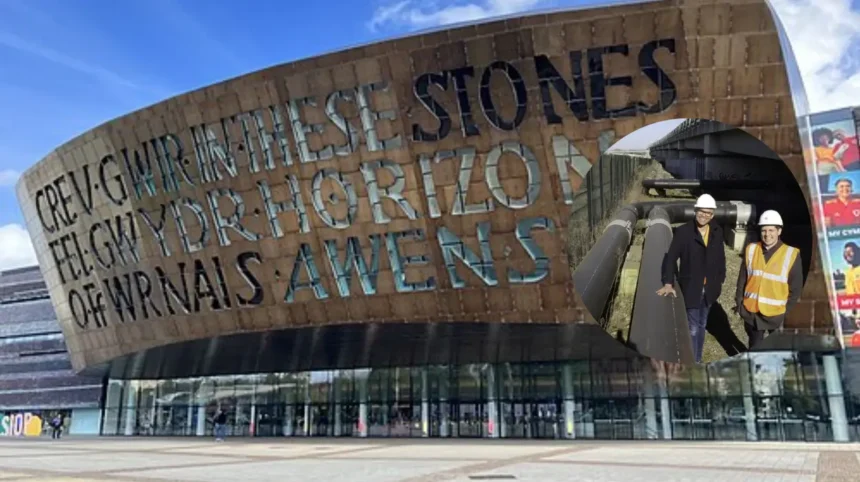
- Tŷ Hywel, Senedd and Wales Millennium Centre have now joined Cardiff Council’s £15.5 million low-carbon heat network.
- It provides heat and hot water via surplus heat from Viridor’s Trident Park Energy Recovery Facility.
- According to Cardiff Council, these connections make it possible not to use any gas boilers in the mentioned three buildings and decrease heating-related CO2 emissions by up to 80%.
- This project uses highly insulated pipework to convey the heat through Cardiff Bay.
- Matthew Jones of the Senedd said that this connection was supposed to lead to the cost reduction and carbon footprint decrease of the Parliament.
- Steve Morris of the Wales Millennium Centre said that this connection would make it possible to minimize the environmental impact of this building and make its heating more reliable.
- Cardiff Council climate change cabinet member, Cllr Dan De’Ath, commented on the connections as an additional way to reduce emissions in the whole city and increase energy security.
- So, together with Cardiff and Vale College, Tresillian House, Nelson House, Butetown Community Centre and Scott Harbour social housing, these three buildings have been added to Cardiff’s low-carbon heat network.
Cardiff (Wales Times) October 30, 2026 — The Senedd, Tŷ Hywel and Wales Millennium Centre have become the latest major uk/local/cardiff/">Cardiff Bay buildings to connect to the city’s £15.5 million low-carbon heat network, removing their reliance on gas boilers for heating and hot water.
- Key Points
- What does the Cardiff heat network supply?
- Why have the Senedd and Wales Millennium Centre joined?
- Which Cardiff buildings are now connected?
- Who funded and delivered the network?
- How much carbon could the Senedd save?
- What happens next for Cardiff’s heat network?
- Background of the development
- Prediction: What this means for Cardiff residents and building owners
As reported by Nation.Cymru staff, Cardiff Council says the connection could reduce heating emissions at the three buildings by up to 80%. The network captures surplus heat produced as a by-product of electricity generation at Viridor’s Trident Park Energy Recovery Facility and distributes it through insulated pipes to buildings across Cardiff Bay.
The development means three of the most prominent buildings in Welsh public and cultural life now receive heat from a district energy system rather than individual gas boilers. The Senedd is the home of the Welsh Parliament, Tŷ Hywel houses Senedd Commission offices, and the Wales Millennium Centre is one of Wales’s leading arts venues.
What does the Cardiff heat network supply?
The Cardiff Heat Network provides space heating and hot water to connected buildings. It takes heat that would otherwise be released during the electricity-generation process at Trident Park and moves it through a pipe network into Cardiff Bay.
As reported by the BBC, the network cost £15.5 million and took four years to build. It is expected to save 10,000 tonnes of carbon dioxide every year once fully operating across its connected buildings.
Cardiff Council’s cabinet member for climate change, Cllr Dan De’Ath, said: “The moment a building connects, it eliminates the need for gas boilers and delivers an 80% cut in carbon emissions.”
The council says the system is designed to be “heat source neutral”. Although Trident Park is the initial source, the network could in future draw on alternative or additional sources, including groundwater or deep geothermal heat beneath Cardiff.
Why have the Senedd and Wales Millennium Centre joined?
The Senedd Commission said the connection forms part of its Carbon Neutral Strategy. Matthew Jones, the Senedd’s head of facilities management services and sustainability, said joining the network would secure a resilient, locally produced heat supply for the parliament estate.
“Joining the heat network is a good opportunity to secure a resilient, locally-produced heat supply for the Senedd estate,” Mr Jones said, as reported by Nation.Cymru. “We expect joining the scheme to lower both our operating costs and carbon footprint.”
The Senedd’s own sustainability reporting had previously identified connection to the Cardiff heat network as its largest single-ticket carbon-reduction measure. The Commission said heat was due to be supplied to the Senedd and Tŷ Hywel in spring 2026, allowing the system to operate before the winter heating period.
Steve Morris, head of business operations at Wales Millennium Centre, said the connection would help reduce the arts venue’s environmental impact and provide a more resilient heating supply.
Cllr De’Ath said the three connections would help Cardiff reduce emissions and strengthen its energy resilience. “These three buildings are at the heart of Welsh public and cultural life,” he said, according to Nation.Cymru.
Which Cardiff buildings are now connected?
The Senedd, Tŷ Hywel and Wales Millennium Centre join a growing group of buildings already connected to the network. These include Cardiff and Vale College, Tresillian House, Nelson House, Butetown Community Centre and Scott Harbour, a council-owned social housing development converted from an office block into 78 apartments.
Cardiff and Vale College was the first building to receive heat from the network, according to the BBC. Scott Harbour subsequently became the first residential building connected to the system.
The BBC reported that other Cardiff Bay buildings, including the Wales Millennium Centre, Butetown Hub, Nelson House, Tresillian House, Tŷ Hywel and the Senedd, were expected to connect in the weeks following the first residential connection.
Who funded and delivered the network?
The network was funded through a UK Government grant and a Welsh Government loan. It was delivered by Cardiff Council through its arm’s-length company, Cardiff Heat Network Ltd.
The company is now in discussions with potential customers close to the existing pipe network about further connections. It is also exploring funding options for a second phase that could extend the system further into Cardiff city centre and Cardiff Bay.
The project’s development followed earlier plans supported by £16 million of backing, with construction originally expected to begin in 2021. The Senedd Commission had signed up as an anchor customer because the scheme required long-term public-sector customers to be viable.
How much carbon could the Senedd save?
The Senedd Commission previously estimated that connecting to the network would save more than 130 tonnes of carbon each year. It also said the heat supplied through the network would cost slightly less than its previous gas expenditure, while producing an 80% reduction in carbon emissions.
The Commission’s wider “Goodbye Carbon” strategy, published in 2021, committed the parliamentary body to becoming net carbon neutral by 2030. It said it aimed to be the first parliamentary body in the UK to reach that position.
That strategy identified connection to Cardiff’s district heating network as one of several medium-term measures expected to save an estimated 331 tonnes of carbon per year. Other measures included refurbishing air-handling units, returning Tŷ Hywel to passive ventilation and installing solar panels at the Senedd and Tŷ Hywel.
The Senedd building already used ground-source heating and cooling through 27 boreholes, each about 100 metres deep, alongside a biomass boiler using sustainably sourced wood chips. The connection to the heat network adds a further low-carbon supply for the estate.
What happens next for Cardiff’s heat network?
Cardiff Heat Network Ltd is continuing to seek new customers near the existing pipes. The company is also examining funding for a second phase, which could extend the network deeper into the city centre and across more of Cardiff Bay.
The network’s initial heat comes from Viridor’s Trident Park Energy Recovery Facility, but its “heat source neutral” design means it may be able to incorporate other sources over time. Potential future sources include groundwater and deep geothermal heat beneath Cardiff’s streets.
The expansion comes as Cardiff Council positions district heating as part of its approach to reducing urban carbon emissions. The connection of landmark public, parliamentary and cultural buildings is intended to demonstrate the network’s capacity to serve large, high-profile sites as well as housing and community facilities.
Background of the development
Cardiff’s heat network captures surplus heat from Viridor’s Trident Park Energy Recovery Facility, where heat is produced as a by-product of generating electricity. That heat is transported through highly insulated pipes to an energy centre and then distributed to buildings across Cardiff Bay.
The project was built over four years at a cost of £15.5 million. It received financial support through a UK Government grant and a Welsh Government loan, and was delivered by Cardiff Council’s arm’s-length company, Cardiff Heat Network Ltd.
The Senedd Commission had identified the network as a central part of its path towards net carbon neutrality by 2030. Its earlier carbon strategy described district heating as a way to use waste heat from the energy-from-waste plant, reduce reliance on gas and deliver a substantial annual carbon saving.
Prediction: What this means for Cardiff residents and building owners
For Cardiff residents, the expansion of the heat network could gradually reduce the city’s dependence on gas boilers in connected buildings, particularly in Cardiff Bay. If further homes and public buildings join, the network’s projected annual saving of 10,000 tonnes of carbon dioxide could increase, although actual outcomes will depend on the number and type of buildings connected.
For building owners and landlords near the existing pipes, the development may create a practical alternative to individual gas heating systems. The council says connections eliminate the need for gas boilers and can reduce heating emissions by up to 80%, while the Senedd expects lower operating costs as well as a smaller carbon footprint.
For businesses, cultural venues and public-sector organisations in Cardiff Bay, a second phase could widen access to locally supplied heat. The network’s ability to accept future heat sources, including groundwater or geothermal energy, may also reduce longer-term exposure to changes in a single heat supply.
For Welsh policymakers, the connection of the Senedd and Tŷ Hywel provides a visible test of district heating at a parliamentary estate. The Senedd Commission’s reported expectations on cost and carbon reduction will therefore be closely relevant to future decisions about low-carbon heating across Wales.