Key Points
- An ex-office block at Cardiff Bay named Scott Harbour has been renovated into 78 council flats in a location at the intersection of Pierhead Street and Bute Place.
- These flats consist of studio apartments, one-, two-, three- and four-bedroom apartments and are planned for the residents listed on Cardiff’s social housing waiting list.
- The first phase of the project consisted of 33 flats that were ready by July 2025 while the other 45 flats completed the scheme.
- This renovation maintained some unique qualities in council housing like bay windows, high ceilings, long corridors, spiral staircase and a wraparound layout.
- This residential building, which is Scott Harbour, is the first to be built in Cardiff to be connected to the council’s district heat network with low-carbon emissions.
- According to Cardiff Council, this development plays a role in supporting its special lettings scheme that aids the households living in overcrowded areas in Butetown to get suitable accommodation.
- This project was undertaken in collaboration with property developer Rightacres.
- For around five years now, the building had been largely vacant prior to the renovations.
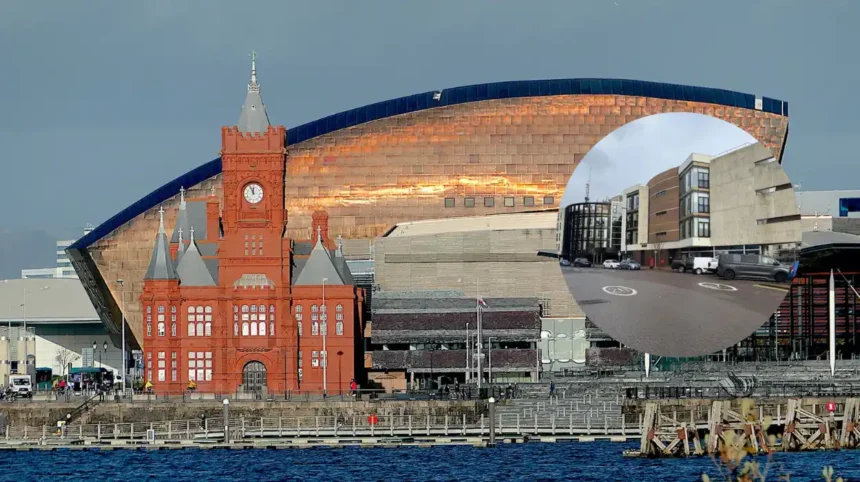
Cardiff (Wales Times) October 30, 2026 — A former office block in uk/local/cardiff/">Cardiff Bay has been fully converted into 78 council apartments, providing permanent and affordable homes for households on the city’s social housing waiting list. The Scott Harbour development, at the junction of Pierhead Street and Bute Place, brings one-, two-, three- and four-bedroom flats into use close to the waterfront, the Senedd and the Wales Millennium Centre.
- Key Points
- What Makes the Scott Harbour Flats Different?
- How Does the Scheme Respond to Cardiff’s Housing Pressure?
- Who Delivered the Cardiff Bay Conversion?
- How Is the Development Connected to Low-Carbon Heating?
- What Housing Types Are Available at Scott Harbour?
- What Was Scott Harbour Before the Conversion?
- Background of the Scott Harbour Development
- Prediction: How This Development Can Affect Housing Waitlists and Future Conversions
As reported by Kieran Molloy of Herald.Wales and Nation.Cymru, the completed scheme has transformed a building that had stood largely unoccupied for about five years into council housing. The first phase, completed in July 2025, provided 33 apartments. The remaining 45 homes have now been finished, taking the development to its full capacity of 78 flats.
The apartments are intended to ease pressure on Cardiff’s housing waiting list. Cardiff Council says the homes will support its special lettings initiative, which is designed to help families in Butetown living in overcrowded conditions move into more suitable accommodation, while also enabling other households to downsize and release homes for those in need.
What Makes the Scott Harbour Flats Different?
The conversion has produced flats with layouts and features that differ from many standard new-build council homes. Because the original office structure was retained, the apartments include larger windows, higher ceilings and irregular internal shapes.
As reported by Kieran Molloy of Herald.Wales, David Jaques, assistant director for development and regeneration at Cardiff Council, said:
“The style of flats, the shape of the flats, are quite unique because you’re dealing with an existing building so the external walls are fixed.”
Mr Jaques added:
“Because it’s an existing building you have bigger windows, higher ceilings, and lovely quirky shapes to a lot of the flats which would be different to our standard build.”
According to Herald.Wales and Nation.Cymru, the homes include long corridors, wraparound layouts, large bay windows and a spiral staircase. These features result from adapting the former commercial building rather than constructing homes to a conventional residential template.
The development includes a courtyard at the rear with community planters. Its location places residents minutes from the Cardiff Bay waterfront and near landmarks including the Senedd and Wales Millennium Centre.
How Does the Scheme Respond to Cardiff’s Housing Pressure?
Cardiff Council has presented the project as part of its response to housing demand and the need for more affordable accommodation. The authority says converting an existing building allowed it to bring homes forward more quickly than a new-build scheme.
As reported by WalesOnline, Councillor Lynda Thorne, Cardiff Council’s cabinet member for housing, said: “During the height of the housing crisis, when our services faced tremendous strain, the council explored every possible avenue to swiftly enhance our affordable housing supply.”
Councillor Thorne added: “Scott Harbour has been pivotal in that effort, and it’s wonderful to see the entire building now open, providing beautiful and essential family homes right in the heart of Cardiff Bay.”
The council’s earlier statement on the Scott Harbour Housing Redevelopment, published through Cardiff Council’s democratic services records, said the scheme was delivered in two phases: 33 apartments in phase one and the remaining 45 apartments in phase two. It said all apartments were redesigned to meet Welsh Government design standards and to be suitable for permanent tenancies.
The council also said the project included parking facilities and a private communal garden. It described property conversions as a way to bring empty buildings back into use while delivering much-needed affordable apartments more quickly than new-build developments.
Who Delivered the Cardiff Bay Conversion?
The Scott Harbour redevelopment was delivered through a partnership between Cardiff Council and property developer Rightacres. The council acquired the 90,000 sq ft building from Rightacres as part of a £28.5m investment, according to reporting by WalesOnline.
The former Scott Harbour complex included several buildings, including Emperor House and Discovery House. WalesOnline reported that these buildings were constructed in 1996, while other reporting has described the wider office complex as dating from 1997.
The building sits at the intersection of Bute Place and Pierhead Street. Its converted apartments overlook Roath Basin and Cardiff Bay, according to WalesOnline.
As reported by Business News Wales and cited by Cardiff Daily, Paul McCarthy, chief executive of Rightacres, said Scott Harbour presented “a unique opportunity to take a previously unloved office building and breathe new life into it”. He said Rightacres worked closely with Cardiff Council’s housing development team to create “high-quality, waterfront homes that meet today’s environmental and sustainability standards”.
How Is the Development Connected to Low-Carbon Heating?
Scott Harbour is the first residential building in Cardiff to connect to the council’s new low-carbon district heat network. The system provides heat and hot water to the converted flats as part of the city’s move towards lower-carbon energy infrastructure.
As reported by the BBC, the network captures heat from steam already produced as a by-product at Viridor’s Trident Park Energy Recovery Facility. That heat is transported through insulated pipes to buildings across Cardiff Bay.
The BBC reported that the network cost £15.5m and that Scott Harbour flats were connected to the system after Cardiff and Vale College became the first building to receive heat from it.
As reported by Wales 247 and cited by Cardiff Daily, Councillor Dan De’Ath, Cardiff Council’s cabinet member for climate change, strategic planning and transport, said: “The heat network provides customers with an affordable, reliable and sustainable source of heat and hot water and has the scope to expand further over time.”
Councillor De’Ath also said: “The moment a building connects, it eliminates the need for gas boilers and delivers an 80% cut in carbon emissions.”
He described the network as a complicated project to deliver but “an incredibly simple idea at heart”, saying it captures heat that already exists but is currently wasted and transports it to where it can be used instead of burning fossil fuels.
What Housing Types Are Available at Scott Harbour?
The development provides a mix of one-, two-, three- and four-bedroom apartments. WalesOnline reported that the homes are primarily intended for families and are available to residents on Cardiff’s social housing waiting list.
The presence of larger three- and four-bedroom homes is significant because family-sized social housing is often in shorter supply than smaller flats. The council’s special lettings initiative is intended to prioritise overcrowded households in Butetown, helping them move into larger accommodation.
The scheme also creates opportunities for some households to downsize. According to Herald.Wales and Nation.Cymru, this can free up additional homes elsewhere in the city for people on the waiting list.
The development is not presented as a short-term or temporary housing scheme. Cardiff Council has described the apartments as permanent, affordable residences.
What Was Scott Harbour Before the Conversion?
Scott Harbour was previously an office complex in Cardiff Bay. Before redevelopment, the site had been largely vacant for approximately five years, according to WalesOnline.
Earlier reporting by WalesOnline in 2023 described plans to revitalise the Scott Harbour buildings, which had been predominantly vacant for more than two years at that stage. The proposals included converting part of the complex into residential accommodation, with ground-floor commercial uses and amenities.
The site’s later conversion into council housing formed part of Cardiff Council’s wider approach to increasing affordable housing supply. The council said it uses property purchases to supplement its new-build housing programme and bring forward homes at pace.
The completed project retains the original building’s commercial structure while converting its interior into residential accommodation. This approach has shaped both the appearance and internal layout of the 78 apartments.
Background of the Scott Harbour Development
Scott Harbour is located at the junction of Pierhead Street and Bute Place in Cardiff Bay. The former office complex included buildings such as Emperor House and Discovery House, constructed in the mid-1990s.
The 90,000 sq ft building was acquired by Cardiff Council from Rightacres. The council invested £28.5m in completing the conversion, according to WalesOnline.
The redevelopment was delivered in two phases. Phase one, completed in July 2025, provided 33 apartments. Phase two added the remaining 45 homes, completing the 78-apartment scheme.
The project also forms part of Cardiff’s low-carbon energy plans. Scott Harbour became the first residential building connected to the council’s district heat network, which supplies heat and hot water using heat recovered from the Trident Park Energy Recovery Facility.
The scheme combines affordable housing delivery with the reuse of a vacant commercial building. It also includes communal outdoor space, with a courtyard and community planters at the rear of the development.
Prediction: How This Development Can Affect Housing Waitlists and Future Conversions
For households on Cardiff’s housing waiting list, the 78 apartments provide additional permanent social housing in a central waterfront location. The availability of larger family homes may be particularly relevant for overcrowded households in Butetown, which the council says are a focus of its special lettings initiative.
The development may also affect how Cardiff Council approaches future housing supply. By converting an existing office building, the authority has demonstrated a route to create homes without relying solely on new-build construction. This could be relevant where vacant commercial property is available and housing demand is high.
For tenants, connection to the district heat network may influence household energy arrangements. The system removes the need for individual gas boilers in connected homes and supplies heat and hot water through a shared network.
For developers and local authorities, Scott Harbour provides an example of adaptive reuse. If similar vacant office buildings are available, councils may consider comparable conversions to increase affordable housing supply, regenerate underused sites and support lower-carbon heating infrastructure.
The full effect on Cardiff’s wider waiting list will depend on future allocations, household moves and the continued availability of larger homes. However, the completed Scott Harbour scheme adds 78 council apartments to the city’s affordable housing stock and provides a practical case study for converting vacant offices into residential use.