Key Points
- Both England and Wales are technically experiencing a drought even after recent rainfall, with water in their reservoirs at around 56-57% and the groundwater reserves depleted.
- According to the Environment Agency, ending this drought condition would require roughly 120% more than the average rainfall within the coming seven months.
- Recent rains have made the grasses and parks look green, but authorities have warned that this is no sign of ending the drought.
- There are ten temporary use restrictions (hosepipe bans) in effect for water company regions in England, affecting about 30 million people.
- The forecast from the Met Office shows a turn back towards drier conditions towards the end of September, especially in the south. However, El Nino means there is an increased likelihood of having a wet autumn season with strong storms.
- For Wales, the mid-August wildfires and loss of pasture land due to this have caused losses to both farmers and livestock. Recovery efforts are ongoing and will take some time.
- The government of the UK has promised to invest up to £100 million in dealing with extreme weather events and wildfires.
Wales (Wales Times) September 19, 2026 – After the UK’s hottest summer on record scorched grasslands and browned public parks, recent rainfall has brought a visible return of green across drought‑hit landscapes, even as officials warn that the drought itself is far from over. The Environment Agency (EA) confirmed this week that almost three‑quarters of England and the whole of Wales remain in drought, with reservoir storage in England at about 56–57%—nearly 20 percentage points below the seasonal average—and groundwater levels still low.
- Key Points
- What is the current drought status in England and Wales?
- How much rain is needed to end the drought?
- What do before‑and‑after images show?
- What are water companies and officials saying?
- How has the weather behaved in September so far?
- What has been the impact on parks, farming and communities?
- What is the government’s response and what are critics saying?
- Background: how did England and Wales reach this drought?
- Prediction: how could this development affect residents, farmers and water users?
What is the current drought status in England and Wales?
As reported by Emily Wood of BBC Weather, the EA stated that despite wetter weather in early September, almost three‑quarters of England remains in drought following an exceptionally dry spring and summer and successive heatwaves. Ten EA areas are in drought status—East Anglia; Hertfordshire and North London; Thames; Devon, Cornwall and Isles of Scilly; West Midlands; Wessex; Kent and South London; Solent and South Downs; East Midlands; and Lincolnshire and Northamptonshire—while the North East, North West and Yorkshire are in prolonged dry weather. In Wales, the entire country remains in drought status, and in Scotland four east‑coast areas are at significant water scarcity, defined as river flows below the low‑flow threshold for 30 consecutive days.
How much rain is needed to end the drought?
The EA says drought recovery requires rivers, groundwater and reservoirs to return to normal levels, not just greener grass. To achieve that by spring 2027, England needs around 120% of typical rainfall over the next seven months, meaning sustained above‑average precipitation through to April. Even under the Met Office’s most likely scenario of a wetter‑than‑average autumn, Devon & Cornwall and East Anglia could still be in drought by spring, and there is roughly a one‑in‑four chance that around half of England remains in drought at that point.
What do before‑and‑after images show?
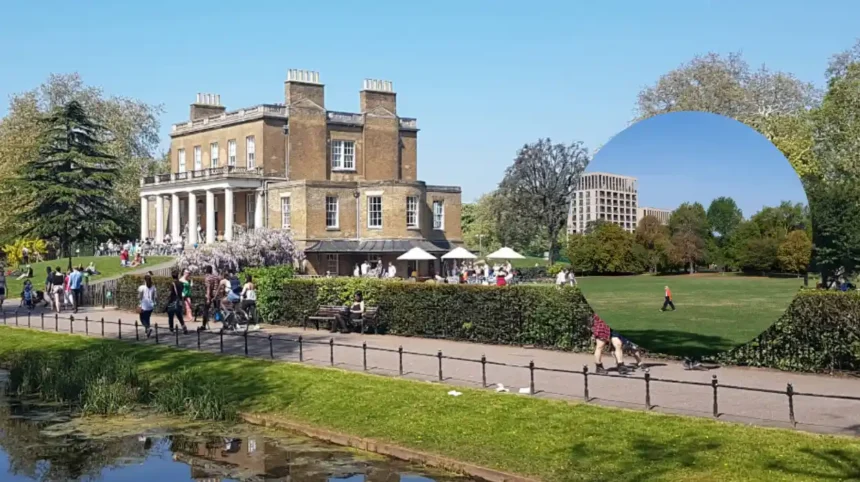
Before‑and‑after photographs circulating this week highlight the visual contrast between peak summer and mid‑September. In London’s royal parks, grass that had turned to dust during repeated heatwaves is now regaining colour, though the parks are not yet in full bloom. Darren Share, director of the royal parks, told the Guardian: “The grass was completely scorched off across all of our park network, it was quite shocking… This time it was just one [heatwave] after another.” He added: “I’m looking at the parks and seeing the grass come back to green. We’re very lucky that grass can tolerate that level of heat and will regenerate like we’re seeing now.” In Wales, similar recovery is visible in fields that had dried out during mid‑August wildfires, though the environmental and social impacts of that damage persist.
What are water companies and officials saying?
Helen Wakeham, director of water at the Environment Agency, said: “The recent rain has seen the grass turn green again and it would be understandable to think the drought is over… However, drought recovery is a very long process and only complete once reservoirs, rivers and groundwaters are back to normal.” EA chief executive Philip Duffy warned: “The drought situation remains very serious, and we cannot underestimate the challenge ahead over the coming months… A few weeks of rain cannot reverse the deficit we face from the very dry spring and summer.” Water companies continue to remind customers that temporary use bans remain in force across ten company areas, affecting around 30 million people, despite reduced demand in cooler weather.
How has the weather behaved in September so far?
According to the UK government’s weekly drought summary for 11–17 September, England received 48% of its long‑term average September rainfall to date, with regional totals ranging from 40% in the north‑east to 63% in the north‑west. The week of 11–17 September was drier than the previous one, though all areas saw some rain, with totals from 6mm in the south‑east and south‑west to 23mm in the north‑west. The Met Office is forecasting a return to drier conditions in the second half of September, particularly in the south where rain is most needed, even as El Niño increases the likelihood of a stormier autumn overall.
What has been the impact on parks, farming and communities?
In the royal parks, visitor numbers fell during the height of the heat and many sporting and volunteering activities were cancelled on health and safety grounds, Darren Share said. In Wales, climate activist and former Senedd member Carolyn Thomas described seeing “really thin cattle because they had no food for grazing” and farmers dipping into winter feed stocks to keep animals alive. “Sheep and cows were hiding under the shade of trees barely moving. Some were lying down flat and I was thinking: ‘Are they dead?'” she said. While rain has provided some relief for farmers harvesting root crops such as potatoes and carrots, yields remain variable, and the south and east of England have received just over half the expected rainfall in the past six months.
What is the government’s response and what are critics saying?
The UK government has pledged £100m to “strengthen the country’s capacity to respond to extreme weather and wildfires”, according to reporting on the Welsh situation. Carolyn Thomas argued this was not the solution, saying:
“If you have to evacuate your home because of a wildfire you can’t just think: ‘We need a bigger fire service and more helicopters that can drop water’… We need prevention.”
On climate policy, Prime Minister Andy Burnham wrote in the Guardian that “the climate crisis is not a distant threat. It is here and with us now,” adding that the green transition offers a chance to “reindustrialise Britain”.
Background: how did England and Wales reach this drought?
The current drought follows the UK’s hottest summer on record, with repeated heatwaves and prolonged dry spells that left soils hardened and water stores depleted. The EA notes that drought only ends when rivers, groundwater and reservoirs recover to normal levels, a process that can take many months because rain must percolate through baked ground to recharge aquifers. England has not experienced a severe drought—defined as widespread, lasting impacts on the environment, farming, communities and the economy, with potential threats to public supplies—since 1976, though officials say there is currently only a 1% chance of severe drought in the coming months.
Prediction: how could this development affect residents, farmers and water users?
If rainfall remains near or slightly above average through autumn and winter, grasslands and surface water will continue to recover, but reservoir and groundwater levels may still lag into spring 2027, meaning hosepipe bans and voluntary conservation measures could persist for millions of households. For farmers, continued below‑average rainfall in the south and east would keep pasture recovery uneven and maintain pressure on irrigation and winter feed planning, while a wetter, stormier autumn driven by El Niño could bring short‑term flood risks that complicate water storage due to sediment and nitrate runoff.
For the general public, the most likely outcome is a prolonged period of cautious water use, with visible green‑up in parks and fields but ongoing restrictions until storage and groundwater indicators return to seasonal norms.