
Key Points
- Petition to the Senedd seeks stronger licensing powers over high‑occupancy visitor accommodation – often described as ‘party houses’ – in Welsh villages.
- More than 1,500 people have already signed the petition, which focuses on properties housing 10 or more guests in residential and rural areas.
- The campaign was launched by Brynford and Halkyn councillor Fran Lister after Flintshire County Council backed her call to lobby Welsh Government.
- Liberal Democrat Cllr Fran Lister and Labour Cllr Simon Jones are jointly leading the campaign following complaints from residents in Halkyn.
- Councillors say similar problems with large holiday lets and AirBnB‑style properties have been reported across multiple Flintshire wards.
- The petition stresses it is not aimed at traditional holiday lets or responsible tourism businesses but at large group “weekend party” bookings.
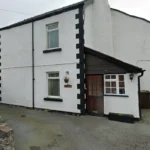
- Examples cited include conversions of old schoolhouses and chapels into high‑capacity rentals with bars, entertainment rooms and professional sound systems.
- The petition asks Welsh Government for stronger licensing arrangements, especially for properties accommodating more than 10 guests.
- Proposed licensing conditions include noise management plans, controls on outdoor entertainment areas, named responsible managers and sanctions for repeated disturbance.
- An affected Flintshire resident, speaking anonymously, says high‑occupancy lets have invaded their privacy and damaged their daily life.
- The resident supports the petition in the hope that stronger legislation will protect other families from similar experiences.
- Cllr Lister argues councils need clearer powers to set conditions in advance rather than reacting after communities have suffered.
- She warns the issue is “live and emotive” in Brynford and Halkyn but could impact communities anywhere in Wales if a legislative gap remains.
- Cllr Jones says proper licensing would protect neighbours while allowing responsible holiday accommodation to continue operating.
- The petition is titled “Introduce stronger licensing for high‑occupancy visitor accommodation in Wales” and is hosted on the official Senedd petitions website.
Wales (Wales Times) July 18, 2026 – The Senedd petition titled Introduce stronger licensing for high‑occupancy visitor accommodation in Wales has already attracted more than 1,500 signatures, reflecting growing concern over so‑called ‘party houses’ in Welsh villages and rural areas. A Senedd petition calling for more powers to control so‑called ‘party houses’ in Welsh villages has already received over 1,500 signatures, according to the original report, which sets out in detail the scale of local frustration over large holiday rentals operating in quiet communities. As reported in the source material, the move follows a decision by Flintshire County Council to back calls for Welsh Government to strengthen planning and enforcement powers over high‑capacity holiday rentals in order to curb anti‑social behaviour and protect residents.
- Key Points
- How did the petition over ‘party houses’ in Welsh villages begin?
- What kind of properties are at the centre of the ‘party house’ complaints?
- How does Cllr Fran Lister define the scope and intention of the petition?
- What specific licensing powers and safeguards are being requested from Welsh Government?
- How are affected residents describing the impact of high‑occupancy holiday lets?
- What role is Cllr Simon Jones playing in the campaign for tougher controls?
- How widespread could the impact of high‑occupancy ‘party houses’ become across Wales?
- Background to the high‑occupancy visitor accommodation debate in Wales
- Prediction: how could this petition affect residents, tourism operators and Welsh councils?
How did the petition over ‘party houses’ in Welsh villages begin?
The petition was launched by Brynford and Halkyn councillor Fran Lister after Flintshire County Council supported her proposal to lobby Welsh Government for stronger controls on high‑capacity visitor accommodation. It was initiated when Liberal Democrat Cllr Lister and her fellow ward councillor, Labour’s Cllr Simon Jones, received repeated complaints from residents about one particular property in the quiet village of Halkyn, where large groups staying at a holiday rental had allegedly caused significant disturbance.
As described in the original account, once the issue was raised at County Hall, Cllr Lister and Cllr Jones discovered that a number of fellow councillors had experienced similar problems in their own wards. This indicated that the disruption was not confined to Halkyn but formed part of a wider pattern across Flintshire, involving holiday rentals designed to accommodate large numbers of guests.
The petition itself is hosted on the official Senedd petitions website, where the text explains that the focus is on high‑occupancy visitor accommodation rather than standard holiday lets or conventional tourism businesses. The petition can be found at the Senedd petitions portal under the title “Introduce stronger licensing for high‑occupancy visitor accommodation in Wales”, and it sets out specific licensing powers that local councils are seeking.
What kind of properties are at the centre of the ‘party house’ complaints?
According to the original report, the issue largely stems from large, older buildings in Welsh communities – including former schoolhouses and chapels – being purchased and renovated into holiday rentals or AirBnB‑style properties that can accommodate 10 or more people at a time. These properties are frequently marketed towards weekend party bookings, corporate events, and celebrations, rather than traditional family holidays or low‑impact tourism.
Cllr Lister explains that some of these high‑capacity lets are equipped with entertainment rooms, bars, outdoor social spaces, professional sound and lighting systems, and facilities specifically designed to host large groups. In effect, they can operate more like private venues than standard holiday cottages, even though they may be situated within residential streets or small rural villages where local residents expect relative peace and quiet.
The petition text, as reported, points out that such properties often occupy locations that were never designed to cope with sustained noise late into the night, increased traffic, and frequent turnover of large numbers of visitors. This combination, councillors say, can produce a very different impact on neighbours compared with conventional holiday lets, and in some cases has led to ongoing noise, loss of privacy, and fears about safety and wellbeing among nearby residents.
How does Cllr Fran Lister define the scope and intention of the petition?
In the source material, Cllr Fran Lister is quoted as making clear that the petition is not intended to target ordinary holiday accommodation or responsible tourism businesses. She stresses that Brynford and Halkyn already have “excellent tourism accommodation” where operators “act responsibly and contribute positively to the local economy”, and she says explicitly that “the actions requested by this petition would not affect the vast majority of holiday accommodation.”
As reported by the original article, Cllr Lister states:
“This petition is about large properties marketed for high‑occupancy group stays, corporate events and celebrations, where the impact on nearby residents can be very different from a traditional holiday let.”
She goes on to describe how some of these properties, equipped with bars, entertainment rooms, outdoor social spaces and professional sound and lighting systems, “can operate more like private venues than traditional holiday cottages,” reinforcing her argument that different regulatory treatment is justified.
Cllr Lister adds that “Residents should not have to endure repeated noise and disturbance before stronger safeguards can be considered. Councils need clearer licensing powers so conditions can be set in advance, rather than communities being left to deal with the impact after problems have already occurred.” This statement frames her core objective: shifting the emphasis from reacting to complaints to proactively managing the potential impact of high‑occupancy accommodation through licensing rules. She concludes that “This is a live and emotive issue in my ward, but unless this legislative gap is closed, it could affect communities anywhere in Wales,” underlining her belief that the problem is not confined to Flintshire.
What specific licensing powers and safeguards are being requested from Welsh Government?
The petition calls for Welsh Government to introduce stronger licensing powers specifically for high‑occupancy visitor accommodation, with a particular emphasis on properties accommodating more than 10 guests. It asks for licensing arrangements that would allow councils to set conditions in advance on several key aspects of how such properties operate.
Among the measures sought, the petition proposes that local authorities should be able to impose conditions related to noise management, including limits on loud music, use of outdoor entertainment areas, and the hours during which events or gatherings can take place. It also seeks powers for councils to define and oversee the use of outdoor social spaces, ensuring that gardens, patios and similar areas are not routinely used in ways that cause repeated disturbance to neighbours.
Furthermore, the petition urges Welsh Government to give councils authority to require named responsible managers for these high‑capacity properties. The idea is that a clearly identified individual or company would be accountable for addressing complaints, ensuring compliance with licence conditions, and taking remedial action where necessary. The petition also calls for mechanisms enabling councils to act where serious disturbance is repeated, potentially including sanctions, changes to licence conditions or, in some cases, restrictions on the way the property can be used.
How are affected residents describing the impact of high‑occupancy holiday lets?
One Flintshire resident who has been directly impacted by a high‑occupancy holiday let near their home has given a detailed account of the effects, although they asked to remain anonymous. The resident is quoted in the original report as saying: “The impact this holiday let near us has had on our daily lives, and the invasion of our privacy, is something we would never wish on anyone.”
They continue: “Our aim now is to help ensure that stronger legislation is introduced to properly regulate these types of ‘party houses’.” The resident explains that their experience has prompted them to support the petition not just for their own benefit, but to “help protect other families in the future.” The statement emphasises a wider concern that similar properties could appear in other communities, causing comparable disruption if no new regulatory framework is introduced.
The anonymous resident adds: “No one should have to go through what we are going through just to feel safe and comfortable in their own home. This could happen to anyone and we want to help protect other families in the future.” This testimony portrays the situation as more than an occasional inconvenience, instead depicting a sustained impact on feelings of safety, privacy and comfort within their own property. It is intended to illustrate why they believe stronger licensing and enforcement powers are necessary.
What role is Cllr Simon Jones playing in the campaign for tougher controls?
Cllr Simon Jones, the Labour councillor for the same ward, is described as standing “shoulder to shoulder” with Cllr Lister on the issue of high‑occupancy holiday lets. His involvement reinforces that the campaign has cross‑party support at local level, with Liberal Democrat and Labour representatives united around the call for stronger licensing powers.
Cllr Jones is quoted as saying: “Many residents will have heard about high‑occupancy holiday lets and the impact they have on neighbours and the community.” He highlights that awareness of such properties and their effects is already growing, suggesting the problem is not isolated to a single street or village. His comments position the petition as part of a broader effort to address a known issue rather than an abstract or hypothetical concern.
He further argues that “Proper licensing would give councils clearer powers to protect residents while allowing responsible holiday accommodation to continue operating.” This statement is significant because it reiterates the petition’s central balance: protecting residents and neighbourhoods from the negative impacts of ‘party houses’ while recognising the economic and social benefits that well‑run, conventional holiday accommodation can bring to local areas.
How widespread could the impact of high‑occupancy ‘party houses’ become across Wales?
In her comments, Cllr Lister warns that, although the issue is currently “live and emotive” in Brynford and Halkyn, it has the potential to affect communities “anywhere in Wales” unless what she describes as a “legislative gap” is closed. Her concern is that the growth of high‑capacity holiday rentals, particularly those marketed for parties and events, may spread beyond Flintshire to other rural and semi‑rural counties.
The fact that multiple Flintshire councillors reported similar experiences in their own wards once the matter was raised at County Hall suggests the trend may already be present in various parts of the county. If high‑occupancy properties continue to be created or expanded in other regions, and if they operate without specific licensing controls, the petitioners believe that noise complaints, disputes between neighbours and tensions around tourism could become more common.
For that reason, the petition to the Senedd is framed as a national issue rather than a purely local one. While the initial impetus comes from one ward and one county, the mechanisms being requested – stronger licensing powers, more detailed conditions on operation, and clearer accountability – are intended to be available across Wales so that councils in different areas can respond according to their local circumstances.
Background to the high‑occupancy visitor accommodation debate in Wales
The current petition sits within a broader discussion about the rise of short‑term lets, holiday rentals and platforms such as AirBnB in the UK and, more specifically, in Wales. Over recent years, rural and coastal communities have reported increasing numbers of properties being converted into holiday accommodation, sometimes raising concerns about housing availability, community cohesion and noise.
In the Welsh context, debates have already taken place around planning controls for second homes and holiday lets, as well as the potential need for specific licensing regimes to monitor and manage their impact. The emergence of high‑occupancy “party houses” adds a further layer, because these properties can generate more concentrated activity than standard holiday cottages, particularly when used for events or large group celebrations.
The petition led by Cllr Lister and Cllr Jones reflects these wider themes, focusing on the regulatory tools that local authorities currently have or do not have to prevent or address problems before they escalate. It also highlights the challenge of balancing economic benefits from tourism with the rights of permanent residents to enjoy their homes without persistent disturbance.
Prediction: how could this petition affect residents, tourism operators and Welsh councils?
If Welsh Government responds positively to the petition and introduces stronger licensing powers for high‑occupancy visitor accommodation, several groups could be affected. Residents living near such properties may see clearer routes to raise concerns and, potentially, improvements in noise control, timing of events and overall management of high‑capacity lets, which could reduce the kind of disruption described by the anonymous Flintshire resident.
Tourism operators who run large group accommodation would likely face more detailed licensing requirements, including the need to designate responsible managers, prepare noise management plans and comply with conditions on outdoor entertainment areas. For responsible businesses already operating with considered practices, these requirements could formalise existing standards; for others, they might require adjustments to marketing, booking policies or property layout to meet regulatory expectations.
For Welsh councils, new powers could bring both opportunities and responsibilities. Enhanced licensing regimes would give authorities clearer legal grounds to act when serious disturbance is repeated, but they would also need resources, processes and guidance to implement, monitor and enforce any new conditions. Over time, the changes could contribute to a more structured framework for managing high‑occupancy visitor accommodation across Wales, aiming to protect community wellbeing while supporting sustainable, well‑regulated tourism.