

Key Points
- Prince William, Prince of Wales, stood in for King Charles III to attend the state funeral of Norway’s King Harald V, held in Oslo on 9 September 2026.
- Princess Anne participated in the funeral ceremony on a personal level since she was the godmother of Norway’s new king, King Haakon VIII.
- The ceremony held at Oslo Cathedral ended the 13-day mourning period after the death of King Harald on 28 August aged 89 years.
- Hundreds of European royalty members and heads of states attended the ceremony that included representatives of countries such as Spain, Sweden, Denmark, Netherlands, Japan and the President of Ukraine Volodymyr Zelensky.
- King Harald’s casket was taken to the cathedral using a gun carriage after a walk along Karl Johan Avenue filled by tens of thousands of people.
Wales (Wales Times) September 2026 – Prince William, the Prince of Wales, joined other royals and heads of state at the state funeral of Norway’s King Harald V, a ceremony that brought 13 days of national mourning to a close. The service at Oslo Cathedral followed a solemn procession in which the late king’s coffin was carried on a gun carriage from the Royal Palace through central Oslo as large crowds gathered to pay their respects.
- Key Points
- Who attended King Harald’s funeral in Oslo?
- How was the funeral procession conducted in Oslo?
- What statements were made about Prince William’s role?
- What tributes were paid to King Harald V?
- Background of the development
- Prediction: How might this affect royal watchers and diplomatic observers?
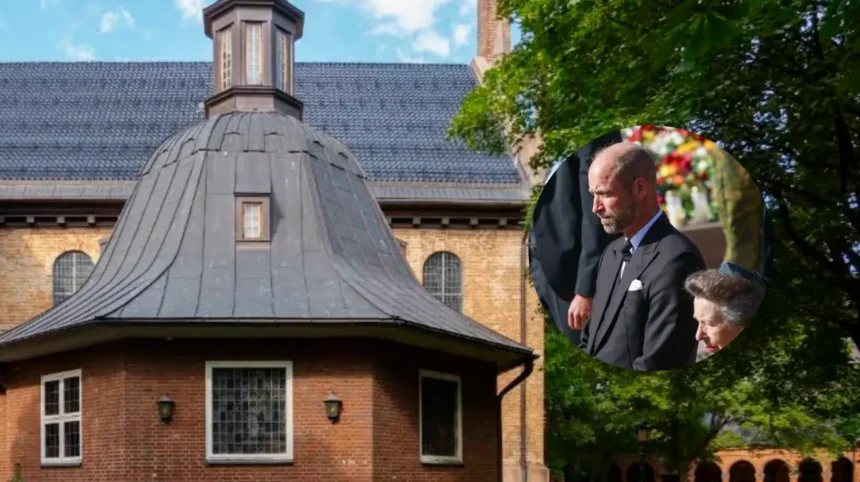
As reported by Sky News, Prince William attended on behalf of his father, King Charles III, in line with the convention that British sovereigns do not usually attend the funerals of other heads of state. He was accompanied by his aunt, Princess Anne, who attended in a private and personal capacity as godmother to Norway’s new king, Haakon VIII.
Who attended King Harald’s funeral in Oslo?
The funeral drew dozens of European royals and international dignitaries. According to Reuters, those processing on foot behind the coffin included Britain’s Prince William, Japan’s Crown Prince Akishino, the kings of Denmark, the Netherlands, Sweden and Spain, the presidents of Germany and Finland, France’s prime minister, and Ukraine’s President Volodymyr Zelensky.
The Guardian reported that the church ceremony was attended by royals including Britain’s Prince William and Princess Anne; Spain’s King Felipe and Queen Letizia; Sweden’s royal family; Denmark’s King Frederik and Queen Mary; the Netherlands’ King Willem-Alexander and Queen Maxima; and Japan’s Crown Prince Akishino and Crown Princess Kiko. BBC coverage also noted the presence of King Abdullah II of Jordan and President Zelensky among the figures in attendance.
As reported by HELLO!, William’s role representing King Charles followed the usual precedent that the sovereign typically does not attend the funerals of other heads of state, with the duty falling to the heir apparent. Buckingham Palace had confirmed on 5 September that the Prince of Wales would attend the funeral on Wednesday, 9 September, with Princess Anne attending in a personal capacity.
How was the funeral procession conducted in Oslo?
The funeral began with a silent procession from the Royal Palace to Oslo Cathedral at noon, punctuated by cannon fire from Akershus Fortress, according to RTE. Tens of thousands of people lined Karl Johan Avenue, with police reporting large crowds who fell silent as the coffin passed.
The New York Times described the event as a “highly choreographed ceremony” that drew royal families, heads of state and thousands of citizens to mourn a monarch widely seen as a unifying force. Xinhua reported that King Harald’s coffin left the Royal Palace at noon and was carried on a gun carriage in a ceremonial procession through central Oslo to the cathedral, as thousands of people lined the streets to pay their respects.
What statements were made about Prince William’s role?
As reported by the BBC, royal sources said Prince William’s attendance, representing his father King Charles, follows the convention that the monarch does not usually go to the funeral of another head of state. The Guardian noted that, in keeping with precedent that the sovereign does not attend funerals of other heads of state, the duty falls to William, a future king, to represent his father and pay his respects at the service.
ITV News reported that the Prince of Wales would be joined by Princess Anne, who is attending in a private and personal capacity as godmother of the new king, Haakon VIII. Geo TV reported that King Charles had delegated an “important and emotional duty” to his son Prince William after days of deliberation, and that it is usual precedent for the sovereign not to attend funerals of other heads of state.
What tributes were paid to King Harald V?
King Harald V died on 28 August at Oslo University Hospital at 6:35am local time, the Royal Palace announced, saying he had passed away peacefully after being treated for a blood condition. He had been in hospital since 17 August receiving treatment for haemolytic anaemia, a condition in which red blood cells are destroyed faster than they can be replaced.
Euronews reported that the 89-year-old had been in hospital since 17 August with haemolytic anaemia, and that his family rushed to his bedside after the palace announced his condition had become “extremely serious”. Le Monde noted that Harald was admired for his simplicity and humility, and was the first monarch born in Norway in nearly six centuries.
AP News described Harald as a popular monarch who died on 28 August at 89, with crowds lining Oslo’s streets and foreign royals and leaders gathering for the funeral. The Times of India reported that King Harald had been the country’s ceremonial head of state for more than three decades, and that his son Haakon became king immediately after his father’s death.
Background of the development
King Harald V ascended to the throne in January 1991 and reigned for 35 years, becoming Europe’s oldest reigning monarch at the time of his death. His death triggered an immediate succession: Crown Prince Haakon became King Haakon VIII, and his daughter Ingrid Alexandra became Crown Princess and heir to the throne. The Royal Court confirmed the death in a statement expressing “deep grief” and noting that the king had passed away peacefully at Oslo University Hospital.
The 13 days of national mourning culminated in the state funeral on 9 September, which was televised and attended by members of the royal family, foreign royals and world leaders. The ceremony followed long-standing Norwegian royal protocol, with a gun-carriage procession, cannon salutes and a service at Oslo Cathedral before the interment.
Prediction: How might this affect royal watchers and diplomatic observers?
For royal watchers, the prominent role of the Prince of Wales at a major European state funeral reinforces the expectation that William will continue to undertake high-profile representational duties on behalf of King Charles, particularly at events involving other heads of state. The joint appearance of William and Princess Anne, with Anne attending in a personal capacity due to her godparent role to King Haakon VIII, may also draw sustained interest in how the British royal family balances official and personal ties within European royal networks.
For diplomatic observers, the gathering of dozens of royals and heads of state in Oslo underscores the function of state funerals as informal diplomatic forums where bilateral relationships are maintained through shared ceremonial participation. The presence of leaders such as President Zelensky alongside European monarchs highlights how such occasions can provide opportunities for discreet interaction amid broader geopolitical tensions, even if no formal negotiations are announced. In the near term, analysts are likely to monitor whether similar patterns of attendance emerge at future state funerals in Europe, and whether the British crown continues to delegate representational duties to the Prince of Wales in comparable circumstances.