
Key Points
- Princess Diana Paris accident is noted in syndicated “Today in History” item dated August 31, 2026.
- Princess Diana of Wales died when a Mercedes collided in Pont de l’Alma tunnel in Paris during the early hours of August 31, 1997.
- Her boyfriend, Dodi Al Fayed, and the driver, Henri Paul, were also killed in the accident.
- Trevor Rees-Jones, who was Diana and Dodi Al Fayed’s bodyguard, survived the accident.
- According to the 2026 historical piece, Henri Paul was found to be intoxicated.
- The French inquiry report, presented in 1999, claimed that Henri Paul lost control of the car due to excess speed and intoxication.
- An inquest held in 2008 in Britain concluded that there was an unlawful killing, and the death of Princess Diana was caused by grossly negligent driving of Henri Paul and chasing paparazzi.
- Inquest concluded that lack of seatbelts was a factor that contributed to the death of Diana and Dodi Al Fayed.
- The Boston Herald item is an anniversary piece about historical event rather than a new development in the case.
Wales (Wales Times) August 31, 2026 — Princess Diana Paris crash is the subject of a “Today in History” entry published by the Boston Herald, recalling the collision that killed Diana, Princess of Wales, her partner Dodi Al Fayed and the driver Henri Paul in Paris on August 31, 1997.
The publication’s available listing identifies the story as an anniversary feature, titled Today in History: August 31, Princess Diana dies in Paris tunnel crash.
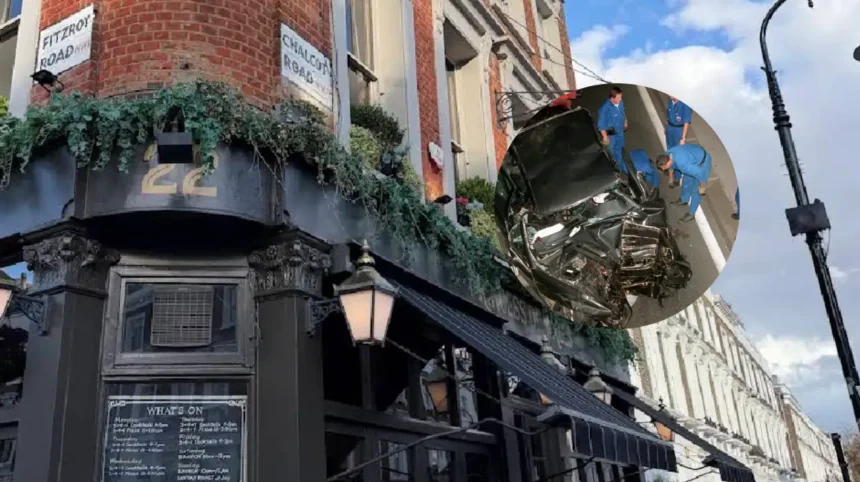
The historical event took place in the early hours of August 31, 1997, when a Mercedes carrying Diana, Dodi Al Fayed, Henri Paul and bodyguard Trevor Rees-Jones crashed in the Pont de l’Alma tunnel in Paris. Diana, Dodi Al Fayed and Henri Paul died as a result of the crash. Rees-Jones survived.
The Boston Herald listing states that Diana was killed after the car in which she was travelling crashed in Paris. It also states that Dodi Al Fayed and Henri Paul died, and notes that Paul was later found to have been intoxicated.
A historical timeline published by The Guardian reported that Diana and Dodi Al Fayed left the Ritz hotel in Paris at about 12:25am on August 31, 1997. Henri Paul, the Ritz’s deputy head of security, drove the Mercedes. The vehicle was followed by photographers and press motorcyclists before it crashed in the tunnel.
According to the same account, Diana and Rees-Jones were seriously injured and taken to hospital, while Dodi Al Fayed and Henri Paul died. Diana was declared dead at about 4am.
A timeline published by USA Today similarly reported that the vehicle crashed shortly after midnight while travelling at speed in an attempt to evade photographers. Its account places the collision at a concrete pillar inside the Pont de l’Alma tunnel.
The event remains one of the most widely remembered deaths involving a member of the British royal family. However, the August 31, 2026 Boston Herald item is framed as a historical commemoration of the date, rather than an announcement of new police findings, a new legal decision or a new investigation.
What did official investigations conclude?
The official inquiries into the crash took place in France and the United Kingdom. Their findings addressed Henri Paul’s driving, the speed of the Mercedes, the pursuit by paparazzi and the use of seatbelts.
A French judicial investigation concluded in 1999 that Henri Paul had lost control of the car while travelling at high speed. BBC reporting said the French investigation found that Paul was intoxicated and held him solely responsible for the crash.
The matter was subsequently examined in Britain through Operation Paget and an inquest into the deaths. The Metropolitan Police’s Operation Paget reached the same broad conclusion as the French inquiry: Henri Paul had been drinking and had driven at excessive speed, according to BBC reporting.
The British inquest concluded in April 2008. The jury found that Diana and Dodi Al Fayed had been unlawfully killed due to the gross negligence of Henri Paul and the paparazzi who were pursuing the car. The jury also cited Paul’s drink-driving and the lack of seatbelts as factors that contributed to the deaths.
The Guardian reported that the jury reached its verdict after a six-month hearing, during which evidence from hundreds of witnesses and thousands of documents was considered. The jury delivered a majority verdict of unlawful killing, finding that both Henri Paul’s driving and the conduct of following vehicles were involved.
The distinction between the French and British findings is important. The French investigation assigned responsibility to Henri Paul, whereas the British inquest’s unlawful-killing verdict found that the grossly negligent driving of both Henri Paul and pursuing paparazzi contributed to the deaths. Both processes rejected claims that the crash was the result of an established murder plot.
Why is August 31 significant in history?
August 31 is the date on which Diana, Princess of Wales, died from injuries sustained in the Paris crash in 1997. The annual date is therefore included in historical calendars, anniversary reporting and public retrospectives about the life and death of the Princess.
The syndicated “Today in History” format used by the Boston Herald places the death within a wider list of notable events associated with the date. An identical historical feature carried by The Morning Call states that August 31, 2026 is the 243rd day of the year, with 122 days remaining, before identifying the death of Diana as the principal historical event highlighted for the date.
Diana had divorced the then-Prince Charles in 1996, but remained an internationally recognised public figure. Her death prompted extensive mourning in the United Kingdom and internationally.
For news readers, it is important to separate the continuing public and cultural significance of the anniversary from verified developments in the case. The supplied Boston Herald headline does not indicate that any new evidence has changed the conclusions of the French investigation, Operation Paget or the 2008 inquest.
Background: What led to the 1997 Paris tunnel crash?
Diana, Princess of Wales, and Dodi Al Fayed had been in Paris on the evening before the collision. They were at the Ritz hotel, which was owned by Dodi Al Fayed’s father, Mohamed Al Fayed. In the early hours of August 31, they left the hotel in a Mercedes driven by Henri Paul. Trevor Rees-Jones was also travelling in the car in his role as bodyguard.
The car entered the Pont de l’Alma tunnel shortly after midnight and struck a pillar. Dodi Al Fayed and Henri Paul were killed at the scene or shortly after the collision. Diana was taken to hospital but was later declared dead. Rees-Jones was the sole survivor.
The crash resulted in years of investigation, legal scrutiny and public discussion. The British inquest examined allegations and competing theories in detail before the jury delivered its unlawful-killing verdict in 2008. BBC reporting said the inquest heard from 250 witnesses and considered thousands of documents.
Prediction: How could this anniversary affect readers and royal-history audiences?
The August 31 anniversary is likely to renew interest among royal-history readers, people who remember the events of 1997 and audiences seeking verified accounts of the crash. News organisations may republish historical timelines or explainers, particularly because the date is closely associated with Diana’s death.
For readers, the main effect is likely to be increased exposure to both factual reporting and unverified claims circulated online. The official findings remain the most reliable reference point: the French investigation cited Henri Paul’s intoxication and speed, while the 2008 British inquest found that grossly negligent driving by Henri Paul and pursuing paparazzi led to the unlawful killing of Diana and Dodi Al Fayed.
For publishers and search audiences, clearly distinguishing anniversary coverage from new developments will remain important. The Boston Herald’s August 31, 2026 entry is a historical remembrance item. It does not report a reopening of the investigation, a new court decision or a revision to the established official conclusions.