

Key Points
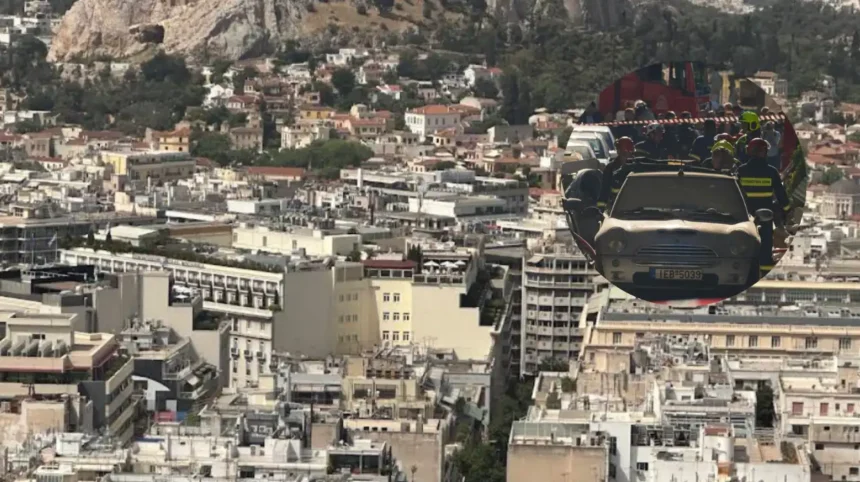
- Explosion led to the collapse of an old two-storey building in Plaka, Athens, near the Acropolis on Friday, September 25, 2026.
- Two women trapped in another building close to the building that collapsed were rescued and admitted to the hospital.
- One witness was slightly injured by the flying debris.
- Gas leakage was thought to be the cause but had not been confirmed yet by the authorities.
- A sniffer dog was used to look for possible survivors in the rubble.
- There were reports that about five people could have been in the building when it collapsed.
- Other buildings in the vicinity, cars and a church were also damaged in the blast.
- The area was sealed by police due to danger of more collapses.
Wales (Wales Times) September 26, 2026 — A powerful blast near the Acropolis caused an old two-storey building to collapse in the historic Plaka district, injuring at least two people and prompting a search operation for possible survivors.
- Key Points
- How many people were inside the collapsed building?
- What did rescue teams find at the scene?
- Were the injured people in the collapsed building?
- How badly was the surrounding area damaged?
- What is known about the suspected gas leak?
- Why did the blast cause concern in Plaka?
- What did local residents and officials say?
- What happens next in the investigation?
- Background: Plaka and the Acropolis area
- Prediction: how could the blast affect tourists and local residents?
The explosion occurred on Friday morning in one of Athens’ busiest tourist areas. The affected building stood in Plaka, the historic neighbourhood located at the foot of the Acropolis hill, Greece’s most visited ancient monument.
According to The Associated Press, as reported by ABC News, firefighters rescued two women from an adjacent building after the blast. Police said the women were taken to hospital for treatment. Local media also reported that a passer-by suffered minor injuries.
The cause of the explosion was not immediately established. However, local media and emergency officials indicated that a gas leak was suspected. An official investigation was launched to determine how the blast happened.
How many people were inside the collapsed building?
It was not immediately clear how many people were inside the building when the explosion occurred. The Associated Press reported that local media believed as many as five people may have been present, although authorities had not confirmed the figure.
Euronews, in a report by Foteini Doulgkeri and Gavin Blackburn, said five people, including three tourists, were reported missing after the explosion. The report added that emergency teams were inspecting the remains of the building and checking nearby structures for additional danger.
The South Wales Guardian, publishing the report through its national news service, said residents believed two people lived in one of the building’s apartments. Other media reports suggested that three tourists may have been staying in a short-term rental apartment inside the property.
Residents described uncertainty over the whereabouts of those who may have been in the building. Andreas Martzaklis, a nearby resident quoted by the South Wales Guardian, said an elderly couple lived upstairs but he did not know whether they had been inside when the explosion happened or had managed to leave.
He also said one apartment in the destroyed building had been used as a short-term rental, while other parts of the property were privately owned.
What did rescue teams find at the scene?
Firefighters and rescue crews moved through the rubble with a sniffer dog as they searched for anyone who might have been trapped. The fire department said the search and rescue operation continued for several hours after the blast.
The area was placed under police control, with officers restricting access to protect residents, tourists and passers-by. Emergency workers also examined neighbouring buildings to determine whether the explosion had caused structural damage that could lead to further collapses.
Euronews reported that a fire broke out after the explosion and that firefighters worked to put it out while assessing the condition of the surrounding buildings. The blast damaged nearby properties on Lysikratous Street, according to information attributed to the Greek Fire Service.
Video footage reviewed by ABC News showed rubble spread across the street. Parked vehicles were damaged by falling debris, while the force of the explosion shattered windows in nearby buildings.
The South Wales Guardian also reported that rescue workers moved slowly across the site as police maintained a cordon around the affected area.
Were the injured people in the collapsed building?
The two women taken to hospital were rescued from an adjacent building rather than directly from the collapsed property, according to authorities cited by ABC News and Euronews.
The South Wales Guardian reported that both women were tourists, based on information from a local resident. It said the women were freed from the neighbouring property and transported to hospital.
Local reports identified one of the women as elderly and said the other was approximately 50 years old. Their conditions were not detailed in the available reports.
A passer-by was also reportedly injured by debris. The injury was described by local media as slight or minor. Authorities had not announced further confirmed casualties at the time of the reports.
How badly was the surrounding area damaged?
The explosion damaged buildings around the collapsed property and sent debris into the surrounding street. Parked cars were struck, and windows in nearby buildings were broken.
Giotis Kantartzis, pastor of the First Greek Evangelical Church in Athens, told the South Wales Guardian that the church had also been affected. He said the damage was extensive, with windows broken throughout the building.
“From the bottom to the top, there is no window that has not been broken,” Kantartzis said, according to the report.
The church planned to hold its Sunday service outdoors because of the damage caused by the blast.
Euronews reported that emergency services were assessing nearby structures to establish whether the neighbouring buildings remained safe. The inspection was particularly important because the explosion occurred in a densely built historic district with narrow streets and buildings close together.
What is known about the suspected gas leak?
The cause of the explosion remained under investigation. Local media reported that a gas leak was suspected, but authorities had not issued a final official conclusion.
A suspected gas leak could explain the force of the blast and the subsequent collapse of the two-storey building. However, investigators would need to examine the gas supply, electrical systems, debris and any other evidence before confirming the cause.
The available reports did not establish whether the suspected leak originated inside the collapsed building or whether another fault contributed to the explosion.
Authorities also had to consider the possibility of secondary hazards, including unstable walls, damaged gas lines and fires. This was one reason emergency teams continued checking surrounding buildings after the main structure fell.
The investigation was still developing, and the reported cause should therefore be treated as unconfirmed until Greek authorities publish their findings.
Why did the blast cause concern in Plaka?
Plaka is one of Athens’ oldest and most heavily visited neighbourhoods. Its location beneath the Acropolis means the district normally attracts large numbers of tourists, businesses and residents.
Euronews reported that the explosion occurred on a small street in the vicinity of the Acropolis and shook the surrounding area. The incident caused particular concern because it happened in a busy tourist district where narrow streets can make access difficult for fire engines and ambulances.
The presence of older buildings also increased the need for structural inspections. Once one building collapses, nearby walls and façades can become unstable, creating risks for rescuers and members of the public.
Police therefore cordoned off the affected area while firefighters and specialist rescue teams worked among the debris. Access restrictions also helped prevent tourists and residents from entering areas where falling masonry or further structural movement could occur.
What did local residents and officials say?
Residents described hearing a loud explosion and seeing damage spread across the street. Andreas Martzaklis told the South Wales Guardian that he heard the blast while drinking his morning coffee.
He said residents did not immediately know who had escaped from the destroyed building. His comments reflected the uncertainty at the scene while rescue crews attempted to establish the number of occupants.
The nearby church pastor also described the impact on the building and confirmed that services would be moved outdoors. His account indicated that the effects extended beyond the property where the blast occurred.
Athens emergency services provided the confirmed information about the collapse, the rescue of two women and the ongoing search. Officials did not immediately confirm the full number of people missing or provide a final explanation for the explosion.
What happens next in the investigation?
Investigators are expected to examine the building’s gas connections, electrical installations and structural remains. They will also assess statements from residents, emergency workers and witnesses who were nearby when the explosion occurred.
The surrounding buildings may need further safety checks before residents, businesses or visitors are allowed to return. Engineers will have to determine whether walls, roofs and façades were weakened by the blast.
Rescue teams may continue searching the rubble until authorities are satisfied that all possible occupants have been accounted for. The number of missing people could change as officials compare residents’ accounts, rental records and information from family members.
The cause of the explosion may also affect any later legal or safety investigation. If a gas leak is confirmed, authorities could examine whether the property had been inspected, whether any warning signs had been reported and whether safety procedures were followed.
Background: Plaka and the Acropolis area
Plaka is Athens’ historic district at the foot of the Acropolis. The neighbourhood is known for its older buildings, narrow streets, shops, restaurants and high concentration of visitors.
The Acropolis is Greece’s most visited ancient monument and is one of the country’s most important cultural landmarks. Because Plaka surrounds the monument, the area combines residential properties with tourism-related accommodation and businesses.
The building affected by Friday’s explosion was described by the fire department as an old two-storey property. Residents said that apartments in the building had different uses, including private homes and at least one short-term rental.
The blast damaged nearby buildings and a church, showing how an explosion in a tightly packed historic neighbourhood can affect structures beyond the original site.
Prediction: how could the blast affect tourists and local residents?
The explosion is likely to cause temporary access restrictions around the affected streets while emergency services complete the search and structural inspections. Tourists visiting the Acropolis and Plaka may face diversions, closed streets or delays near the incident area.
Local residents could experience temporary evacuations if engineers identify further structural risks. People living in older buildings may also face additional safety checks, particularly if authorities investigate whether gas infrastructure contributed to the explosion.
Tourism businesses in the immediate area could be affected by reduced footfall while police cordons remain in place. However, the wider impact will depend on the length of the closure and whether officials confirm that the incident was isolated.
The longer-term effect may include greater scrutiny of gas systems, short-term rental properties and the safety of older buildings in central Athens. These measures would depend on the findings of the official investigation and any recommendations issued by Greek authorities.