
Key Points
- Experienced co-driver and multiple WRC rally winning Terry Harryman is dead at the age of 87 years.
- The Northern Irishman had enjoyed a career spanning five decades, where he won six rounds of the WRC and also secured nine WRC podiums with drivers like Ari Vatanen, Paddy Hopkirk, and Malcolm Wilson.
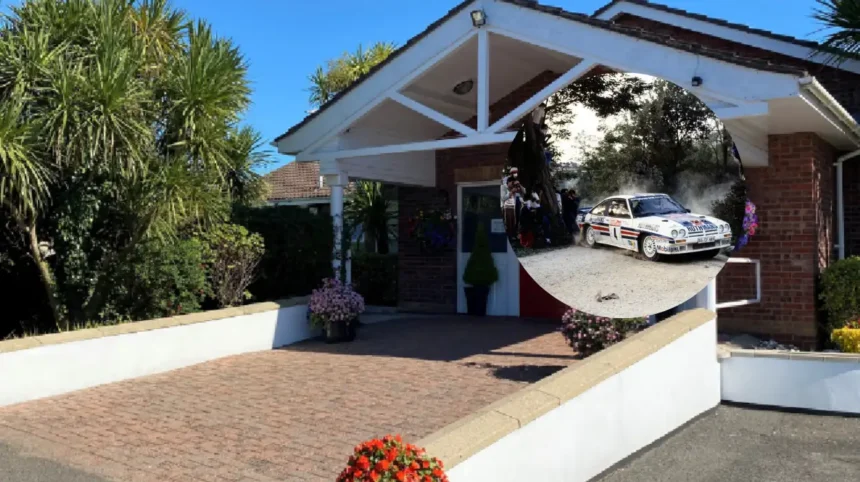
- He died peacefully at Beverly Lodge Care Home after spending a number of months undergoing treatment following being diagnosed with Parkinson’s Disease.
- Harryman’s most productive era was with the 1981 World Champion, Ari Vatanen, where he helped secure six wins for his driver, including the Monte Carlo Rally of 1985 and the 1000 Lakes, Sanremo and RAC wins of 1984.
- One of the most memorable clips of the Manx Rally of 1983 involving the “Oh dear God” comment highlighted Harryman’s unflappable pacenotes in helping Vatanen avoid an incident with an Opel Manta on a tight road.
- His son Allan also drives a racing car.
Wales (Wales Times) September 22, 2026 – The motorsport community is mourning Terry Harryman, a multiple World Rally Championship round-winning co-driver, who has died aged 87. Harryman, widely regarded as one of the finest navigators of his generation, enjoyed a career spanning five decades and recorded six WRC wins and nine podium finishes alongside some of rallying’s most iconic drivers.
- Key Points
- How did Terry Harryman die and where?
- What defined Terry Harryman’s rallying career?
- Which rallies did Terry Harryman win with Ari Vatanen?
- Why is the “Oh dear God” Manx Rally moment famous?
- What did Terry Harryman do after retiring from top-level WRC?
- Who are the drivers Terry Harryman navigated for?
- What legacy does the Harryman family leave in rallying?
- Background of the development
- Prediction: how this development can affect rallying fans and the co-driving community
How did Terry Harryman die and where?
Harryman died peacefully at the Beverly Lodge Care Home, where he had been receiving care during his final months while suffering from Parkinson’s Disease, according to reports from Autosport and Motorsport.com. Tributes quickly emerged from across the rallying world, with the FIA World Rally Championship describing him as a “legendary Northern Irish co-driver” in an official obituary.
What defined Terry Harryman’s rallying career?
Born in uk/local/bangor/">Bangor, County Down, Harryman began his co-driving career in 1962 alongside Ronnie McCartney, winning the Circuit of Munster that year and the Circuit of Ireland in 1964 in an Austin Mini Cooper S, as reported by DirtFish. He secured back-to-back Circuit of Ireland victories with Paddy Hopkirk in 1965 and 1966, and completed a hat-trick of wins at the Donegal International Rally—twice with Cathal Curley and once with Mark Lovell.
Harryman made his WRC debut at the 1974 RAC Rally with McCartney in a Mazda, before forging a partnership with Malcolm Wilson across 1980 and 1981 that helped establish him at the sport’s top level. His most successful period arrived when he joined Ari Vatanen for the 1982 Swedish Rally, a pairing that would deliver all six of Harryman’s WRC victories.
Which rallies did Terry Harryman win with Ari Vatanen?
The Harryman–Vatanen partnership claimed its first podium with second place in Sweden in 1982 in a David Sutton Motorsport-prepared Ford Escort RS1800 Mk2, before climbing to the top step at the 1983 Safari Rally in an Opel Ascona 400. After Vatanen moved to Peugeot Talbot Sport, the duo tamed the 205 T16 Group B car to end the 1984 season with three consecutive wins: 1000 Lakes (Finland), Rallye Sanremo (Italy) and the RAC Rally.
Their winning streak continued into 1985 with a famous fightback victory at the Monte Carlo Rally and a second Swedish win, before a series of mid-season retirements saw them trail team-mate Timo Salonen heading into Rally Argentina, where Vatanen suffered a near-fatal crash that effectively ended their title challenge. Harryman remained with Peugeot to co-drive Michèle Mouton to the German national title in 1986 and later returned for an emotional on-course appearance with Vatanen in a 205 T16 E2 at Sanremo.
Why is the “Oh dear God” Manx Rally moment famous?
As reported by Motorsport Images and widely shared online, a 1983 Manx Rally stage produced one of rallying’s most enduring clips: Harryman calmly calling pacenotes as Vatanen’s factory Opel Manta slid towards concrete posts on a narrow road, prompting the now-iconic “Oh dear God” exclamation. The footage, often cited in retrospectives, captures the trust and precision between driver and co-driver that defined their partnership.
What did Terry Harryman do after retiring from top-level WRC?
Harryman’s career extended into the late 1990s and early 2000s, including a return with Renault to co-drive Robbie Head in the Clio Williams during the 1995 British Championship season, followed by regular competition for eight years and a role as team manager for the Renault Dealer Team. Before announcing his retirement, he capped a near-60-year career by co-driving a race truck in the Dakar and appearing at the 2003 Syrian International Rally with Mohammed Hamsho.
Who are the drivers Terry Harryman navigated for?
Across his career, Harryman called pacenotes for Paddy Hopkirk, Vic Elford, Malcolm Wilson, Jimmy McRae, Tony Pond, Michèle Mouton and Ari Vatanen, among others, according to Autosport. His adaptability across eras from Mini Cooper S to Group B monsters and into the Group A period with Ford and Kalle Grundel underscored his reputation as a consummate professional.
What legacy does the Harryman family leave in rallying?
The Harryman name remains active in the sport through Terry’s son Allan, who has followed in his father’s footsteps as a co-driver and has accumulated 293 starts and counting, as noted by Motorsport.com. Tributes from outlets including WRC.com and DirtFish highlighted Harryman’s calm demeanour, meticulous preparation and enduring influence on generations of navigators.
Background of the development
Terry Harryman’s death marks the passing of a figure who bridged rallying’s amateur roots and its global, manufacturer-driven era. His career unfolded across five decades, beginning in Irish national events before moving into the World Rally Championship at its 1973 inception, with his debut in 1974. The partnership with Vatanen coincided with the rise of Group B, a period defined by extraordinary power and risk, yet Harryman’s methodical approach helped convert that volatility into six WRC wins and nine podiums. His later work with Mouton and in national championships, plus managerial roles, reflected a sustained commitment to the sport’s development beyond the spotlight.
Prediction: how this development can affect rallying fans and the co-driving community
Harryman’s death is likely to prompt renewed attention on the role of co-drivers, whose contributions are often overshadowed by drivers in mainstream coverage. For fans, archival footage such as the 1983 Manx Rally clip may see increased circulation, educating newer audiences on the navigator’s critical function in safety and pace. Within the co-driving community, tributes may encourage mentorship initiatives and historical recognition programmes, ensuring that the craft of pacenote creation and stage management is preserved and celebrated alongside driving achievements.