The labor market for jobs in Gwynedd Wales relies on public administration, healthcare, education, tourism, and agriculture. Gwynedd is a rural county located in northwest Wales covering 2,548 square kilometers, including Eryri National Park and a long coastline. Local workforce dynamics reflect geography, low population density, and seasonal employment shifts. The total population stands at 117,400 residents, with a working-age population of 69,500 people. Public sector employers provide stable year-round employment for residents across major population hubs like uk/local/bangor/">Bangor, Caernarfon, Pwllheli, and Dolgellau.
- Which Major Public and Private Employers Drive Key Hiring Sectors in Gwynedd Wales?
- How Do Healthcare Education and Public Services Provide Long-Term Employment in Gwynedd Wales?
- What Role Do Tourism Hospitality and Outdoor Recreation Play in the Employment Market of Gwynedd Wales?
- How Are Agriculture Forestry and Environmental Management Sustaining Rural Workplaces in Gwynedd Wales?
- What Are the Average Salaries Working Conditions and Remote Work Options for Jobs in Gwynedd Wales?
- How Can Job Seekers Find Applications Prepare CVs and Navigate Language Requirements for Jobs in Gwynedd Wales?
- Frequently Asked Questions
Historical economic developments shifted Gwynedd from heavy industrial extraction to service-oriented and public administration positions. Slate quarrying in Blaenau Ffestiniog and Dinorwic dominated local employment throughout the nineteenth century, employing over 17,000 workers at its peak in 1898. Deindustrialization during the mid-twentieth century forced a economic structural transition toward hospitality, environmental management, green technology, and public health services. Government investment in regional infrastructure expanded municipal administration and educational institutions. Today, Gwynedd retains strong cultural ties to the Welsh language, with 64.4 percent of residents speaking Welsh, making bilingual skills essential for public sector employment.
Economic indicators highlight structural characteristics unique to rural North Wales. The median annual salary for full-time workers in Gwynedd is 32,700 pounds sterling. The regional unemployment rate sits at 4.1 percent. The cost of living remains low compared to urban areas, with average monthly rent at 728 pounds sterling. Employment distribution shows 28.5 percent in health and public services, 16.2 percent in wholesale and retail trade, 14.1 percent in accommodation and food services, 8.4 percent in education, and 6.5 percent in construction.
Understanding regional employment mechanics requires examining main sectors, seasonal labor demand, and remote work infrastructure. Employers recruit through localized public portals, healthcare trusts, and specialist agencies. Local authority policy focuses on retaining young talent through apprenticeship programs, rural transport improvements, and digital infrastructure investments.
Which Major Public and Private Employers Drive Key Hiring Sectors in Gwynedd Wales?
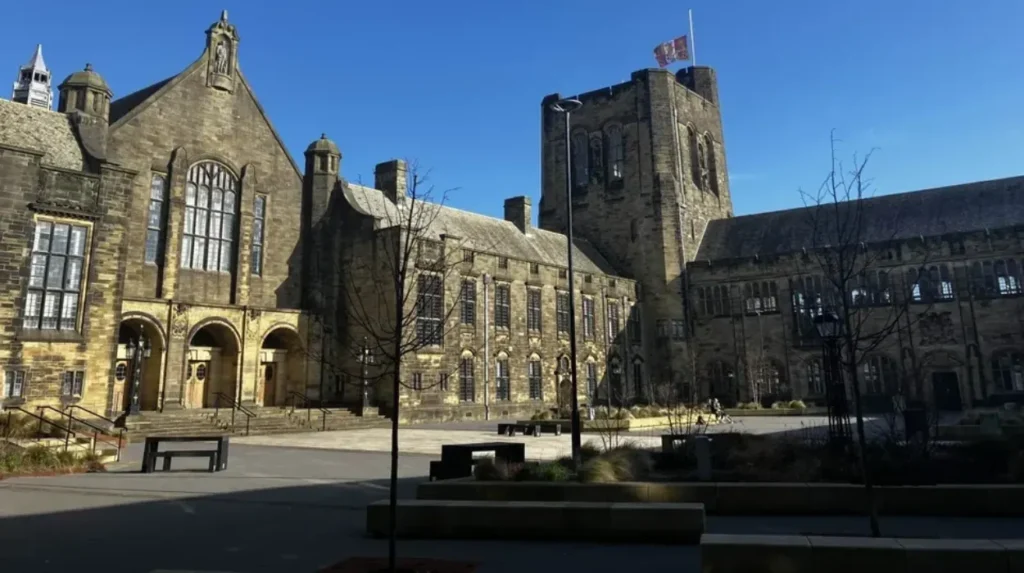
Public sector entities dominate stable employment across North West Wales, providing long-term career progression and structural support. Betsi Cadwaladr University Health Board is the largest single employer in the region, operating Ysbyty Gwynedd hospital in Bangor along with community clinics. Cyngor Gwynedd (Gwynedd Council) employs thousands across civil engineering, social work, administrative governance, and environmental waste operations. Educational employment remains centered around Bangor University, which hosts 10,000 students and employs 2,000 staff members in research, teaching, and operational support.
Private sector employment focuses on tourism, outdoor recreation, specialist manufacturing, and civil infrastructure. Companies like Zip World operate large adventure tourism sites in Penrhyn Quarry and Llechwedd, employing full-time and seasonal staff. High-value engineering and technology businesses operate from Menai Science Park (M-SParc) in Gaerwen, supporting tech startups and research spin-offs. Construction firms such as Jones Bros Civil Engineering execute renewable energy installations, road networks, and coastal defense projects.
Public and private career options demand different skill sets. Public positions require Welsh language proficiency, professional certifications, and compliance with national governance standards. Private employers in tourism and retail focus on customer relations, operational flexibility, and seasonal adaptability. Emerging investments in renewable energy, including nuclear decommissioning at Trawsfynydd and offshore wind operations, continue to generate engineering vacancies.
How Do Healthcare Education and Public Services Provide Long-Term Employment in Gwynedd Wales?
Healthcare services deliver high job security and continuous recruitment across acute and community settings. Betsi Cadwaladr University Health Board recruits registered nurses, medical consultants, radiographers, occupational therapists, and administrative coordinators. Ysbyty Gwynedd functions as a major trauma and specialized medical center, requiring clinical teams and facilities management personnel. Healthcare roles offer standardized pay structures under the NHS Agenda for Change, with Band 5 nursing salaries starting at 28,407 pounds sterling annually.
Education infrastructure provides extensive employment across primary, secondary, tertiary, and research institutions. Grŵp Llandrillo Menai operates further education campuses in Bangor, Caernarfon, and Dolgellau, employing lecturers, vocational instructors, and student assistance advisors. Bangor University drives research funding in ocean sciences, psychology, environmental forestry, and electronic engineering, generating academic research positions. Primary and secondary schools managed by Cyngor Gwynedd regularly recruit certified teachers, teaching assistants, and administrative staff.
Public administration jobs focus on regulatory management, social services, highways maintenance, and planning control. Cyngor Gwynedd maintains headquarters in Caernarfon while operating regional offices in Dolgellau and Pwllheli. Council roles include adult social care workers, child protection officers, planning officers, and Welsh-language translators. These public sector career paths provide defined pension schemes, flexible working patterns, and clear progression structures.
What Role Do Tourism Hospitality and Outdoor Recreation Play in the Employment Market of Gwynedd Wales?

Tourism and hospitality generate substantial revenue and employment throughout the spring and summer seasons. Eryri National Park attracts over 4 million visitors annually, creating demand for hotel managers, tour guides, outdoor instructors, and food service personnel. Coastal towns such as Abersoch, Pwllheli, and Barmouth experience seasonal surges in retail and hospitality roles. Major leisure operators require site managers, safety inspectors, booking administrators, and customer service staff.
Seasonal employment cycles impact overall labor statistics across the county. Peak hiring occurs between March and October, leading to temporary contracts in hotels, holiday parks, restaurants, and outdoor centers. Employers frequently offer seasonal contracts that transition into permanent roles for key operational personnel. The rise of year-round adventure attractions, indoor climbing centers, and heritage sites has extended seasonal employment into permanent, full-time positions.
Outdoor recreation businesses require specialized qualifications for lead instruction roles. Mountain leaders, sea kayak instructors, rock climbing guides, and zip-line operators must hold certifications from recognized governing bodies such as Mountain Training UK. The growth of eco-tourism, outdoor wellbeing retreats, and heritage trail management has broadened career paths beyond traditional hotel service jobs.
How Are Agriculture Forestry and Environmental Management Sustaining Rural Workplaces in Gwynedd Wales?
Agriculture remains a foundational sector for rural employment, land management, and local supply chains. Gwynedd contains over 1,500 active farm holdings, primarily focused on sheep farming, beef production, and dairy operations. Agricultural roles include farm managers, livestock handlers, agricultural machinery operators, and veterinary technicians. The sector supports peripheral employment in feed distribution, machinery repair, livestock auctions, and meat processing facilities.
Forestry and land management provide career paths through public agencies and private forestry contractors. Natural Resources Wales (NRW) manages public timber reserves, nature conservancies, and river catchments across the region. Forestry positions involve timber harvesting oversight, woodland conservation, estate maintenance, and biodiversity monitoring. Sustainable land management initiatives hire conservation officers, peatland restoration specialists, and ecology researchers.
Environmental protection policies drive demand for green jobs across land management and energy development. Renewable energy schemes, including hydro-electric projects, onshore wind farms, and solar installations, require environmental impact assessors and maintenance technicians. The transition toward sustainable farming models under Welsh Government agricultural schemes requires environmental advisors to guide landowners on carbon sequestration, habitat management, and water quality control.
What Are the Average Salaries Working Conditions and Remote Work Options for Jobs in Gwynedd Wales?
Compensation structures across Gwynedd vary based on industry sector, specialization, and location. The median full-time annual salary of 32,700 pounds sterling sits below the broader United Kingdom national average. Public sector positions offer structured progression through defined salary bands, while private sector wages in hospitality and agriculture often align with national minimum wage regulations. Technical engineering, digital technology, and senior healthcare roles offer salaries exceeding 45,000 pounds sterling.
Working conditions balance lower average wages with housing affordability and high quality of life. Average residential house prices in Gwynedd stand at 195,000 pounds sterling, offering lower entry barriers for home buyers compared to urban areas. Commuting times remain short within local employment centers, though rural transport dependencies require personal motor vehicles for workers living outside main bus and rail corridors.
Remote and hybrid work models have grown across administration, digital services, and professional consultancy. Digital connectivity infrastructure improvements, including full-fiber broadband rollout across North Wales, allow professionals to work for global enterprises while living in rural Gwynedd. M-SParc and local community hubs provide co-working facilities, hot-desk rentals, and business incubation spaces for remote workers and local freelancers.
How Can Job Seekers Find Applications Prepare CVs and Navigate Language Requirements for Jobs in Gwynedd Wales?
Navigating the recruitment process in Gwynedd requires understanding regional channels and bilingual application standards. Official portals handle public administration and health board vacancies, while private job boards host private sector listings. The Welsh Government service Working Wales provides career guidance, training support, and job matching services for local job seekers.
Curriculum Vitae (CV) preparation should highlight localized competencies, technical certifications, and linguistic abilities. Emphasizing Welsh language proficiency is beneficial for public sector roles, where positions are designated under legal Welsh language standards. Applicants should specify their speaking, reading, and writing fluency levels. For non-Welsh speakers, demonstrating a commitment to learn Welsh through employer-sponsored courses is often evaluated positively during public recruitment.
Recruitment agencies, job fairs, and direct networking expand access to unadvertised vacancies. Regional recruitment firms manage temporary placements in light manufacturing, logistics, and administrative support. Attending regional career fairs hosted by Bangor University or Grŵp Llandrillo Menai connects candidates directly with engineering, health, and education recruiters.
Frequently Asked Questions
What are the main industries employing workers in Gwynedd?
The largest employment sectors in Gwynedd are healthcare, public administration, education, tourism, and agriculture. Healthcare and council roles provide steady year-round work, while hospitality and outdoor adventure businesses generate significant seasonal jobs throughout Eryri National Park and coastal regions.
Do you need to speak Welsh to get a job in Gwynedd?
Welsh language skills are essential or desirable for many public sector roles, including council positions, healthcare services, and education. Private sector jobs in tourism, retail, and construction may not require fluent Welsh, though basic conversational skills are valued by local employers.
What is the average salary for jobs in Gwynedd?
The median annual full-time salary in Gwynedd is approximately 32,700 pounds sterling. Public sector positions in nursing, teaching, and civil engineering offer higher pay scales ranging from 28,000 to over 45,000 pounds sterling per year.
Where are the major job hubs located within Gwynedd?
The main employment centers in Gwynedd are Bangor, Caernarfon, Pwllheli, and Dolgellau. Bangor hosts major healthcare and higher education employers, Caernarfon serves as the local government administrative center, and Pwllheli supports maritime, retail, and tourism industries.
How do I apply for public sector vacancies in Gwynedd?
Public sector jobs are listed on dedicated career portals, including NHS Jobs for health board positions and the Cyngor Gwynedd jobs portal for local government roles. Job seekers can also access career guidance, apprenticeship placements, and job matching support through Working Wales.