Key Points
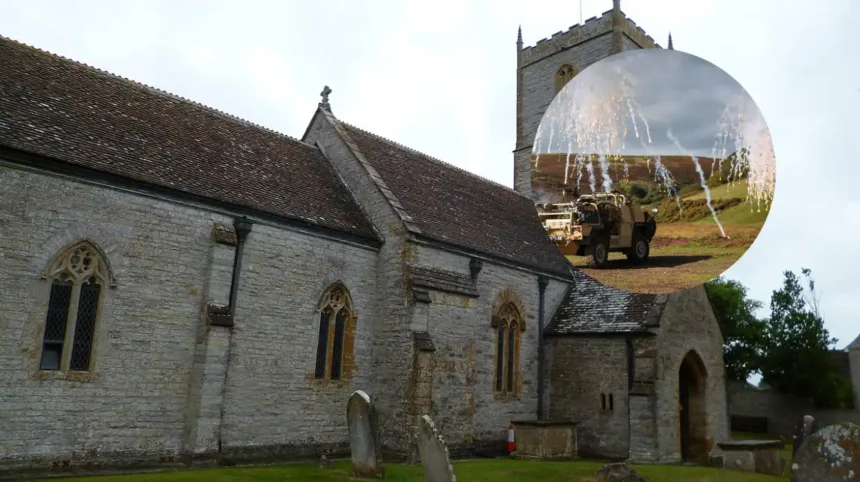
- Marines from the Aviation Combat Service Support Squadron’s Ground Mobility Troop have concluded Exercise Jackal Dawn held at the Sennybridge Training Area in Powys, Wales.
- The exercise involved live firing and according to the Royal Navy, it was the final validation of the troops’ force-protection capabilities.
- The unit is normally stationed at RNAS Yeovilton in Somerset and supports the Commando Helicopter Force’s Merlin and Wildcat helicopters.
- The Marines trained on locating, securing and, if necessary, protecting tactical Forward Refuelling Points located in remote and vulnerable places.
- For each Forward Refuelling Point, 290 personnel are required, a force-protection team, communications experts and resources that include water, fuel, ammunition and food.
- The training was in navigation, communications, command and control, tactical movement, live firing manoeuvring and force protection.
- During the exercise that took place at the 48-square mile Sennybridge Training Area, four Jackal armoured vehicles and two trucks were utilized.
- According to Lieutenant Oliver “Smudge” Smith RM, the exercise confirmed the capability of the unit to offer protection to the aviation assets while using the tactical Forward Refuelling Points.
Wales (Wales Times) October 29, 2026 – Royal Marines have passed an intensive live-fire assessment in mid Wales designed to confirm their ability to protect helicopter refuelling operations in hostile territory.
- Key Points
- Why Were the Royal Marines Tested in Powys?
- What Weapons Were Used in the Live-Fire Test?
- What Did Commanders Say About the Exercise?
- How Does the Squadron Support Helicopters?
- What Does the Exercise Mean for Future Operations?
- Background of the Development
- Prediction: How This Development Can Affect Defence Readers
As reported by the County Times, personnel from the Aviation Combat Service Support Squadron’s Ground Mobility Troop completed Exercise Jackal Dawn at the Sennybridge ranges in Powys. The Royal Navy said the exercise, which included extensive live firing, served as the final test for the squadron’s force-protection capability.
The squadron is normally based at RNAS Yeovilton in Somerset. Its role is to provide ground support to the Commando Helicopter Force when its Merlin and Wildcat helicopters are operating away from established bases. That support includes aviation fuel, equipment, logistics, catering and treatment for casualties.
The Royal Navy said the Ground Mobility Troop is expected to find, secure and, when necessary, defend small forward bases that may be remote and exposed. These locations are known as tactical Forward Refuelling Points, or FRPs.
According to the Royal Navy, each Forward Refuelling Point requires around 290 personnel, a force-protection team, communications experts and sufficient combat supplies to sustain operations. Those supplies include water, fuel, ammunition and rations.
Why Were the Royal Marines Tested in Powys?
The exercise was the culmination of months of progressive training in the United Kingdom. The Royal Navy said Exercise Jackal Dawn was intended to validate the Ground Mobility Troop’s force-protection skills and abilities.
During the assessment, personnel faced a series of demanding serials focused on navigation, communications, command and control, tactical movement, live-fire manoeuvre and force protection. The training tested both mounted and dismounted close combat, reflecting conditions that could be encountered during future Commando Force operations.
As reported by Forces News, the Ground Mobility Troop deployed to the Sennybridge Training Area with four Jackal armoured vehicles and two trucks. The training area covers approximately 48 square miles, an area described by the Royal Navy as larger than Burnley and three times the size of Portsmouth.
The Jackal vehicles were used to help the troop find, secure and cordon off locations intended to serve as temporary helicopter refuelling sites. Forces News reported that these temporary facilities can be established deep behind enemy lines, allowing helicopters to refuel and rearm without returning to a main base.
What Weapons Were Used in the Live-Fire Test?
The County Times reported that troops from the Commando Helicopter Force Aviation Combat Support Squadron’s Ground Mobility Troop conducted Jackal Live Firing Tactical Training using .50 calibre Heavy Machine Guns and 7.62 General Purpose Machine Guns.
The live-fire element formed part of a wider tactical manoeuvre programme. The Royal Navy said the exercise tested the unit’s ability to operate in complex environments and to provide robust protection for aviation assets at tactical Forward Refuelling Points.
The training was not limited to weapons handling. It also examined how personnel navigate, communicate, command and control movements, and protect a forward location while supporting helicopter operations.
What Did Commanders Say About the Exercise?
Lieutenant Oliver “Smudge” Smith RM, Officer Commanding Ground Mobility Troop, said the exercise represented the culmination of months of dedicated training by the Royal Marines of the Aviation Combat Service Support Squadron’s Ground Mobility Troop.
As quoted by the County Times, Lieutenant Smith said:
“Conducting live-fire tactical manoeuvre training at Sennybridge has enabled our personnel to demonstrate the professionalism, tactical competence and fighting spirit required to operate effectively in complex environments.”
He added:
“Most importantly, the exercise has validated our ability to provide robust force protection for aviation assets operating from tactical Forward Refuelling Points.”
Lieutenant Smith said the capability was fundamental to enabling Commando Helicopter Force aviation operations wherever the UK Commando Force is required to operate. He also said the standards displayed throughout the exercise were “exceptional”.
As reported by Khalem Chapman of ADS Advance, Major Ryan McCormick, the officer commanding the Royal Marines’ Aviation Combat Service Support Squadron, described the successful completion of Exercise Jackal Dawn as a significant milestone in developing the squadron’s deployable, force-protected tactical forward-refuelling capability.
How Does the Squadron Support Helicopters?
The Aviation Combat Service Support Squadron provides essential ground, logistics and combat service support to the Commando Helicopter Force. Its personnel include Royal Marines, Royal Navy aircraft handlers, medical staff and communications specialists.
The squadron’s work enables Merlin HC4 and Wildcat AH1 helicopters to receive fuel, equipment and other support while deployed away from main operating bases. ADS Advance reported that the Ground Mobility Troop’s role is to locate, secure and defend remote and exposed Forward Arming and Refuelling Points, known as FARPs.
The Royal Navy described these locations as “vital nodes” because they allow helicopters to continue operating in the field. The ability to establish and protect such sites is intended to support operations ranging from crisis response and littoral raids to high-intensity conflict.
What Does the Exercise Mean for Future Operations?
The successful completion of Exercise Jackal Dawn confirms that the Ground Mobility Troop has met the training standard required to protect forward helicopter refuelling operations. The Royal Navy said the exercise validated the troop’s ability to provide force protection for aviation assets operating from tactical Forward Refuelling Points.
The training also reinforces the importance of combining ground mobility, logistics and force protection. ADS Advance reported that the exercise demonstrated how these elements support the Commando Helicopter Force in enabling UK Commando Force operations globally.
The assessment followed earlier preparation activity. Forces News previously reported that Royal Marines from the Commando Helicopter Force’s Aviation Combat Service Support Squadron took part in Exercise Green Reminder 2, where they practised battlefield helicopter refuelling drills ahead of the squadron’s annual winter deployment to the Arctic Circle on Operation Clockwork.
Background of the Development
The Sennybridge Training Area in Powys is a major UK military training location. The UK Government publishes monthly firing notices for the area, confirming its continuing use for live-fire training.
The Aviation Combat Service Support Squadron is based at RNAS Yeovilton in Somerset. It supports the Commando Helicopter Force, whose Merlin and Wildcat helicopters may operate from temporary forward locations rather than established airfields.
The Ground Mobility Troop’s task is to establish security around those locations. Its role includes finding suitable sites, securing them, coordinating communications and defending them if required. The Royal Navy said these bases may be used across the full spectrum of operations, from crisis response and littoral raids to high-intensity conflict.
Exercise Jackal Dawn was announced by the Royal Navy on October 26, 2026. Coverage followed from the County Times, Somerset County Gazette, Forces News and ADS Advance, each reporting the completion of the live-fire validation exercise.
Prediction: How This Development Can Affect Defence Readers
For defence-focused readers, the validated capability suggests that the Royal Marines’ Aviation Combat Service Support Squadron is better prepared to sustain helicopter operations from temporary forward sites. The exercise indicates that the unit can now be considered trained to protect Forward Refuelling Points during demanding operations.
For UK military observers, the development highlights the continuing importance of logistics and force protection alongside frontline aviation. Helicopters depend on fuel, ammunition, communications, medical support and secure ground positions; the exercise tested those connected requirements rather than weapons skills alone.
For readers in Powys and the wider mid-Wales area, the exercise confirms that Sennybridge remains an active location for large-scale military training. The Royal Navy said the training area covers about 48 square miles and was used for mounted and dismounted live-fire activity during Exercise Jackal Dawn.
For international defence audiences, the exercise may be viewed as evidence of the UK Commando Force’s emphasis on operating away from fixed bases. The Royal Navy said the capability is intended to support operations from crisis response through to high-intensity conflict, although the exercise itself was a training validation and does not indicate any specific future deployment.