

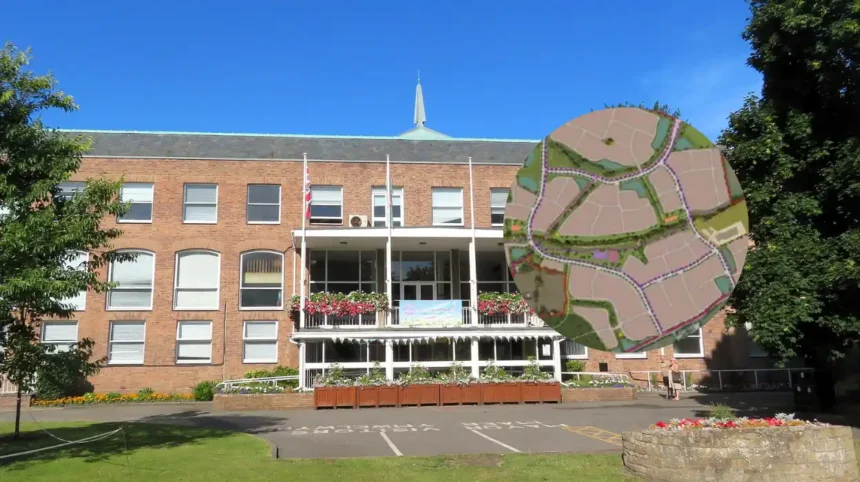
Key Points
- Four days of public hearings have been scheduled to consider proposals for over 1,400 dwellings on Ruthin Road, Wrexham.
- It is believed that the proposed development comprises about 1,450 dwellings.
- The public inquiry has been planned to take place in September.
- The planning matter is going to be managed using the Welsh planning system and Planning Inspectorate.
- The plan has been resubmitted in October 2024.
- The resubmission has taken place at the time when Wrexham County Borough Council was facing legal challenges related to its decision not to adopt the Local Development Plan.
- The public inquiry will help to examine the evidence and representations regarding the proposal before reaching a decision.
- Important matters are likely to include housing need, transport, infrastructure, planning policies and impact of the proposed development.
- The result may decide whether or not the housing project proceeds, changes or is refused.
Wrexham (Wales Times) October 5, 2026 — A four-day inquiry into plans for a major development of approximately 1,450 homes on Ruthin Road is due to take place in September, according to a report by Herald.Wales. The hearing will examine the proposal before the relevant planning decision is made.
- Key Points
- Why has the inquiry been scheduled?
- What will the four-day hearing examine?
- Will the development meet housing needs?
- Can local roads handle additional traffic?
- What infrastructure would be required?
- How would the scheme affect the surrounding area?
- What is the significance of the Local Development Plan dispute?
- Who will be affected by the decision?
- What happens after the inquiry?
- What does the proposal mean for Wrexham’s growth?
- Background to the Wrexham housing proposal
- How could the inquiry affect Wrexham residents?
The inquiry represents the next formal stage in the long-running consideration of the housing scheme. The proposal is significant because of its scale and because it would introduce a substantial number of new homes in one part of uk/local/wrexham/">Wrexham.
The case is being dealt with through the Welsh planning process. Planning and Environment Decisions Wales manages planning casework connected with the development and use of land in the public interest, including planning appeals, local development plans and other development-related decisions.
The inquiry will not, by itself, confirm that the homes will be built. Instead, it will provide a formal setting in which the planning issues surrounding the scheme can be considered. Evidence can be presented, relevant representations can be examined and the case can proceed towards a decision.
Why has the inquiry been scheduled?
The inquiry has been scheduled because the proposed Ruthin Road development requires detailed examination before its planning future can be determined. A scheme of around 1,450 homes is likely to involve questions extending beyond the principle of building new houses.
Those questions may include whether the location is suitable for development, whether the proposal complies with planning policy and whether existing roads, schools, health services and other facilities could accommodate the additional population. The inquiry will provide the mechanism for those matters to be considered in an organised and transparent way.
According to Herald.Wales, the plans were resubmitted in October 2024. The resubmission took place during Wrexham County Borough Council’s High Court battle over its refusal to adopt the Local Development Plan.
That timing is important because a local development plan provides the policy framework used to guide decisions about where development should take place. Disputes over the adoption of such a plan can create uncertainty around the planning context for major applications.
The inquiry will therefore be watched closely by the council, the applicants, local residents and other parties with an interest in Wrexham’s future growth.
What will the four-day hearing examine?
The precise agenda and evidence will be determined through the formal inquiry process. However, the scale of the proposal means several planning matters are likely to be central to the discussion.
Will the development meet housing needs?
The proposal would provide about 1,450 homes, making it one of the larger housing schemes considered in the Wrexham area. The inquiry is expected to consider whether the homes would help meet identified housing requirements and whether the number, type and timing of the properties are appropriate.
The assessment may also consider the balance between market housing and any affordable housing provision. The final mix of homes, together with delivery arrangements, can be important when authorities assess whether a proposal would make a meaningful contribution to local housing needs.
Can local roads handle additional traffic?
A development of this size would be expected to generate additional journeys. The inquiry may therefore consider the effect on Ruthin Road and the wider local road network.
Evidence could address traffic levels, junction capacity, pedestrian safety, cycling connections and access to public transport. The availability of suitable routes for walking and cycling may also be relevant when assessing whether future residents would be able to reach nearby services without relying entirely on private cars.
What infrastructure would be required?
Major housing developments normally raise questions about infrastructure. The inquiry may consider whether the proposal would require improvements or financial contributions linked to education, healthcare, drainage, open space, transport and community facilities.
The eventual planning decision could include conditions or legal agreements requiring particular measures to be delivered. Such arrangements are designed to ensure that the effects of development are addressed as far as possible through the planning process.
How would the scheme affect the surrounding area?
The examination is also likely to consider the site’s relationship with nearby homes, agricultural land, public rights of way and the wider landscape. Matters such as noise, air quality, ecology, drainage and the appearance of the development may form part of the evidence.
The proposal’s effect would not be limited to the construction period. If approved and built, the scheme would change the pattern of land use around Ruthin Road and could affect how residents travel, access services and use open space.
What is the significance of the Local Development Plan dispute?
The reference to Wrexham County Borough Council’s High Court battle provides important context for the resubmitted application. The Local Development Plan is intended to establish a strategic approach to land use and development within the county borough.
A dispute over whether the plan should be adopted can affect the policy background against which planning proposals are assessed. It can also raise questions about the status of planned development sites, housing allocations and the council’s wider approach to growth.
Herald.Wales reported that the plans were resubmitted in October 2024 while that legal dispute was taking place. The inquiry will consider the proposal in the context of the planning evidence and policy position that applies to the case.
The High Court proceedings and the planning inquiry are separate processes, although the circumstances surrounding the council’s development plan may be relevant to the wider planning debate. The inquiry’s role will be to examine the development proposal and the evidence presented in relation to it.
Who will be affected by the decision?
The decision will be relevant to existing residents living near the proposed site, people seeking homes in the Wrexham area, local councillors, infrastructure providers and the applicant behind the scheme.
For nearby communities, the main concerns are likely to involve traffic, construction activity, pressure on services, drainage, the appearance of the development and the loss or change of open land. Residents may also want clarity about the timing of construction and whether infrastructure would be delivered before or alongside new homes.
For people looking for housing, the proposal could represent a sizeable addition to the local supply if it is approved and ultimately built. However, planning approval would not mean that all homes would appear immediately. Large schemes are generally delivered in phases, subject to detailed approvals, market conditions and the provision of supporting infrastructure.
For Wrexham County Borough Council, the inquiry is an opportunity for its planning case to be considered alongside the evidence submitted by the applicant and other parties. The council’s position and any representations from residents or organisations will form part of the formal examination where accepted by the inquiry process.
What happens after the inquiry?
A four-day inquiry is a stage in the planning process rather than the final construction approval. Once the hearing has concluded, the inspector or relevant decision-making authority will consider the evidence and representations before reaching or recommending a decision, depending on the procedure applying to the case.
The final outcome could allow the development to proceed, approve it subject to conditions and obligations, require changes, or refuse permission. The decision may also be subject to further legal challenge if a party believes that the correct legal process was not followed.
Planning and Environment Decisions Wales manages casework connected with land development in the public interest. Its published services include planning appeals and applications, local development plans and development of national significance.
The precise timetable for a decision will depend on the inquiry process and the amount of evidence that must be considered. Until the decision is issued, the proposal remains a plan under examination rather than an approved housing development.
What does the proposal mean for Wrexham’s growth?
The scheme could become an important part of the debate about how Wrexham accommodates population growth and future housing demand. A development of approximately 1,450 homes would be large enough to affect planning decisions beyond the immediate site.
Supporters may argue that a major scheme can provide much-needed housing and help support investment in local facilities. Opponents may focus on the pressure that additional residents could place on roads, schools, health services and the environment.
The inquiry is intended to test those arguments against planning evidence rather than settle the matter through political claims. Its importance will therefore lie in the evidence presented, the policy framework applied and the conditions that could be attached to any approval.
The public hearing also provides a formal opportunity for planning concerns to be recorded and assessed. That is particularly relevant where a proposal has been resubmitted during a period of uncertainty over the local development plan.
Background to the Wrexham housing proposal
The proposed development concerns plans for more than 1,400 homes on Ruthin Road, with the scheme described as involving approximately 1,450 properties. Herald.Wales reported that the plans were resubmitted in October 2024, during Wrexham County Borough Council’s High Court battle over its refusal to adopt the Local Development Plan.
The resubmission forms part of the proposal’s planning history and helps explain why the forthcoming inquiry is being treated as a significant event. The Local Development Plan dispute provides the wider policy context, while the inquiry will focus on the evidence and planning merits of the housing scheme itself.
The Welsh planning system includes formal procedures for examining planning applications, appeals and development-plan matters. Planning and Environment Decisions Wales manages casework relating to the development and use of land in the public interest.
The inquiry scheduled for September will allow the proposal to move through the next stage of scrutiny. It will not predetermine the result, and the development cannot be treated as confirmed until the relevant planning decision has been issued.
How could the inquiry affect Wrexham residents?
The Wrexham development inquiry could affect residents by determining whether a major housing scheme on Ruthin Road moves closer to construction. If permission is granted, the area could eventually see new homes, additional traffic and demand for local services, although delivery would depend on future approvals and phased construction.
If permission is refused, the proposed change to the area may not proceed in its current form. The applicant could potentially revise the scheme or pursue another planning route, subject to the relevant rules.
For existing residents, the most immediate effect is likely to be continued uncertainty until the inquiry and decision process are complete. For prospective residents, the proposal could increase future housing availability, but it should not be treated as a guaranteed source of homes until approval and delivery are confirmed.
The outcome will depend on the planning evidence, the council’s position, representations from interested parties and the decision reached after the four-day inquiry.