

Key Points
- Abdul Quhhar, 21, of Newport, established a drugs operation from the Queen’s Hotel in Newport
- Police discovered the operation after searching two properties linked to him on Amber Close and Stow Hill
- Court heard he sold Class B and C drugs including cannabis, nitrous oxide and cocaine to fund his own addiction
- Messages on his phone showed he sent “text bombs” promoting drug sales and threatening debtors
- Items seized included nitrous oxide containers, scales with white powder residue, burner phones and £160 cash
- Quhhar pleaded guilty to involvement in supplying nitrous oxide, cannabis and cocaine, plus possession with intent to supply
- He received a three-year suspended sentence with 150 hours community service and rehabilitation requirements
- Recorder Greg Bull KC told him “the choice is yours now” regarding returning to prison
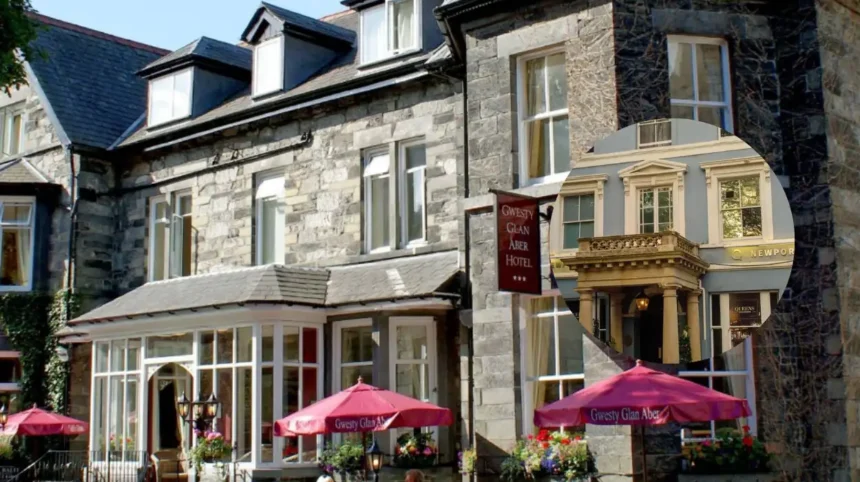
Newport Crime (Wales Times) July 30, 2026 – A 21-year-old man from uk/local/newport/">Newport has been sentenced after establishing a criminal drugs operation from a hotel room in the city centre. Abdul Quhhar, of Amber Close, was found to have been running the operation from the Queen’s Hotel after police carried out searches on two properties already linked to him. The case was heard at Cardiff Crown Court, convening at Cardiff Magistrates’ Court, with sentencing delivered on Thursday morning by Recorder Greg Bull KC.
- Key Points
- How Did Police Uncover the Newport Hotel Drugs Operation?
- What Evidence Was Found Against Abdul Quhhar?
- What Did the Court Hear About Quhhar’s Motives?
- What Sentence Did Abdul Quhhar Receive?
- Background of the Newport Hotel Drug Development
- Prediction: How This Development Can Affect Newport Residents
- Background of the Newport Hotel Drug Development
- Prediction: How This Development Can Affect Newport Residents
How Did Police Uncover the Newport Hotel Drugs Operation?
As reported by WalesOnline, prosecutor Anisha Rai informed the court that authorities uncovered messages tied to a phone number attributed to Quhhar during an investigation into a drug line. The communications indicated involvement in the distribution of Class B and C substances, specifically cannabis and nitrous oxide. The messages contained requests for illicit drugs, supply arrangements, and discussions regarding banking information. Ms. Rai stated that these texts were indicative of drug distribution for profit.
Quhhar was initially detained at an address on Amber Close in Newport, where a search yielded a mobile phone and a bag containing plant material. On December 5, officers stopped Quhhar in the Well area of Newport after observing suspicious behaviour and seeing him fleeing from them. Upon searching him, officers discovered a small quantity of cocaine.
What Evidence Was Found Against Abdul Quhhar?
His phone revealed multiple messages concerning the distribution of cocaine and nitrous oxide. Ms. Rai noted that he had sent “text bombs” to numerous individuals promoting drug sales and threatening severe consequences for those who failed to repay him. This evidence formed a crucial part of the prosecution case regarding his involvement in supplying controlled substances.
Authorities subsequently searched two properties associated with Quhhar: one on Amber Close and another flat in Stow Hill. During the flat search, they recovered £160 in cash, a top-up EE SIM card, a Swarovski box containing five rings, and four large containers of nitrous oxide. No significant items were found at the second location.
Quhhar was arrested on May 28 while attending a different court proceeding, where law enforcement discovered he had been residing at the Queen’s Hotel. A search of his hotel room uncovered several nitrous oxide bottles, a burner phone, white powder, scales with white powder residue, and what was believed to be cannabis. These items provided further evidence of the criminal operation being run from the hotel premises.
What Did the Court Hear About Quhhar’s Motives?
The court heard that Abdul Quhhar had started selling drugs to fuel his own drug habit. Defense attorney Darren Bishop stated that Quhhar had utilized his time in custody productively and was now free from controlled substances. He characterized Quhhar as a young individual with a minimal criminal history who had pleaded guilty at the earliest opportunity.
In a letter read to the judge, Quhhar expressed how he resorted to drugs as a means of coping with personal struggles. He admitted that his drug use led him into debt, prompting him to make what he called “the wrong decision” to sell drugs to repay his obligations. He stated, “I recognize this was very wrong and I sincerely regret my choices and the harm they may have caused. I am now drug-free and committed to remaining that way.”
What Sentence Did Abdul Quhhar Receive?
Quhhar pleaded guilty to involvement in the distribution of nitrous oxide, cannabis and cocaine as well as possession with intent to supply nitrous oxide and cocaine. The court noted that Quhhar had one prior conviction for possession of nitrous oxide.
During the sentencing, Recorder Greg Bull KC remarked, “You acted in a relatively significant manner for someone of your age. I am quite convinced that you are no fool.” Quhhar received a three-year suspended prison sentence and was mandated to complete 15 rehabilitation sessions, a six-month rehabilitation program, and perform 150 hours of community service. Additionally, he is required to pay a £187 court surcharge within six months. Recorder Bull concluded,
“The choice is yours now; if you wish to return to prison, feel free.”
Background of the Newport Hotel Drug Development
This case represents part of a broader pattern of drug-related criminal activity in Newport that has been targeted by Gwent Police in recent years. The use of hotel rooms as bases for drug operations has been documented in previous cases in the region, including an incident where an organised crime group concealed £135,000 worth of Class A narcotics in a hotel. In that case, Ihtesham Ali Hassan, who managed the Box Hotel in Newport, became embroiled in a drug conspiracy. The current case involving Quhhar demonstrates how individuals continue to exploit temporary accommodation premises for criminal enterprises, though this operation was significantly smaller in scale than organised crime syndicates previously dismantled in the area.
Prediction: How This Development Can Affect Newport Residents
This sentencing is likely to have several implications for the Newport community and similar urban areas across Wales. For local residents, the successful prosecution may provide reassurance that drug operations are being actively pursued by law enforcement, even when conducted from seemingly legitimate premises such as hotels. The suspended sentence with rehabilitation requirements reflects the court’s recognition of Quhhar’s age and his stated commitment to addressing his addiction, which may influence how similar cases involving young offenders with substance dependency issues are approached in future proceedings.
For hotel operators in Newport, this case may prompt increased vigilance regarding guest activities and potential cooperation with police on suspicious behaviour. The revelation that a hotel room was used as a base for drug distribution could lead to enhanced screening procedures or staff training on identifying signs of criminal activity. For young people in the area struggling with addiction, the case highlights the cycle whereby personal drug use can lead to criminal involvement to fund habits, with serious legal consequences including imprisonment. The rehabilitation-focused sentence may encourage others in similar situations to seek help before becoming entangled in criminal networks.
Background of the Newport Hotel Drug Development
This case represents part of a broader pattern of drug-related criminal activity in Newport that has been targeted by Gwent Police in recent years. The use of hotel rooms as bases for drug operations has been documented in previous cases in the region, including an incident where an organised crime group concealed £135,000 worth of Class A narcotics in a hotel. In that case, Ihtesham Ali Hassan, who managed the Box Hotel in Newport, became embroiled in a drug conspiracy. The current case involving Quhhar demonstrates how individuals continue to exploit temporary accommodation premises for criminal enterprises, though this operation was significantly smaller in scale than organised crime syndicates previously dismantled in the area.
Prediction: How This Development Can Affect Newport Residents
This sentencing is likely to have several implications for the Newport community and similar urban areas across Wales. For local residents, the successful prosecution may provide reassurance that drug operations are being actively pursued by law enforcement, even when conducted from seemingly legitimate premises such as hotels. The suspended sentence with rehabilitation requirements reflects the court’s recognition of Quhhar’s age and his stated commitment to addressing his addiction, which may influence how similar cases involving young offenders with substance dependency issues are approached in future proceedings.
For hotel operators in Newport, this case may prompt increased vigilance regarding guest activities and potential cooperation with police on suspicious behaviour. The revelation that a hotel room was used as a base for drug distribution could lead to enhanced screening procedures or staff training on identifying signs of criminal activity. For young people in the area struggling with addiction, the case highlights the cycle whereby personal drug use can lead to criminal involvement to fund habits, with serious legal consequences including imprisonment. The rehabilitation-focused sentence may encourage others in similar situations to seek help before becoming entangled in criminal networks.