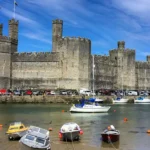
Early medieval Wales formed through the emergence of independent Celtic kingdoms following the departure of Roman administration in the fifth century. Local chieftains and warlords consolidated territorial control across rugged landscapes to establish distinct tribal regions and political units. These nascent realms included Gwynedd in the northwest, Powys in the east, and Dyfed in the southwest. Each territory operated under indigenous legal frameworks known as the Laws of Hywel Dda, which regulated land inheritance, social status, and judicial punishments. Royal courts functioned as mobile administrative centers where kings maintained loyalty through gift exchange, military protection, and feasting rituals. Monarchs derived legitimacy from ancestral descent lines that connected ruling houses to mythical heroes and early Christian saints.
- What role did the Princes of Gwynedd play in unifying medieval Wales?
- How did Edwardian conquest transform the governance and society of Wales?
- What cultural and literary traditions preserved Celtic identity in royal Wales?
- How does modern tourism and historical heritage shape contemporary Welsh identity?
- Frequently Asked Questions
Regional rulers continuously competed for the title of Prince of Wales, a position denoting nominal supremacy over lesser chieftains. Dynastic marriages served as strategic diplomatic tools to secure temporary alliances against external incursions from Anglo-Saxon kingdoms. Geographic barriers such as deep river valleys and mountainous terrain protected these internal political structures from complete foreign domination for centuries. Ecclesiastical networks further reinforced royal authority by anointing monarchs and embedding Christian ideology within tribal governance systems.
Political fragmentation remained a persistent characteristic of early Welsh society due to partible inheritance customs practised across all royal households. Under this traditional legal system, a deceased king divided his lands equally among all legitimate and illegitimate sons. This practice triggered destructive succession civil wars that weakened collective defense capabilities against expanding Anglo-Norman forces. The Kingdom of Gwynedd eventually achieved regional hegemony during the twelfth century under visionary rulers like Owain Gwynedd and Llywelyn the Great. These powerful monarchs centralized administrative functions, built stone fortresses, and adopted the title Prince of Wales to project unified sovereignty.
They negotiated on equal diplomatic terms with English monarchs while managing complex internal feudal obligations demanded by regional lords. Economic stability relied heavily on upland pastoral farming, cattle trading, and coastal commerce with Ireland and continental Europe. Monastic foundations established by the Cistercian and Celtic churches acted as major landowners and centers of literacy within the royal territories. The ultimate collapse of these native dynasties occurred during the late thirteenth century following military campaigns launched by King Edward the First. Subsequent legislation permanently altered the political landscape by dismantling traditional Welsh legal structures and integrating the region into English administration.
What role did the Princes of Gwynedd play in unifying medieval Wales?
The House of Gwynedd exerted decisive influence over Welsh political unification by leveraging strategic geography and military innovation. Based in the rugged mountains of Snowdonia, Gwynedd possessed natural defensive advantages that repelled numerous Anglo-Norman invasions. Rulers such as Llywelyn ab Iorwerth, known as Llywelyn the Great, consolidated power by subduing rival princes through military force and diplomacy. He established formal treaties with English barons and secured recognition of his superior authority across multiple Welsh territories. His grandson, Llywelyn ap Gruffudd, further formalized this political cohesion by assuming the title Prince of Wales in the Treaty of Montgomery.
This historic agreement acknowledged his sovereignty over other regional lords and established tributary obligations for subordinate rulers. Administrative centralization advanced significantly as royal officials collected taxes, administered justice, and managed military conscription from fixed administrative hubs. Military architecture evolved rapidly with the construction of sophisticated stone castles such as Dolwyddelan and Bere to secure strategic mountain passes. These defensive structures projected royal power and protected vital supply routes connecting upland pastures with coastal trading ports. Economic prosperity flourished through wool production, timber harvesting, and maritime trade routes linking Welsh harbors with Gascony and Bristol. Despite these achievements, tensions with the English Crown escalated as royal ambitions challenged Plantagenet authority on the island.
The eventual decline of Gwynedd hegemony resulted from military exhaustion, economic blockades, and fatal dynastic miscalculations during the Edwardian wars. King Edward the First deployed overwhelming financial and military resources to crush the sovereignty of Llywelyn ap Gruffudd between the years twelve seventy-seven and twelve eighty-two. The construction of a massive ring of concentric stone fortresses across North Wales permanently shattered native political autonomy. Castles such as Conwy, Caernarfon, Harlech, and Beaumaris served as permanent garrisons and symbols of alien imperial domination.
Following the death of Llywelyn ap Gruffudd and the execution of his brother Dafydd, native royal governance was formally abolished. The Statute of Rhuddlan enacted in twelve eighty-four replaced traditional Welsh laws with English common law and divided the region into shires. Royal authority was symbolically transferred to the English royal family when King Edward the First created his newborn son Prince of Wales. This historic title permanently linked the principality to the English Crown while extinguishing independent Celtic dynastic rule. Cultural memory of Gwynedd preeminence persisted through Welsh poetry, historical chronicles, and romanticized folklore passed down through generations.
How did Edwardian conquest transform the governance and society of Wales?
The English conquest of Wales under King Edward the First fundamentally restructured regional administration, land tenure, and social hierarchies. The Statute of Rhuddlan enacted in twelve eighty-four dismantled native legal codes and imposed English royal governance models. Traditional Welsh legal customs regarding land division and criminal compensation were systematically replaced by English common law jurisprudence. The conquered territories were reorganized into administrative counties overseen by royal sheriffs, justices, and coroners who answered directly to Westminster. Local populations experienced heavy taxation, forced labor service for uk/local/swansea/castle/">castle construction, and strict restrictions on bearing arms in public.

English settlers flooded into newly established walled boroughs, creating distinct cultural enclaves separated from native rural communities. Native Welsh elites faced severe disenfranchisement, though some families retained minor administrative roles by submitting to royal authority. The Church in Wales was integrated more closely with Canterbury, diminishing the independence of traditional monastic and clerical institutions. Economic life shifted toward serving English military logistical needs and supplying agricultural surplus to garrison towns. These systemic changes generated widespread resentment that culminated in numerous localized rebellions against alien colonial administration.
Resistance to English rule persisted through sporadic uprisings that challenged administrative control throughout the fourteenth and fifteenth centuries. The most significant rebellion was led by Owain Glyndwr beginning in the year fourteen hundred, seeking to restore native Welsh independence. Glyndwr established a functioning independent parliament, forged foreign alliances with France, and captured strategic English strongholds across the region. Although his rebellion ultimately failed due to financial exhaustion and superior English resources, it demonstrated deep-seated resistance to assimilation.
The aftermath of the Glyndwr rising prompted severe penal laws that prohibited Welsh citizens from holding public office or purchasing urban property. Gradual integration eventually resumed during the Tudor dynasty, whose founder Henry Tudor originated from Welsh nobility. The Laws in Wales Acts passed between fifteen thirty-five and fifteen forty-two formally incorporated Wales into the English administrative framework. These Acts abolished remaining palatine jurisdictions, introduced parliamentary representation for Welsh shires, and mandated English language usage in courts. This legislative union completed the transition from a conquered frontier territory into an integral administrative component of the British state.
What cultural and literary traditions preserved Celtic identity in royal Wales?
Native cultural traditions survived centuries of political subjugation primarily through the dedicated efforts of professional poets, musicians, and scribes. The bardic order functioned as the official cultural memory bank of royal courts, preserving genealogies and heroic epics. Poets known as the Poets of the Princes composed elaborate panegyrics praising military victories, divine right, and ancestral lineages of rulers. These literary works were transmitted orally before being compiled into manuscript collections such as the Black Book of Carmarthen and the Red Book of Hergest. Musical performance played a central role in courtly life, utilizing traditional instruments like the harp and crwth to accompany epic recitations.
Religious scriptoria maintained literacy in the Welsh language by translating theological texts and recording historical chronicles of regional kingdoms. The Mabinogion, a collection of early prose tales, preserved ancient Celtic mythology, folklore, and Arthurian legends deeply embedded in the landscape. These stories maintained a distinct cultural identity that transcended shifting political boundaries and resisted total cultural assimilation. Patronage from native nobility sustained these artistic expressions until the collapse of the independent princely courts in the late thirteenth century.
Following the loss of political sovereignty, the bardic tradition adapted to survive under the patronage of the gentry rather than royal courts. Poets shifted their focus toward elegies, love poetry, and nature descriptions while maintaining strict adherence to complex metrical rules. The eisteddfod, a traditional festival of competitive poetry and music, served as a vital forum for preserving linguistic purity and artistic standards. Despite legislative bans and discouragement from English administrators, the Welsh language remained the primary medium of daily communication.
The translation of the Bible into Welsh by William Morgan in fifteen eighty-eight secured the survival of the written language. This monumental publication standardized Welsh grammar and spelling, ensuring cultural continuity across generations of common citizens and nobility alike. Oral traditions, folk songs, and regional customs continued to reinforce community bonds during periods of economic hardship and social change. The enduring strength of these cultural pillars ensured that Celtic heritage remained a defining characteristic of modern Welsh society.
How does modern tourism and historical heritage shape contemporary Welsh identity?
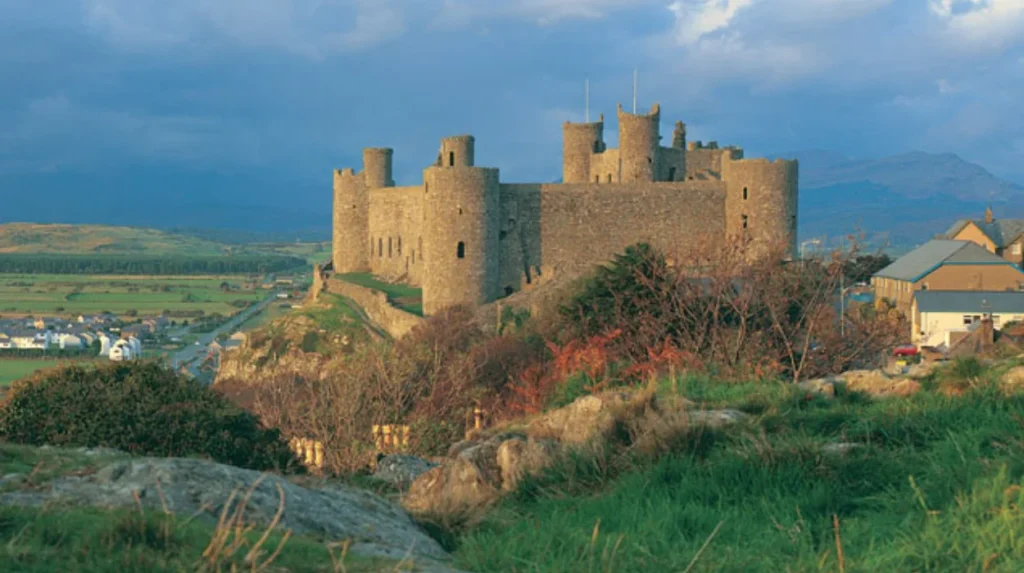
Contemporary heritage management transforms the physical remnants of Celtic and medieval royal Wales into major economic and cultural assets. Historic monuments, including Edwardian castles and native Welsh strongholds, are preserved and managed by public agencies like Cadw. Prominent historical sites such as Conwy Castle, Caernarfon Castle, Harlech Castle, and Beaumaris Castle hold collective designation as World Heritage Sites. These architectural landmarks attract millions of international tourists annually, generating vital revenue for local economies in rural regions.
Visitor centers and educational exhibits interpret the complex history of conflict, political ambition, and cultural exchange between nations. Interpretation strategies emphasize both the engineering brilliance of English fortifications and the resilience of native Welsh resistance movements. Public festivals, medieval reenactments, and cultural celebrations continually engage local communities and visitors with historical traditions. National museums curate extensive collections of medieval artifacts, including royal seals, illuminated manuscripts, and weapons recovered from archaeological excavations. These cultural institutions foster civic pride and enhance global awareness of the distinct historical trajectory experienced by the nation.
Modern national identity successfully balances a rich Celtic heritage with the realities of a post-industrial and diverse contemporary society. Educational curricula incorporate Welsh history, language instruction, and local heritage studies to instill cultural awareness among younger generations. Government initiatives actively promote the usage of the Welsh language in public administration, signage, and digital communication platforms. The devolution of political power through the establishment of the Senedd restored a localized democratic assembly for the first time in centuries.
This modern legislature operates within capital Cardiff, symbolizing a contemporary resurgence of self-governance and national confidence. Cultural diplomacy leverages historical connections to foster international partnerships with other Celtic nations and European regions. Preservation societies, community archives, and digital humanities projects continue to uncover new archaeological evidence regarding medieval royal settlements. Through these combined efforts, the historical legacy of Celtic royal Wales remains a vibrant and evolving foundation for national identity.
Frequently Asked Questions
What defined the political structure of medieval Celtic Wales?
Medieval Celtic Wales operated through a patchwork of independent kingdoms governed by native royal dynasties. These realms adhered to traditional indigenous legal codes and practiced partible inheritance. This system frequently resulted in political fragmentation and dynastic conflicts among rival princes.
Who was the most powerful ruler in medieval Welsh history?
Llywelyn ap Gruffudd is widely recognized as one of the most powerful native rulers in Welsh history. He successfully united disparate territories and secured formal recognition as Prince of Wales. His sovereignty challenged English royal authority before his tragic defeat in twelve eighty-two.
Why did Edward the First build so many castles in Wales?
King Edward the First constructed a massive ring of concentric stone fortresses to permanently subjugate the region. These military strongholds served as permanent garrisons, administrative hubs, and symbols of imperial domination. Castles like Conwy and Caernarfon effectively ended native independence.
How did the Welsh language survive English rule?
The Welsh language survived centuries of legal suppression through oral storytelling, poetic traditions, and religious translation. The publication of the Bible in Welsh standardized grammar and literacy. This linguistic resilience preserved distinct cultural identity despite aggressive political assimilation policies.
What role does the Senedd play in modern Wales today?
The Senedd functions as the devolved national parliament for Wales located in Cardiff. It holds legislative authority over local health, education, and environmental policies. This modern institution represents the restoration of localized self-governance after centuries of external rule.