

Key Points
- Max Dangerfield, aged 20, of Felinfoel, was caught driving his BMW at 141.67 mph on the A48 road between Cross Hands before colliding with a taxi in January 2025.
- The taxi driver incurred seven rib fractures, lung trauma, liver tear, and microbleeds in the brain and was confined to bed for several months.
- Dangerfield overtook the police officers at very high speed and disregarded the blue light before crashing with the taxi.
- He was not insured at the time and received a fine in Llanelli Magistrates’ Court for the offense.
- He pleaded guilty to causing severe injury by dangerous driving in Swansea Crown Court.
- Judge Huw Rees passed a sentence of 28 months in Young Offender Institution and disqualified him from driving for 50 months with an extended retest.
Wales (Wales Times) August 18, 2026 — A teenage BMW driver has been jailed after travelling at more than 140mph and smashing into the back of a taxi on the A48, leaving the cab driver with life-changing injuries. The incident occurred in the early hours of Saturday, January 25, 2025, and sentencing took place at uk/local/swansea/">Swansea Crown Court in August 2026.
- Key Points
- What happened on the A48 near Cross Hands?
- How severe were the taxi driver’s injuries?
- What did the crash data reveal about speed?
- What did the court hear about the driver’s state of mind?
- What sentence was handed down at Swansea Crown Court?
- Background to the Cross Hands crash and sentencing
- Prediction: How this case may affect drivers and road users in west Wales
What happened on the A48 near Cross Hands?
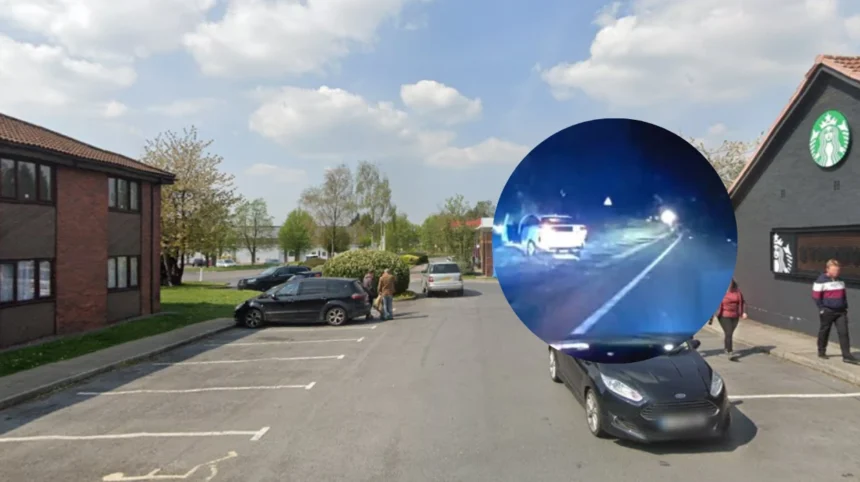
Police were driving on the A48 at 4.23am when a BMW driven by Max Dangerfield overtook them at high speed as they headed towards Cross Hands, prosecutor Caitlin Brazel told Swansea Crown Court. The officers switched on their blue lights, but Dangerfield accelerated away and, despite the patrol car reaching 120mph, they lost sight of him.
A short time later, officers came across the scene of a crash after Dangerfield’s BMW hit a taxi with such force that the cab veered across into the central reservation and then back to the nearside verge. The fire service was called to help free the taxi driver, who was stuck in the car, and he was taken by ambulance to University Hospital of Wales.
How severe were the taxi driver’s injuries?
Ms Brazel said the taxi driver suffered seven fractured ribs, bruising to his lungs, a grade two laceration to his liver, and six microbleeds on the brain. The two passengers in the taxi, aged 22 and 18 and returning home from a night out, were not seriously injured but were taken to hospital for precautionary checks.
In a statement read out by Ms Brazel, the taxi driver said he was bed-bound for several months after the crash and was unable to work for six months, after which he was only able to return part-time. He added that he now does not work night shifts and still suffered issues associated with the injuries caused by the crash.
What did the crash data reveal about speed?
Crash investigators received a data download from the airbag control unit in the defendant’s car, and this revealed he was travelling at 141.67mph at the time of the crash. Checks also revealed Dangerfield was uninsured at the time, for which he was fined at Llanelli Magistrates’ Court.
As the officers were aiding the victims, another driver arrived on the scene and went to Dangerfield’s car, where the defendant was sat on his phone and appeared to be uninjured.
What did the court hear about the driver’s state of mind?
The court heard Dangerfield was “emotional” on the day of the crash following an argument with a friend, and was driving to the gym in order to work out his frustration.
“He accepts now he was not in any fit mental state to be driving,”
said Megan Williams, appearing for the defendant.
“He takes full responsibility. He hasn’t driven since this incident.”
Ms Williams said there had been a delay in the case coming to court, and Dangerfield now aged 20 had not re-offended since and had no previous convictions prior to the crash. The defendant, of Felinfoel, pleaded guilty to causing serious injury by dangerous driving.
What sentence was handed down at Swansea Crown Court?
“You were driving at an extreme and, in my view, an unbelievable speed,”
said Judge Huw Rees.
“This was an atrocious example of bad driving. You could have killed a number of people. All this is due to your selfish want to drive at an extreme speed of 141mph in an area limited to 70mph.”
He sentenced Dangerfield to two years and four months in a Young Offender Institution, disqualified him from driving for 50 months, and ordered him to pass an extended driving test before regaining his licence.
Background to the Cross Hands crash and sentencing
The A48 at Cross Hands is a dual-carriageway route linking west Wales communities and carries significant night-time traffic, including taxis and private hire vehicles. The crash occurred in the early hours of a Saturday, a period when police patrols often monitor for speeding and antisocial driving. Dangerfield’s decision to accelerate away from officers after they activated blue lights added to the seriousness of the incident, as it demonstrated a refusal to comply with police signals.
The case reached Swansea Crown Court after investigative work by Dyfed-Powys Police and the Crown Prosecution Service, with data from the vehicle’s airbag control unit providing key evidence on speed. The uninsured driving offence was dealt with separately at Llanelli Magistrates’ Court, reflecting the multiple regulatory breaches involved.
Prediction: How this case may affect drivers and road users in west Wales
This development is likely to reinforce deterrence messaging around extreme speeding and fleeing from police in the Cross Hands and wider Carmarthenshire area. For young drivers, the 28-month custodial sentence and 50-month ban signal that courts will treat 140mph-plus incidents as high-harm offences, even where fatalities do not occur. For taxi drivers and night-shift workers, the case may increase awareness of the risks posed by high-speed drivers on dual carriageways and could prompt calls for enhanced enforcement or signage. For local policing, the outcome may support continued use of pursuit protocols and data-led crash investigation to secure convictions in serious injury cases.