

Key Points
- There were six arrests made in the operation called Operation Alchemy which was carried out in a joint effort between various agencies to combat rural crime in Herefordshire and Gloucestershire on 19th August 2026.
- More than £300,000 worth of plant machinery and vehicles were seized in the operation; the items seized included excavators, dumper trucks, a lorry, tractor, and cars.
- One male, 35-year-old William Preston, was charged with handling stolen goods and remanded to Kidderminster Magistrates’ court.
- Charges included suspicion of theft, theft of motor vehicle, fraud by false representation, fraud, and forgery, handling stolen goods, and money laundering.
- Operation Alchemy involved West Mercia Police, Gloucestershire Police, National Construction & Agriculture Theft Team (NCATT), British Transport Police, South West Regional Organised Crime Unit (SWROCU), Organised Immigration Crime Domestic Taskforce (OICDT), Leicestershire Police, Warwickshire Police, Immigration Enforcement, and Environment Agency.
- According to the police, the operation targeted organised criminals operating in the rural community to ensure that the area becomes a “hostile environment” for rural, wildlife and heritage crimes.
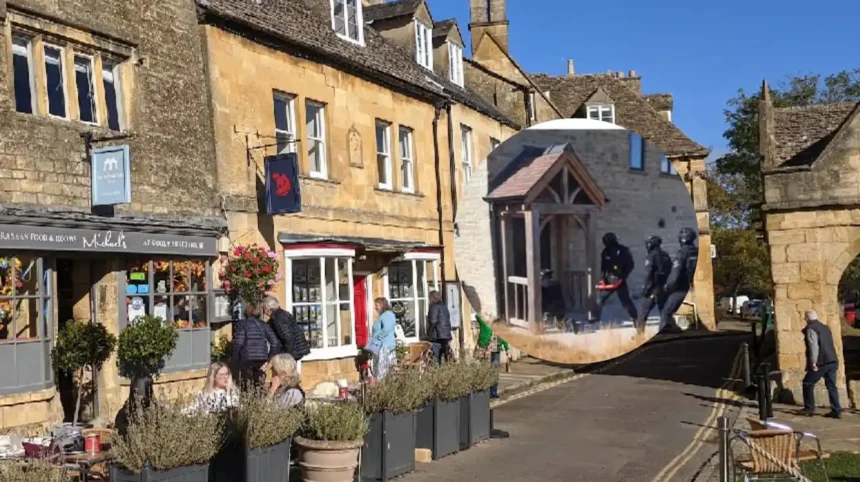
Wales (Wales Times) August 2026 – Six people have been arrested and plant machinery valued at more than £300,000 seized in a coordinated crackdown on organised rural crime across Herefordshire and Gloucestershire, police and partner agencies confirmed. The operation, codenamed Operation Alchemy, saw officers execute six warrants at farm sites and commercial premises on Wednesday, 19 August 2026, recovering suspected stolen equipment including excavators, dumper trucks, a lorry, a tractor and multiple cars, according to statements from West Mercia Police and Gloucestershire Police.
What happened during Operation Alchemy?
As reported by Lizzie Coutts of Hits Radio (Hereford & Worcester), West Mercia Police said Operation Alchemy was a co-ordinated day of action targeting organised criminals who operate in rural communities. Across the sites visited, suspected stolen items valued at more than £300,000 were seized.
In Pendock, Gloucestershire, ten items of suspected stolen plant machinery, including excavators and dumper trucks, were seized; one truck had been reported stolen from uk/local/cardiff/">Cardiff on the same morning, police said. Two men were arrested in Pendock: a man in his 50s on suspicion of theft and a man in his 30s on suspicion of theft of motor vehicle, both released on police bail.
At a site in Redmarley, Gloucestershire, ten items of suspected stolen plant machinery, including excavators and dumper trucks, and one suspected stolen car were recovered, according to police. A suspected stolen tractor and a suspected stolen car were seized from a site in Staunton, Gloucestershire. In Stroud, Gloucestershire, a suspected stolen roller was recovered from a commercial premises. Also in Pendock, four further items of suspected stolen plant machinery and a suspected stolen car were seized.
Who was arrested and what are the charges?
Six people were arrested in total. In addition to the two men arrested in Pendock on suspicion of theft and theft of motor vehicle, a woman in her 50s was arrested on suspicion of fraud by false representation and a man in his 20s on suspicion of fraud and forgery; both were released under investigation, police said.
In Herefordshire, a woman in her 30s was arrested on suspicion of handling stolen goods at an address in Eastnor, Ledbury, and released on police bail. A man in his 30s was arrested on suspicion of money laundering, handling stolen goods and theft at a site in Redmarley, Gloucestershire; he remained in police custody at the time of the initial police statements.
A separate update reported by Tom Feaheny of Hits Radio (Gloucestershire) stated that 35-year-old William Preston, of Wyndbrook Lane, Gloucestershire, has been charged with handling stolen goods, namely a dumper truck to the value of £18,000, and was remanded to appear before Kidderminster Magistrates Court. The same report noted that five others had been arrested and more than £300,000 of stolen plant machinery seized in the crackdown.
Which agencies were involved in the rural crime operation?
The operation was a collective effort between multiple agencies. As outlined in the Hits Radio report, participating bodies included West Mercia Police, the National Construction & Agriculture Theft Team (NCATT), Gloucestershire Police, British Transport Police, the South West Regional Organised Crime Unit (SWROCU), the Organised Immigration Crime Domestic Taskforce (OICDT), Leicestershire Police, Warwickshire Police, Immigration Enforcement and the Environment Agency.
Inspector Billy Keys, from the Rural Crime team, said:
“Yesterday’s strike day targeted organised criminals who operate in our rural communities, and I’m delighted it resulted in six arrests and a large amount of plant machinery and vehicles seized, including some that had been stolen the same morning.”
He added that the outcome reflected a “well-planned and co-ordinated police and multi-agency approach” and that such days of action also disrupt suspected criminal gangs, with evidence gathered to support future investigations.
Inspector Dan Wakeford, of Gloucestershire Police, said:
“Crime can have a huge impact on those living and working in our rural communities. We want to make our whole region a hostile environment for those taking part in rural, wildlife and heritage crime.”
He added that rural crimes are often under-reported and expressed hope that operations like this would help rural communities feel “empowered, recognised and confident in the police”.
Superintendent Andrew Huddleston, Head of NCATT, said:
“Op Alchemy has supported NCATT’s ongoing efforts to tackle organised criminal groups involved in stealing high-value agricultural and construction plant equipment across the UK.”
He added:
“This operation was not just about protecting valuable commercial assets; it was also about confronting organised crime gangs who exploit our rural areas and cause harm to the communities who live there.”
What items were seized and where?
Police recovered a range of high-value plant machinery and vehicles across multiple locations. In Pendock, ten items of suspected stolen plant machinery were seized, including excavators and dumper trucks, with one truck reported stolen from Cardiff earlier that day. At Redmarley, ten further items of suspected stolen plant machinery and one suspected stolen car were recovered, alongside a suspected stolen tractor and a suspected stolen car seized at Staunton. A suspected stolen roller was recovered in Stroud, and four additional items of suspected stolen plant machinery plus a suspected stolen car were seized in Pendock.
Hits Radio (Gloucestershire) reported that excavators, dumper trucks and a lorry were recovered across Gloucestershire and Herefordshire, with total value exceeding £300,000. William Preston was charged in connection with a dumper truck valued at £18,000.
Background to the development
Rural crime, including theft of plant machinery, agricultural equipment, fuel and vehicles, has been a persistent issue in the West Midlands and South West, with organised groups targeting farms and commercial premises. The National Construction & Agriculture Theft Team (NCATT) has led national efforts to tackle organised criminal groups stealing high-value agricultural and construction plant equipment. Multi-agency operations such as Operation Alchemy are designed to combine intelligence, warrants and rapid recovery of stolen goods to disrupt criminal networks and return assets to owners. Police have also highlighted that rural crimes are often under-reported, and have encouraged communities to report incidents to improve detection and prevention.
Prediction: how this development can affect rural communities and businesses
The arrests and seizures are likely to have a deterrent effect on organised groups operating in rural areas, while also reassuring farmers, contractors and rural businesses that stolen equipment can be recovered quickly. For rural communities, the visible multi-agency response may increase confidence in reporting thefts and suspicious activity, potentially improving intelligence flows and future detection rates. For businesses that rely on plant machinery, the operation signals that high-value thefts will be pursued across force boundaries, which could reduce insurance premiums over time if theft frequency falls. However, the presence of organised crime in rural areas means continued vigilance will be required, and further coordinated operations may be needed to sustain disruption to criminal networks.