

Key Points
- Darragh O’Grady, 31, from Ireland, has been charged after a serious incident on the A55 dual carriageway in North Wales on Monday evening.
- The taxi was reported stolen from Holyhead, Anglesey, before police stopped it travelling in the wrong direction between Rhosneigr and Rhostrehwfa.
- O’Grady faces charges of causing serious injury by dangerous driving, dangerous driving, aggravated taking of a vehicle, theft and fraud by false representation.
- A cyclist was hit on London Road in Holyhead before the wrong-way driving and remains in hospital with non-life-threatening injuries.
- O’Grady has been remanded in custody and is due before Caernarfon Magistrates’ Court on Thursday.
- North Wales Police said there is currently no evidence the incident was filmed for social media and urged people not to speculate.
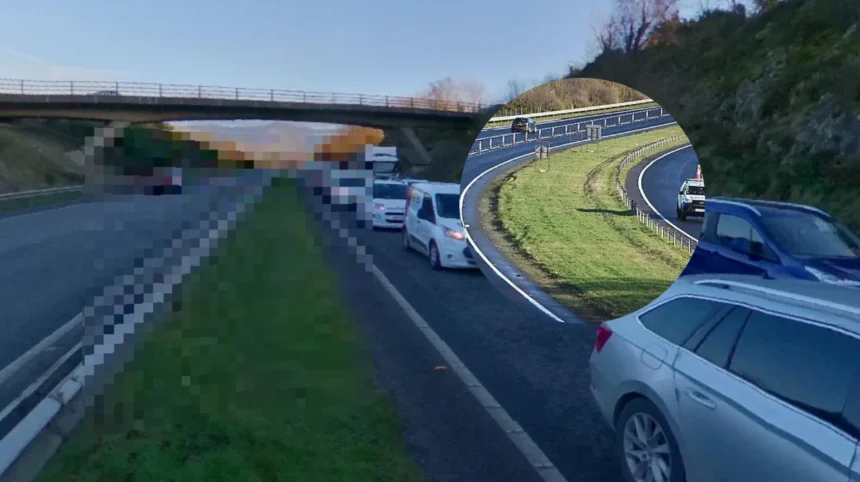
Wales (Wales Times) August 27, 2026 – An Irish man has been charged after North uk/police/">Wales Police stopped a stolen taxi that was being driven the wrong way along the A55 dual carriageway on Monday evening. The vehicle, which had been reported stolen from Holyhead, was intercepted between Rhosneigr and Rhostrehwfa after officers closed the road to bring it to a safe stop, according to a statement from the force.
Darragh O’Grady, 31, of no fixed abode but from Ireland, faces multiple charges including causing serious injury by dangerous driving, dangerous driving, aggravated taking of a vehicle, and other driving offences, North Wales Police confirmed on Thursday. He is additionally charged with theft and fraud by false representation. O’Grady has been remanded in custody and is scheduled to appear at Caernarfon Magistrates’ Court on Thursday.
Sequence of events leading to police intervention
As reported by Eleanor Barlow of the Press Association, via coverage in multiple outlets including The Irish Times, the incident began earlier on Monday when a cyclist was involved in a collision on London Road in Holyhead. The cyclist was taken to hospital with injuries that were not believed to be life-threatening, the force said.
Following that collision, the same vehicle – a taxi reported stolen from Holyhead – entered the A55 westbound carriageway travelling in the wrong direction, North Wales Police said. Officers moved to close the road and safely stopped the car between Rhosneigr and Rhostrehwfa, preventing further danger to other road users, the force added.
Charges brought against Darragh O’Grady
North Wales Police outlined the full list of offences with which O’Grady has been charged. As the force stated on Thursday, he is accused of causing serious injury by dangerous driving and dangerous driving in connection with the collision involving the cyclist and the subsequent wrong-way driving on the A55. He is also charged with aggravated taking of a vehicle and other driving offences, alongside separate counts of theft and fraud by false representation, the police said.
The decision to bring multiple charges reflects the seriousness of the alleged conduct, from the initial taking of the taxi to the dangerous manner in which it was driven and the injury caused to the cyclist, according to the police statement.
Police response and public appeal
A police spokesman addressed speculation around the motive for the wrong-way driving. As reported by The Independent, the spokesman said: “At the current time, there is no evidence to indicate that the incidents on Monday evening were filmed for the purposes of uploading to social media.” The force added: “This continues to be an active investigation and therefore we urge people not to speculate on the details of the incident or the motivations behind it.”
North Wales Police have not released further details about the driver’s movements prior to the incident or the circumstances of the theft, citing the ongoing nature of the investigation.
Wider context of wrong-way driving incidents
The incident in North Wales comes days after a separate wrong-way crash on the A66 in Teesside, in which seven people, including two police officers, were killed, as noted in coverage by The Independent. That crash has prompted wider discussion about dangerous driving and the risks posed by vehicles travelling against the flow of traffic on dual carriageways and motorways.
In Ireland, concerns have also been raised about social media trends linked to wrong-way driving. As reported by IBTimes UK, recent fatal crashes on the A66 and M9 motorways have sparked debate over online content that appears to glorify dangerous driving, with authorities urging platforms to remove such material. The AA warned last year that it had seen an increase in young motorists driving the wrong way on motorways and posting their actions online, with 31 drivers charged for such offences in a 30-week period, according to the Mirror.
Background of the development
The charges against Darragh O’Grady follow a pattern of serious motoring offences being pursued by police in both Wales and Ireland, particularly where stolen vehicles are involved and public safety is put at significant risk. The A55 is a major dual carriageway linking Holyhead with the rest of North Wales and sees heavy traffic, making wrong-way driving especially hazardous, as local reporting by Denbighshire Free Press and Rhyl Journal highlighted. The decision to charge O’Grady with causing serious injury by dangerous driving reflects the harm already caused to the cyclist, while the aggravated vehicle-taking and theft charges relate to the unlawful removal and use of the taxi, according to police statements.
The inclusion of fraud by false representation suggests investigators believe there may have been deception involved in how the vehicle was obtained or used, though details have not been disclosed due to the active investigation, as North Wales Police indicated. The case is being closely watched given the broader national conversation about dangerous driving and the potential influence of social media on risky behaviour behind the wheel, as noted in multiple reports.
Prediction: How this development can affect road users and communities
This development is likely to heighten awareness among road users, local communities, and policymakers about the dangers posed by stolen vehicles and wrong-way driving on high-speed roads. For drivers on the A55 and similar dual carriageways, the incident may reinforce the need for vigilance and support for measures such as improved signage, barriers, and rapid police response protocols to prevent and mitigate wrong-way incursions. For communities in Holyhead and across North Wales, the case could spur calls for stronger enforcement against vehicle theft and more robust sentencing for dangerous driving offences that endanger the public.
In a wider sense, the charges and the surrounding media coverage may influence public debate on how to tackle dangerous driving trends, including any link to social media challenges. If courts impose significant penalties on O’Grady, it could serve as a deterrent to others considering similar actions, while also prompting further review by transport authorities and police forces on both sides of the Irish Sea about prevention strategies and public education campaigns targeting high-risk driving behaviour.