
Key Points
- A licensed tattoo studio will be opening up within the Independent Living Centre located in Semington, Wiltshire, which usually offers advice and equipment assessment to elderly and disabled individuals.
- Wiltshire Council has given full permission for planning (PL/2026/03460) on 9th September 2026 for change of use from Class E to sui generis, allowing the opening of a tattoo studio within an unused unit in the center.
- The Independent Living Centre in St George’s Road, Semington (BA14 6JQ) offers free and impartial occupational therapy assessment and mobility equipment advice to disabled individuals and elderly residents of Wiltshire, Bath and North East Somerset.
- The project has attracted media interest due to the odd combination of a tattooing business being located in a centre for independent living advice.
- The planning application describes the project as the ‘conversion of an unused unit’ in the centre and not construction, with works having to commence within three years or else permission expires.
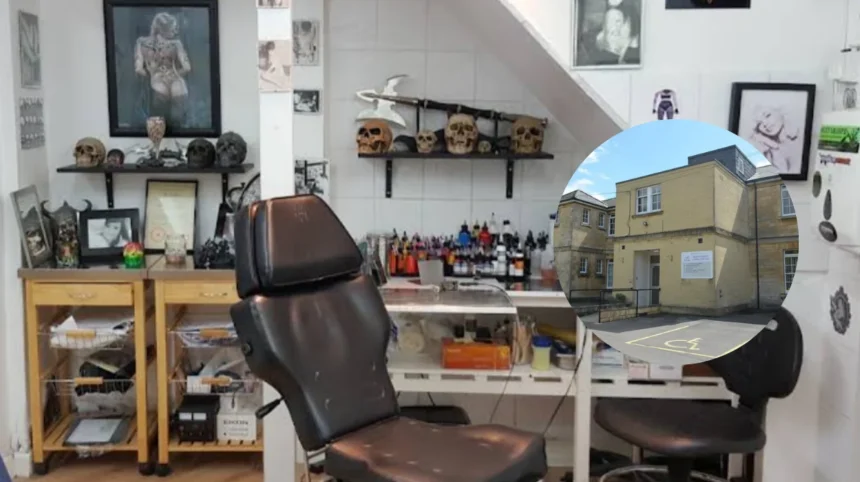
Trowbridge (Wales Times) September 24, 2026 – A facility that gives older and disabled people advice on how to live independently will soon be offering a new service – tattoos, after Wiltshire Council approved plans for a licensed tattoo studio inside the Independent Living Centre in Semington.
- Key Points
- What is happening at the Independent Living Centre in Semington?
- Why is a tattoo studio opening in a mobility advice centre?
- How was the tattoo studio planning application decided?
- What services does the Independent Living Centre currently provide?
- How does this fit with other tattoo studio developments in Wiltshire?
- Background of the particular development
- Prediction: how this development can affect older and disabled people in Wiltshire
What is happening at the Independent Living Centre in Semington?
Wiltshire Council has granted full planning permission for a change of use at the Independent Living Centre on St George’s Road, Semington, allowing an unused unit within the building to operate as a licensed tattoo studio. The decision, issued on 9 September 2026 under reference PL/2026/03460, approves a shift from Class E use to sui generis for the tattoo studio, subject to standard conditions that require work to begin within three years or the permission will lapse.
The proposal, as recorded in the council’s planning file, is described as “change of use, from CLASS E to Sui Generis, from an unused unit to a licensed tattoo studio”. The application was received and validated on 1 June 2026 and determined in the Melksham Without West & Rural ED ward, within Semington civil parish.
Local public notices list the Semington application alongside other planning decisions in the area, highlighting the tattoo studio as a notable change of use at the Independent Living Centre site.
Why is a tattoo studio opening in a mobility advice centre?
The Independent Living Centre is best known locally as an assessment and advice hub for disabled people and older residents, offering access to mobility equipment, occupational therapy input and guidance on living independently. According to Wiltshire Together, the centre provides “free and impartial Occupational Therapy Assessments to people of any age with disabilities living in Wiltshire, Bath, and North East Somerset” and has operated for around 35 years from the ground floor of a former hospital building.
NHS service directory entries describe the centre as operating by appointment only, with opening hours typically Monday to Thursday 9am–4:30pm and Friday 9am–4pm, and note that all visits must be booked in advance. The site is routinely used by individuals referred by health and social care professionals, as well as self-referrals, to trial equipment and receive advice on adaptations for daily living.
Against that background, the approval of a tattoo studio within the same building represents an unusual diversification of services at a location primarily associated with mobility and independent-living support. Local news coverage has framed the development as a tattoo service appearing at an “unusual location” given the centre’s established role advising older and disabled people on how to live independently.
How was the tattoo studio planning application decided?
The planning application for the tattoo studio was submitted in June 2026 and progressed through Wiltshire Council’s standard full-application process. The file shows the application was validated on 1 June 2026, added to the public planning index in August 2026, and formally decided on 9 September 2026 with a status of “Approve with Conditions”.
Under the full-application procedure, the council considered siting, design, access and landscaping as fixed elements of the proposal, assessing the change of use from Class E to sui generis in the context of local planning policy and the existing use of the Independent Living Centre. The decision notice confirms that permission is granted subject to any conditions set out by the council, and that work must normally commence within three years or the permission will lapse.
Public notice listings for Wiltshire planning decisions include the Semington tattoo studio application among other recent grants and pending determinations across the county, indicating it has been treated as a standard full planning application rather than a major or controversial development.
What services does the Independent Living Centre currently provide?
The Independent Living Centre in Semington functions as an assessment and information hub for disabled people and older residents seeking support to live more independently. Wiltshire Together describes the centre as offering “free and impartial advice” through an occupational therapist and a wide range of mobility and daily-living equipment available for trial on site.
Turn2Us’ advice finder characterises the service as an “assessment centre with an Occupational Therapist and equipment designed to make life easier for anyone who has difficulty with everyday activities – cooking, bathing, climbing stairs etc”. The centre is open to people of any age with a disability living in Wiltshire, Bath and North East Somerset, and also provides information and training for professionals and organisations interested in disability-related support.
NHS records list the centre at St George’s Road, Semington, BA14 6JQ, with access notes indicating that all visits must be booked in advance and that referrals can be made either by individuals themselves or by professionals on their behalf. The site’s long-standing role as an independent-living resource underpins its local profile as a place associated primarily with mobility advice rather than commercial leisure or body-art services.
How does this fit with other tattoo studio developments in Wiltshire?
Wiltshire has a number of established tattoo studios operating in towns such as Chippenham, uk/local/cardiff/trowbridge/">Trowbridge, Salisbury and Swindon, with several businesses advertising custom tattoos, piercings and laser removal services. Recent local reporting has also highlighted concerns among some Wiltshire tattoo artists about “bottomless brunch” style micro-tattoo events, which they argue have led to more clients seeking corrections or cover-ups.
Planning records show other recent changes of use and new studio permissions across the county, including a 2013 case in Chippenham where a tattoo studio was approved in a residential garage setting despite initial town council objections. The Semington application adds to this pattern by introducing a licensed tattoo operation within a building already occupied by a specialist disability and mobility service, rather than in a conventional high-street or commercial unit.
Wiltshire Council maintains regulatory oversight of tattooing and skin-piercing activities, requiring practitioners to be registered and providing guidance on how members of the public can choose a safe, registered studio. Any tattoo studio operating at the Independent Living Centre will be expected to comply with these registration and hygiene requirements in addition to planning conditions.
Background of the particular development
The tattoo studio proposal emerged through a standard planning process after an unused unit within the Independent Living Centre was identified for conversion. The application sought to change the use of that unit from Class E (commercial, business and service uses) to sui generis, the classification typically applied to tattoo studios and similar premises that do not fit neatly into other use classes.
Wiltshire Council’s decision to approve the application on 9 September 2026 followed validation in June and a period of consultation and officer assessment, resulting in a grant of full planning permission with conditions. The approved plans relate specifically to the tattoo studio use within the existing building footprint at St George’s Road, rather than any expansion of the centre’s overall site.
Public notice summaries and planning indexes record the decision as part of the wider set of Wiltshire planning outcomes in late summer 2026, noting the Semington tattoo studio alongside other residential, commercial and community-related permissions. The development therefore represents a formal, council-approved diversification of use within a long-established independent-living facility.
Prediction: how this development can affect older and disabled people in Wiltshire
For older and disabled people who already use the Independent Living Centre, the addition of a tattoo studio is likely to be experienced primarily as a change in the mix of activities on site rather than a direct alteration to core mobility and equipment services. Because the tattoo studio occupies an unused unit and operates under separate planning consent, day-to-day occupational therapy assessments, equipment trials and advice sessions can continue alongside the new commercial use, provided access and scheduling are managed to avoid conflicts.
Some service users may benefit indirectly if the tattoo studio increases footfall and helps sustain the overall viability of the centre building, potentially supporting the long-term availability of independent-living services at the Semington site. At the same time, the presence of a body-art business in a setting associated with health, disability and ageing could prompt discussions about how different types of use coexist, particularly around issues such as accessibility, privacy and the perception of the centre among new and existing clients.
If the tattoo studio attracts a different demographic of visitors, there may be opportunities for greater community use of the site, but also a need for clear signage, appointment systems and operational boundaries so that older and disabled people continue to experience the centre as a calm, accessible environment for mobility advice and equipment assessment. Over time, the development could serve as a local example of how specialist disability facilities adapt their premises to remain financially sustainable while maintaining their core support functions for vulnerable residents.