

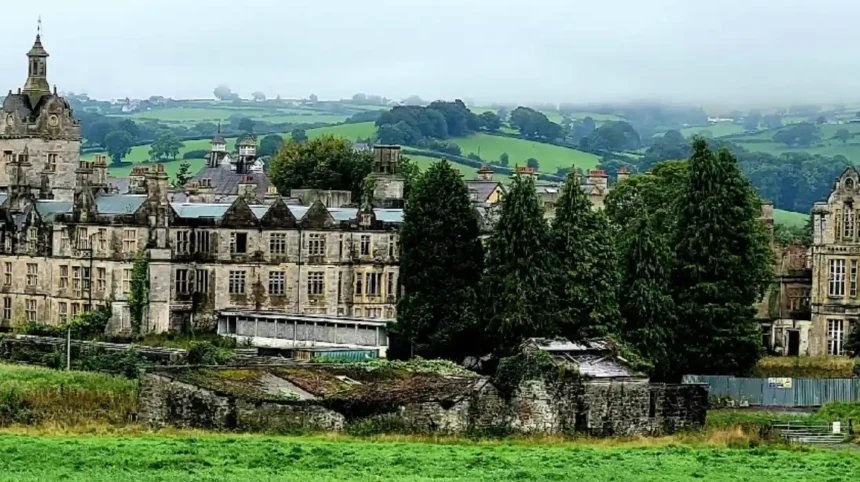
Denbigh is a historic market town located in Denbighshire, North Wales, positioned within the Vale of Clwyd. The geographic position of Denbigh influences its local weather patterns, creating a temperate maritime climate characterized by cool summers, mild winters, and moderate precipitation throughout the year. The town sits at an elevation of approximately 85 meters above sea level and benefits from partial shelter provided by the Clwydian Range to the east and the Hiraethog Mountains to the west. Standard meteorological observations for Denbigh indicate an average annual high temperature of 14 degrees Celsius and an average low of 6 degrees Celsius. Annual precipitation averages approximately 992 millimeters, distributed across 150 rainy days.
- What Are the Typical Annual Temperature Ranges in Denbigh North Wales?
- How Much Rainfall Does Denbigh Receive Each Season?
- What Are the Dominant Wind Patterns and Storm Risks in Denbighshire?
- How Does Topography Affect Local Microclimates Around Denbigh?
- What Sunshine Hours and Daylight Variations Occur Throughout the Year?
- How Should Visitors and Residents Prepare for Denbigh Weather Conditions?
- Frequently Asked Questions About Denbigh Weather
The North Atlantic Drift, a warm ocean current extending from the Gulf Stream, serves as the primary driver of weather for Denbigh North Wales. This maritime influence moderates extreme temperatures, preventing prolonged sub-zero drops in winter and extreme heatwaves during summer. Prevailing southwesterly winds transport moist maritime air across the region, which interacts with local topography to generate localized rainfall variations. Regional weather monitoring relies on stations such as Hawarden Airfield and nearby Ruthin weather installations. Understanding these atmospheric mechanisms provides essential context for residents, outdoor enthusiasts, and local agricultural planners across the Vale of Clwyd.
What Are the Typical Annual Temperature Ranges in Denbigh North Wales?
Denbigh experiences a temperate maritime climate with average summer high temperatures reaching 19 degrees Celsius and winter lows dropping to 2 degrees Celsius. Seasonal transitions remain gradual, preventing rapid temperature swings throughout the calendar year.
Temperature patterns in Denbigh show consistent moderation due to proximity to the Irish Sea and North Atlantic currents. The warmest months are July and August, recording average daily maximums between 18 degrees Celsius and 20 degrees Celsius. Daily minimum temperatures in peak summer average around 11 degrees Celsius to 13 degrees Celsius. Sub-zero thermal conditions occur infrequently during summer months, providing comfortable daytime conditions for outdoor recreation across the Vale of Clwyd.
Winter temperatures in Denbigh remain mild relative to inland continental locations at similar latitudes. January and February represent the coldest period, featuring average daily high temperatures of 7 degrees Celsius and low temperatures of 2 degrees Celsius. Nighttime frosts occur on an average of 30 to 40 days annually, predominantly between December and March. Extreme cold events with temperatures falling below minus 5 degrees Celsius remain rare due to constant oceanic air circulation.
Spring and autumn act as extended transition seasons with steady thermal progressions. April daytime temperatures average 11 degrees Celsius, rising to 16 degrees Celsius by late May. Autumn sees temperatures drop from an average high of 16 degrees Celsius in September down to 9 degrees Celsius by late November. Thermal stability minimizes severe freeze-thaw cycles, protecting local infrastructure and supporting surrounding agricultural operations.
Read more: Young People Start Work in Wales
How Much Rainfall Does Denbigh Receive Each Season?
Denbigh receives an annual average precipitation total of 992 millimeters spread evenly across all four seasons. Autumn and winter register the highest monthly totals, whereas spring months maintain the driest atmospheric conditions overall.
Precipitation in Denbigh results from frontal weather systems originating over the Atlantic Ocean. Winter is the wettest season, with December generating an average rainfall total of 93 millimeters over 15 wet days. Rain during winter tends to fall as steady, persistent light-to-moderate showers rather than short violent downpours. Cloud cover remains frequent from November through January, averaging over 65 percent coverage across the local sky.
Spring brings a measurable reduction in total rainfall volumes across Denbighshire. March and April represent the driest months, averaging 73 millimeters and 75 millimeters of rainfall respectively. Reduced cyclonic activity in spring allows longer periods of dry conditions, benefiting spring planting seasons. Thunderstorm activity remains minimal, occurring on fewer than 8 days per year across the region.
Summer precipitation patterns involve brief convective rain showers interspersed with prolonged dry spells. July and August average 78 millimeters of rainfall per month across approximately 9 rainy days each. Autumn brings renewed cyclonic strength, increasing monthly totals to 88 millimeters in October and 91 millimeters in November. Topographic uplift over the nearby Clwydian Hills occasionally amplifies local shower intensity during autumn frontal passages.
Related article: A541 Mold Road Crash Details
What Are the Dominant Wind Patterns and Storm Risks in Denbighshire?
Southwesterly winds dominate the weather patterns in Denbigh, averaging speeds of 15 to 22 kilometers per hour. Severe gales occur primarily in winter, while surrounding high topography provides shelter from extreme coastal squalls.
Wind behavior in Denbigh is strongly dictated by its geographic location in the Vale of Clwyd. Prevailing winds blow from the southwest and west, carrying moist air directly from the Irish Sea and North Atlantic. Average wind speeds remain moderate throughout spring and summer, ranging between 12 and 16 kilometers per hour. These gentle to moderate breezes maintain good air quality across the town without causing structural disruption.
Winter brings increased pressure gradients that elevate wind velocities across North Wales. Peak mean wind speeds occur in January, reaching averages of 24 kilometers per hour with intermittent gusts exceeding 60 kilometers per hour. Major Atlantic depressions periodically bring gale-force winds exceeding 75 kilometers per hour. Inland gales affect Denbigh on fewer than 6 days per year, significantly less than coastal towns like Rhyl.
The physical presence of the Clwydian Range creates localized wind phenomena in Denbighshire. Lee waves and minor rain-shadow effects occur when easterly winds cross the ridges, leading to localized variations in wind strength. Severe weather warnings issued by the Met Office for Denbigh typically relate to winter wind gusts and heavy surface rainfall rather than tornadic activity or severe squall lines. Structural damage from wind events remains historically infrequent in low-lying valley zones.
Discover more: AI Motorcycle Safety Cameras Installed in Swansea
How Does Topography Affect Local Microclimates Around Denbigh?
Denbigh lies within a valley basin where surrounding mountain ranges alter local temperature, humidity, and rainfall patterns. Elevation changes create distinct microclimates between the low-lying valley floor and nearby upland plateaus.
The local topography of the Vale of Clwyd plays a fundamental role in shaping microclimatic conditions. Denbigh sits at an altitude of 85 meters, bounded by higher ground reaching over 500 meters in the Clwydian Range. Atmospheric moisture forced over these eastern ridges undergoes orographic lifting, releasing precipitation on windward slopes while leaving the valley floor relatively sheltered. This process reduces total rainfall in Denbigh compared to Snowdonia to the west.
Temperature inversions occur frequently in the valley around Denbigh during clear, calm winter nights. Cold, dense air drains from surrounding hills into the valley bottom, trapping cool temperatures near the surface. As a result, low-lying pastures experience lower overnight temperatures and denser frost than elevated hillsides. Morning ground fog often settles along the River Clwyd basin before dissipating under daytime solar heating.
Microclimate variations also affect local agricultural productivity and vegetation distribution. Sheltered valley positions provide longer frost-free growing periods compared to the upland moorlands of Mynydd Hiraethog. Upland regions experience temperatures approximately 0.5 degrees Celsius lower per 100 meters of elevation gain. This temperature gradient ensures that snow accumulation remains minimal in Denbigh town while persistent snowpacks cover nearby summits.
What Sunshine Hours and Daylight Variations Occur Throughout the Year?
Denbigh receives approximately 1,400 hours of bright sunshine annually, peaking at 6 hours daily in June. Daylight duration ranges from 7.5 hours during midwinter to nearly 17 hours during the summer solstice.
Sunlight exposure in Denbigh varies substantially across seasons due to its northerly latitude of 53.18 degrees North. June records the highest solar exposure, averaging 180 hours of bright sunshine for the month. Clear skies occur most frequently between May and August, when daytime cloud cover drops to its lowest annual levels. Extended twilight periods during summer provide usable outdoor light past 10:00 PM local time.
Winter produces significantly reduced sunshine totals across Denbighshire. December represents the period of lowest light intensity, averaging less than 45 total hours of sunshine over the entire month. Low solar angles combined with persistent cloud layers reduce daily sunlight duration to roughly 1.5 hours per day in midwinter. Solar radiation levels drop to seasonal minimums between December 15 and January 15.
Yearly daylight progression affects solar energy generation and outdoor activity schedules. Daylight expands rapidly through spring, gaining roughly 4 minutes of illumination per day during late March. Autumn features a corresponding decrease in daylight hours from late September through November. Despite seasonal cloudiness, Denbigh receives higher annual sunshine totals than mountainous interior regions of Northern Wales.
How Should Visitors and Residents Prepare for Denbigh Weather Conditions?
Preparing for Denbigh weather requires adaptable layered clothing, waterproof outerwear, and accurate local daily forecasts. Year-round atmospheric variability makes multi-layer apparel essential for outdoor activities across all seasons.
Managing daily life or travel in Denbigh requires preparing for rapid weather changes. Due to maritime air movements, clear conditions can quickly transition to localized rain showers within short timeframes. Carrying lightweight, breathable rain gear is recommended during all months, including peak summer. Sturdy footwear with adequate traction is vital for walking on rural footpaths that become damp or muddy following autumn rain.
Winter preparation involves monitoring thermal conditions and road safety. Household insulation and heating systems should accommodate extended damp periods where relative humidity averages over 80 percent. Drivers traversing rural routes around Denbighshire must watch for black ice on low-lying valley roads during calm winter mornings. Vehicle preparation should include functioning windshield defrosters and checked tire treads for wet road handling.
Planning outdoor visits around seasonal weather trends improves safety and comfort. Summer visitors benefit from checking localized UV indices, which reach moderate-to-high levels between late May and early August. Hikers exploring the nearby Clwydian Range should carry wind-resistant layers, as summit temperatures run cooler than valley floor readings. Real-time weather apps pulling data from regional radar provide reliable short-term forecasting for daily planning.
Frequently Asked Questions About Denbigh Weather
Does it snow often in Denbigh North Wales?
Snowfall in Denbigh town occurs infrequently, averaging only 5 to 10 days of sleet or snow per year. Settling snow remains rare on the low valley floor due to mild maritime air temperatures. Higher elevations surrounding the town, such as the Clwydian Hills, experience more persistent snow accumulation during winter months.
What is the warmest month to visit Denbigh?
July is historically the warmest month in Denbigh, with average daytime high temperatures of 19 degrees Celsius to 20 degrees Celsius. July also provides the highest proportion of clear skies and sunny days throughout the year. Summer temperatures offer ideal conditions for exploring historic sites and hiking local trails.
Why is Denbigh drier than other parts of Wales?
Denbigh benefits from a rain-shadow effect caused by the high mountain peaks of Snowdonia to the west. As moist Atlantic air rises over the western mountains, it loses much of its moisture before reaching the Vale of Clwyd. Consequently, Denbigh receives significantly less annual rainfall than upland North Wales.
What is the wettest month of the year in Denbigh?
December is typically the wettest month in Denbigh, recording an average monthly rainfall total of 93 millimeters. Late autumn and early winter experience frequent Atlantic frontal systems that bring persistent rain and cloud cover. Precipitation during this period usually falls as light to moderate rain showers.
How windy does it get in Denbighshire valleys?
Average wind speeds in the Denbighshire valley range between 15 and 22 kilometers per hour throughout the year. Winter storms occasionally bring stronger gusts exceeding 60 kilometers per hour, but severe damage is rare. Surrounding landforms shelter the valley floor from the intense coastal gales seen along the northern shoreline.