

Key Points
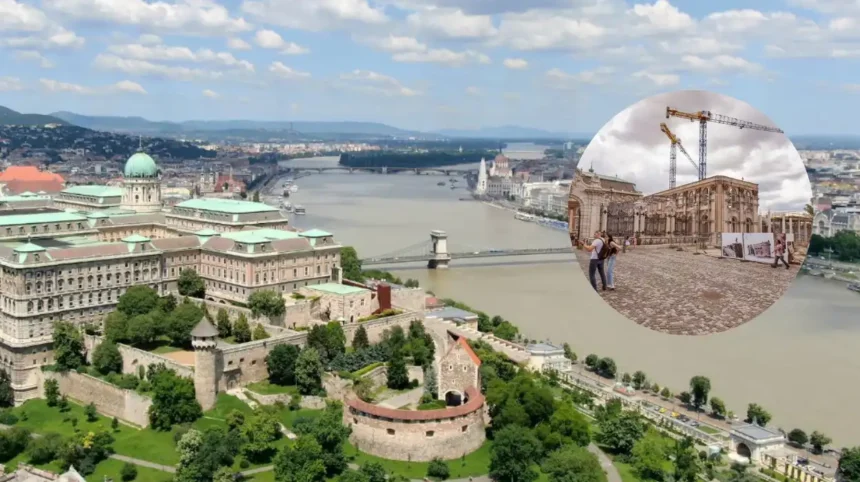
- Hungarian government headed by TISZA has stopped construction works in wing “A” of Buda Castle and the contractor will have to evacuate by 30 September 2026.
- ZÁÉV Építőipari Zrt., which belongs to the business group of Lőrinc Mészáros, has received an ultimatum from the Ministry of Transport and Investment headed by Dávid Vitézy to evacuate the premises within two weeks.
- The Ministry has announced that works were frozen due to the fact that the previous government failed to finance the project adequately and the contract expired.
- However, according to opposition and construction sector representatives, the building is still not waterproof, posing a threat of its structural damage when the autumn and winter season arrives.
- This decision relates to an overall revision of the National Hauszmann Program and all projects, contracts and intended usage until 30 September 2026.
- Newly tendered future works will be organized in the new institutional form being now discussed in the parliament.
Castle (Wales Times) September 26, 2026 – TISZA government halts Buda uk/local/swansea/castle/">Castle Wing A reconstruction, orders contractor ZÁÉV off site by month-end
- Key Points
- What triggered the construction halt at Buda Castle?
- Who is affected by the Buda Castle work suspension?
- How has the government explained the Buda Castle decision?
- What is the status of the National Hauszmann Program?
- Background of the Buda Castle development
- Prediction: how the Buda Castle halt may affect stakeholders
The TISZA-led Hungarian government has ordered an immediate suspension of reconstruction works on Wing “A” of the Buda Castle, directing the main contractor to clear the site by 30 September 2026. The Ministry of Transport and Investment (KBM), headed by Dávid Vitézy, confirmed the measure to Világgazdaság, stating that the existing contract was due to expire and that financial arrangements under the previous administration were insufficient to allow seamless continuation.
As reported by Világgazdaság, citing insider sources, the contracted construction company ZÁÉV Építőipari Zrt. — part of the business empire of Viktor Orbán’s childhood friend Lőrinc Mészáros — has been given just two weeks to vacate the premises. The ministry’s announcement, relayed through Világgazdaság and later echoed by MTI and the Budapest Times, framed the move as the implementation of an existing contractual framework rather than an arbitrary political halt.
What triggered the construction halt at Buda Castle?
The decision follows a broader government-ordered review of the National Hauszmann Program, which seeks to restore the palace district of Budapest to its early 20th-century condition. At the end of June, the TISZA government instructed officials to evaluate all ongoing projects, contracts, permits and planned future uses connected to the programme, with a deadline of 30 September 2026 for the review.
In response to an inquiry from Világgazdaság, the Ministry of Transport and Investment confirmed that work on Building “A” would not continue under the current arrangement. According to the ministry, the previous government entered into the construction contract without adequate financial backing, prompting the contractor to file an official notice of impediment last year — a notice that was accepted at the time. With the existing contract nearing expiry, the ministry said it was simply adhering to the contractual framework already in place.
Who is affected by the Buda Castle work suspension?
The primary entity affected is ZÁÉV Építőipari Zrt., the main contractor responsible for the reconstruction of Wing “A”. The company has been told to complete current tasks and then withdraw from the site by the end of September. The halt also impacts subcontractors, suppliers and workers engaged in the palace district works, as well as cultural heritage bodies monitoring the restoration of the UNESCO-listed site.
Critics have highlighted the timing of the suspension. As noted in Világgazdaság’s reporting, industry figures such as Tasnádi have pointed out that the building has not yet been made rainproof. With autumn and winter approaching, there is a risk of significant structural damage if temporary protective measures are not put in place before the contractor departs.
How has the government explained the Buda Castle decision?
The Ministry of Transport and Investment has rejected accusations that the halt is arbitrary or politically motivated. In statements provided to Világgazdaság and subsequently carried by MTI and the Budapest Times, the ministry emphasised that the previous administration’s contract lacked sufficient financial coverage and was close to expiry. On that basis, officials argued that continuing work without a new legal and financial framework would have been untenable.
At the same time, the ministry has not offered a detailed explanation for why funds were not allocated for temporary safety measures or for a seamless handover to a new contractor. In later clarifications reported by Világgazdaság, officials stressed that external construction activities were being “suspended” rather than permanently stopped, pending the outcome of professional assessments and decisions.
What is the status of the National Hauszmann Program?
The construction freeze at Wing “A” is part of a comprehensive review of the National Hauszmann Program, which covers multiple restoration and redevelopment projects in the Buda Castle palace district. The government’s June directive requires a full audit of ongoing works, existing contracts, permits and long-term usage plans across the programme. The review is due to conclude by 30 September 2026.
According to the Ministry of Transport and Investment, future works in the palace district will be put out to bid under a new institutional model that is currently being debated in the Hungarian Parliament. In interviews with Portfolio and other outlets, ministry representatives indicated that, contrary to some market rumours, there was no plan for a permanent stop to all construction, but rather a pause while new public procurement procedures are prepared.
Background of the Buda Castle development
The Buda Castle palace complex, a UNESCO World Heritage Site, has been the focus of extensive restoration efforts under the National Hauszmann Program, named after architect Alajos Hauszmann, who oversaw major works in the late 19th and early 20th centuries. Wing “A” forms a key part of the palace district and has been undergoing reconstruction to return the building to its historical appearance while adapting it for modern cultural and institutional use.
The current contract with ZÁÉV Építőipari Zrt. was concluded under the previous government and has been the subject of political controversy due to the company’s links to Lőrinc Mészáros, a close associate of former prime minister Viktor Orbán. The TISZA government, which took office earlier in 2026, has pledged greater transparency and a reassessment of major public investments initiated under the prior administration. The Buda Castle suspension is among the first high-profile interventions in that review process.
Prediction: how the Buda Castle halt may affect stakeholders
If the suspension leads to a prolonged pause without adequate temporary protection, conservation experts and local businesses in the castle district could face heightened risks of damage to historic fabric and loss of income from disrupted tourism and events. For the construction sector, the move signals tighter scrutiny of large heritage projects and may encourage more cautious bidding and contract management in future public procurements.
For the TISZA government, the outcome of the National Hauszmann Program review will shape its reputation for balancing heritage protection, fiscal discipline and political accountability. A swift, well-documented transition to a new procurement process could stabilise the project and reassure international heritage bodies. Conversely, any visible deterioration at the site or extended legal disputes with the outgoing contractor could attract domestic and international criticism, complicating the government’s broader reform agenda.