

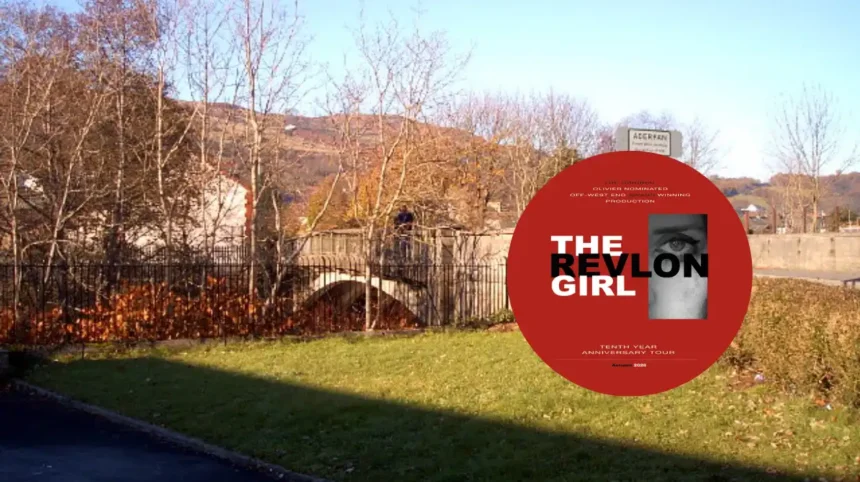
Key Points
- The Revlon Girl comes back to Wales for the tenth-anniversary tour.
- The play will premiere at Pontardawe Arts Centre on October 7 before the 60th anniversary of the Aberfan disaster.
- The play was written by Welsh dramatist Neil Anthony Docking and directed by Maxine Evans and deals with the issues of grief, friendship, guilt and healing.
- The plot centers around bereaved mothers who decide to invite Revlon representative to their hotel room and ask her about beauty tips.
- The Aberfan disaster resulted in 144 deaths including 116 children on October 21, 1966.
- The play received an Olivier Award nomination after being performed at London’s Park Theatre.
- The play won Off West End Award for Best New Play and had international performances.
- Certain performances will be accompanied by talks with the creators of the show, historians, special guests and the audience.
- There will be an additional performance at Theatr Soar dedicated to the memory of Aberfan throughout the last six decades.
- The Welsh tour will be held in such cities as Pontardawe, Pwllheli, Treorchy, Abertillery, Llanelli, Holyhead, Blackwood and Newport.
- London performance at Park Theatre will start from October 26.
Wales (Wales Times) October 10, 2026 – The Revlon Girl returns to Wales as the country prepares to mark 60 years since the Aberfan disaster. The award-winning play will begin its tenth-anniversary tour at Pontardawe Arts Centre on October 7, with performances scheduled at venues across Wales before the production moves to London.
- Key Points
- Why is The Revlon Girl returning to Wales?
- What is the play about?
- How has The Revlon Girl developed over ten years?
- Who is in the cast?
- What discussions will accompany the performances?
- What will happen at the Aberfan remembrance event?
- What will happen at the Newport discussion?
- Where will the Welsh tour take place?
- What is the historical background to Aberfan?
- What could the production mean for Welsh audiences?
- Background
- Prediction: how could the return affect Welsh theatre audiences?
The report was published by Nation.Cymru under the byline “Nation.Cymru staff”. The production is written by Welsh playwright Neil Anthony Docking and directed by Maxine Evans. It focuses on the experiences of women living with the consequences of the disaster, which claimed the lives of 144 people, including 116 children, on October 21, 1966.
Why is The Revlon Girl returning to Wales?
The play is returning as Wales approaches the 60th anniversary of the Aberfan disaster. Its tour will combine theatrical performances with public discussions about grief, memory and the long-term effects of the tragedy.
Set eight months after the disaster, The Revlon Girl presents a fictionalised account of a group of bereaved mothers. The women secretly arrange a meeting with a representative from Revlon, who visits a local hotel to give them beauty tips.
The meeting provides the central setting for the play. Through the women’s conversations, the production examines how people attempt to continue with ordinary life after experiencing a devastating loss.
According to the Nation.Cymru report, the play explores friendship, grief, guilt and laughter. These themes are presented together rather than separately, showing how bereaved families may experience different emotions while coping with the same tragedy.
The production does not focus only on the immediate events of the disaster. Instead, it considers the personal and emotional aftermath for the mothers who lost their children and the ways in which communities attempt to rebuild their lives.
What is the play about?
The Revlon Girl follows women who have lost their children in the Aberfan disaster. The characters meet away from public attention and create a private space in which they can talk, remember and attempt to support one another.
The Revlon representative’s visit gives the women an opportunity to discuss subjects that may appear ordinary, including beauty and personal appearance. Within the context of the play, however, the meeting becomes a way for the characters to reconnect with parts of their identities that have been affected by grief.
The story places the women’s relationships at the centre of the production. Their conversations address the tension between mourning and the expectation to return to everyday life. The play also considers how guilt, friendship and memories can influence the recovery process.
By setting the story eight months after the disaster, Docking places the characters at a point when public attention may have begun to move elsewhere, while the families’ grief remains ongoing. The production therefore examines an aftermath that is personal, continuing and difficult to resolve.
How has The Revlon Girl developed over ten years?
The production began in Wales before travelling to the Edinburgh Festival and later moving to London’s Park Theatre. During its London run, it received an Olivier Award nomination.
The play also won the Off West End Award for Best New Play. Since then, it has been performed by theatre companies in different parts of the world.
The tenth-anniversary tour marks a further stage in the production’s history. It brings the play back to Welsh audiences while also creating opportunities to discuss the real events and memories connected with Aberfan.
Director Maxine Evans said the production continues to reveal new details each time it is performed.
“Every single time we’ve performed this play, we’ve found something new,” Evans said, according to Nation.Cymru. “Just when you think you’ve found everything there is to find, you suddenly discover a new layer or an unexpected depth or a small, but profound detail. This time will be no different.”nation
Her comments indicate that the production is not being treated as a fixed interpretation. Instead, the return to the stage is expected to offer the creative team another opportunity to examine the relationships, emotions and historical context within the play.
Who is in the cast?
The cast for the Welsh tour includes:
- Antonia Kinlay as Revlon.
- Charlotte Gray as Sian.
- Hedydd Dylan as Maralyn.
- Llinos Daniel as Jean.
- Mirain Haf Roberts as Rona.
The characters represent women connected by bereavement and by their attempts to manage life after the disaster. Their interactions form the main dramatic structure of the play.
The production’s return also brings together the creative team involved in its continuing development. Evans is directing the play, while Docking remains connected with discussions about its inspiration, historical setting and journey through different stages and venues.
What discussions will accompany the performances?
Several performances will be followed by discussions under the title Stay for the Conversation. These sessions will allow audiences to speak with members of the creative team and invited guests.
Docking will take part in the opening-night discussion at Pontardawe Arts Centre on October 7. The session will consider the inspiration behind the play, the story of Aberfan and the production’s development during the past decade.
The discussions are intended to provide context beyond the performance itself. They will give audiences a chance to ask questions and consider how theatre can represent a historic tragedy without separating it from the people and communities affected by it.
At Ffwrnes in Llanelli on October 14, director and actor Steve Elias will host a post-show discussion with Evans and members of the cast. The discussion will focus on the production’s return ten years after it first began.
Topics are expected to include the process of revisiting the play, the experience of performing the characters again and the significance of presenting the work in Wales during the anniversary period.
What will happen at the Aberfan remembrance event?
A separate event titled Aberfan: What Do We Remember? will take place at Theatr Soar in Merthyr Tydfil on October 13. Docking will host the event.
It will bring together scenes from The Revlon Girl with testimony, documents, photographs, archive material and music. The programme will examine Aberfan before, during and after the disaster.
The event will consider what was known, witnessed and said at the time. It will also explore how the tragedy has been remembered during the six decades since it occurred.
This event differs from a standard post-show conversation because it will draw on a broader range of historical material. The inclusion of testimony and archive sources is intended to place the theatrical work alongside records and recollections connected with the disaster.
The programme will also consider how public memory changes over time. That includes the continuing importance of personal testimony, historical documentation and cultural works such as theatre.
What will happen at the Newport discussion?
At The Riverfront in uk/local/newport/">Newport on October 20, the eve of the disaster’s anniversary, Jayne Bryant MS will host a discussion linked to the play and the events that inspired it.
The session will begin with Bryant’s reflections on the production and Aberfan. She will then be joined by Evans and members of the company.
The discussion will address grief, recovery, motherhood, friendship and memory. It will later be opened to the audience, allowing those attending to contribute their own questions and responses.
The timing of the discussion is significant because it takes place on October 20, one day before the anniversary of the disaster. The event will therefore form part of the wider period of remembrance surrounding October 21.
Where will the Welsh tour take place?
The production will visit the following venues:
| Date | Venue |
|---|---|
| October 7–8 | Pontardawe Arts Centre |
| October 9 | Neuadd Dwyfor, Pwllheli |
| October 10 | Park & Dare, Treorchy |
| October 12 | The Metropole, Abertillery |
| October 14–15 | Ffwrnes, Llanelli |
| October 16–17 | Ucheldre Centre, Holyhead |
| October 19 | Blackwood Miners’ Institute |
| October 20–21 | The Riverfront, Newport |
After the Welsh tour, the production will move to London. Its run at Park Theatre is scheduled to begin on October 26.
Tour information and tickets are available through the production’s official website, therevlongirl.com, according to the Nation.Cymru report.
What is the historical background to Aberfan?
The Aberfan disaster took place on October 21, 1966, when a coal spoil tip collapsed and engulfed part of the village in South Wales. The disaster killed 144 people, including 116 children.
The event left a lasting impact on the local community and became one of the most widely remembered tragedies in modern Welsh history. Its consequences extended beyond the day of the collapse, affecting families, survivors and residents for many years.
The Revlon Girl is set eight months after the disaster, allowing the story to examine a period when the immediate emergency had passed but grief remained central to the lives of those affected.
The play’s focus on bereaved mothers provides a specific perspective on the disaster. Rather than presenting a full historical account, it concentrates on the emotional and social experiences of fictional characters living through its aftermath.
What could the production mean for Welsh audiences?
The return of The Revlon Girl is likely to provide Welsh audiences with an opportunity to engage with Aberfan through both drama and public discussion. Its timing connects the tenth anniversary of the production with the 60th anniversary of the disaster.
For audiences with personal, family or community connections to Aberfan, the play may offer a space to reflect on grief and remembrance. For younger audience members and visitors who have less direct knowledge of the disaster, the accompanying discussions and archive-based events may provide additional historical context.
The production is not a replacement for testimony or historical records. However, its focus on the lives of fictional bereaved mothers may help audiences consider the personal consequences of a tragedy that is often remembered through statistics and public commemorations.
The discussions may also encourage wider conversations about how Wales remembers difficult events. Their focus on motherhood, friendship, recovery and memory creates opportunities for audiences to examine both the historical event and its continuing place in Welsh cultural life.
The effect will vary between audience members. Some may attend because of an existing connection to Aberfan, while others may be drawn by the production’s awards, its Welsh setting or its tenth-anniversary return.
Background
The Revlon Girl was written by Welsh playwright Neil Anthony Docking and directed by Maxine Evans. The play began in Wales, later appeared at the Edinburgh Festival and transferred to London’s Park Theatre, where it received an Olivier Award nomination. It also won the Off West End Award for Best New Play and has been staged internationally.
The production is set eight months after the Aberfan disaster of October 21, 1966. Its story centres on fictional bereaved mothers who arrange a private meeting with a Revlon representative. The tenth-anniversary tour will return the play to Welsh stages before its London run at Park Theatre.
Prediction: how could the return affect Welsh theatre audiences?
The return of The Revlon Girl is likely to increase opportunities for Welsh audiences to engage with Aberfan through live performance, historical discussion and remembrance events. The strongest effect may be felt in communities near the venues, where the play’s themes could have particular local relevance.
The accompanying conversations may broaden the production’s appeal beyond regular theatre audiences. People interested in Welsh history, community memory and local heritage may be encouraged to attend because the programme includes testimony, archive material and opportunities to speak with the creative team.
The production may also help introduce the history of Aberfan to younger audiences, although its fictionalised story should be understood alongside historical sources and personal testimony. Its impact will depend on how audiences respond to the balance between dramatic representation and remembrance.
The scheduled performances and discussions are expected to make the tour more than a conventional theatre run. They will place the production within Wales’s wider preparations to mark 60 years since the disaster, while giving audiences different ways to reflect on the people and communities affected.