Key Points
- An innovative NHS drone delivery system could aid medical services in reaching remote communities in Wales faster, research shows, when developed in collaboration with partners of NHS Wales.
- The scheme is called Dragon’s Heart and it is led by Snowdonia Aerospace with Skyports Drone Services, SLiNK-TECH and Volant Autonomy.
- The project is being funded by Innovate UK and its aim is to assist Welsh Blood Service and Welsh Ambulance Service.
- It will enable transportation of light medical items such as blood products and urgent samples among strategic NHS sites.
- Prototype vertiport sites have been earmarked in Talbot Green, Wrexham and Dafen, Llanelli.
- In the current phase, there is an emphasis on strategic growth and regional demonstrations, which include the launch of a representative prototype service from the Welsh Blood Service headquarters in Talbot Green by 2027.
- The project follows an earlier Welsh Drone Innovation Partnership that has been supported through UK Research and Innovation’s Future Flight Challenge.
- Supporters argue that this innovative scheme will make it easier for people in hard-to-reach areas to get access to timely care.
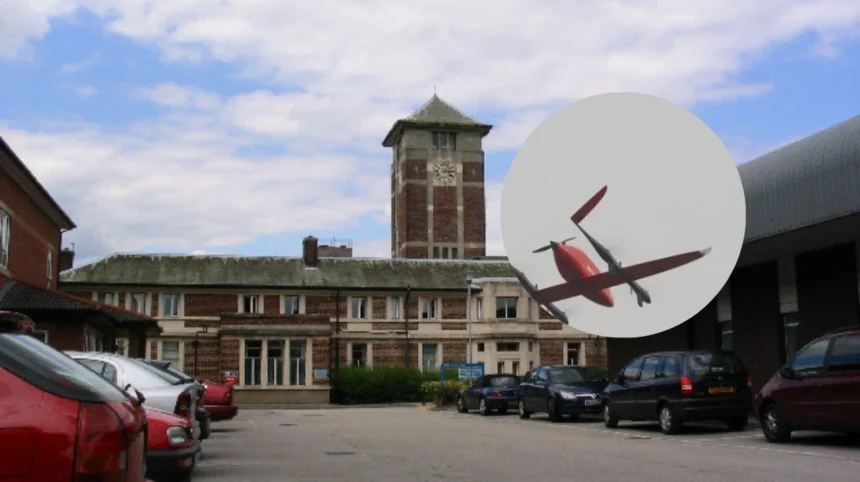
Wales (Wales Times) October 13, 2026 — Medical drones could help NHS Wales reach remote communities more quickly under a proposed delivery network designed to move blood products, urgent samples and other light medical supplies between health sites across the country.
- Key Points
- What is the proposed NHS drone network?
- Why is Wales being considered for medical drones?
- Which NHS services would benefit?
- Where would the drone hubs be located?
- How would the drones operate safely?
- What has already happened in the project?
- What happens next?
- What do project partners say?
- Background of the development
- Prediction: How could this affect patients in rural Wales?
As reported by the Pembrokeshire Herald, researchers working with NHS Wales partners say the proposed network could improve the speed and resilience of medical logistics, particularly for communities where conventional road transport is constrained by distance, terrain and traffic.
The development forms part of the Dragon’s Heart project, an Innovate UK-funded initiative led by Snowdonia Aerospace in partnership with Skyports Drone Services, SLiNK-TECH and Volant Autonomy. According to Velindre University NHS Trust, the project aims to accelerate the development of a fully automated drone delivery network for critical services, including the Welsh Blood Service and the Welsh Ambulance Service.
What is the proposed NHS drone network?
The proposed Welsh Medical Drone Delivery Network is intended to create a pan-Wales system that improves the resilience and responsiveness of NHS Wales’ medical supply chain. Velindre University NHS Trust says the project would allow light goods and samples to move between strategic locations in Wales’ medical network, potentially supporting both emergency and elective care pathways.
The network is not being presented as a replacement for ambulances, road transport or existing NHS logistics. Instead, it is designed to complement those services by transporting suitable, time-sensitive items such as blood products and urgent samples—more directly between sites.
Velindre University NHS Trust states that NHS Wales serves a mixed landscape of rural and remote populations, with infrastructure that crosses those areas. The trust says the drone network seeks to “frog-leap” barriers created by ground-based infrastructure and accelerate the transport of medical items.
Why is Wales being considered for medical drones?
Wales’ geography is central to the case for the project. The Welsh Blood Service says the country’s landscape presents unique logistical challenges for healthcare delivery, particularly in rural and hard-to-reach communities.
As reported by Velindre University NHS Trust, Alan Prosser, Director of the Welsh Blood Service, said: “Wales is a perfect place to benefit from this due to our landscape, which presents unique logistical challenges for healthcare delivery. This technology offers a practical solution to overcome those barriers and improve outcomes for patients across the country.”
The project’s backers argue that drones could reduce the time taken to deliver essential supplies in emergencies. Velindre University NHS Trust says faster delivery of blood products and easier movement of supplies between locations could help healthcare teams respond more quickly and support timely clinical decisions.
Which NHS services would benefit?
The Welsh Blood Service and the Welsh Ambulance Service are the principal NHS bodies named in the Dragon’s Heart project. Velindre University NHS Trust says the network is designed to support critical services including both organisations.
The Welsh Ambulance Services University NHS Trust’s Research, Development and Innovation Department also describes a partnership with the Welsh Blood Service and industry partners Snowdonia Aerospace and SLiNK-TECH to develop an NHS drone delivery supply network.
Earlier work by the Welsh Ambulance Service has also examined a separate potential use of drones: delivering defibrillators to people experiencing cardiac arrest. The trust said its Drone-Delivered Defibrillators study, known as the 3D Project, partnered with the University of Warwick and SkyBound to test whether drone-delivered defibrillators could make a difference in cardiac arrest cases.
Where would the drone hubs be located?
Three prototype vertiports are planned as part of the current phase. According to Velindre University NHS Trust, they will be installed at the Welsh Blood Service headquarters in Talbot Green, the Ambulance and Fire Rescue Services resource centre in Wrexham, and the Emergency Medical Retrieval and Transfer Service/Wales Air Ambulance site in Dafen, Llanelli.
These facilities are intended to host demonstration flights. Velindre University NHS Trust says they will allow NHS staff to engage with the new infrastructure and explore how it could support patient care.
Swansea Bay News reported that the Llanelli hub would demonstrate how drones can carry blood products and urgent medical samples directly between NHS sites, helping frontline teams respond more quickly to emergencies.
How would the drones operate safely?
The technology being developed is intended to operate autonomously while detecting and avoiding hazards during flight. Velindre University NHS Trust says the drones will be capable of autonomously detecting and avoiding threats mid-flight to support the safe delivery of medical supplies.
Jeremy Howitt, Technical Director at Snowdonia Aerospace Centre, said the project would refine technical elements including autonomous flight guidance, ground-based radar and medical delivery drones. As reported by Velindre University NHS Trust, he said: “Crucially, we’re working in close partnership with the Welsh Blood Service and the Welsh Ambulance Service to ensure the system is designed around the practical needs of frontline healthcare teams.”
A post attributed to Jonathan Sammut of the Welsh Ambulance Service described the planned aircraft as fully automated drones with real-time hazard detection and rerouting technology. It said the pilot would test and build a rural medical drone delivery network around Snowdonia, supported by Innovate UK’s Future Flight Programme.
What has already happened in the project?
The Dragon’s Heart project follows earlier work under the Welsh Drone Innovation Partnership Project. Velindre University NHS Trust says that project was one of five successful projects under the UKRI Future Flight Challenge and proposed a pan-Wales network to improve NHS Wales’ medical supply chain.
In February 2024, the partnership received Small Business Research Initiative funding from UK Research and Innovation for a foundation study. Velindre University NHS Trust says that study was intended to establish the potential for drone-based delivery services to support the Welsh NHS, test the basic premise with the Civil Aviation Authority, and identify a roadmap for the longer-term vision.
The Welsh Blood Service was involved in work examining the potential for drones to enhance logistics, including transporting blood products between north and south Wales. Velindre University NHS Trust reported this work in August 2024.
What happens next?
The current phase focuses on strategic growth and regional demonstration. Velindre University NHS Trust says this work will lay the foundation for a fully operational representative prototype drone delivery service from the Welsh Blood Service’s Talbot Green headquarters by 2027.
The Welsh Drone Innovation Partnership Project page states that the project runs until 2026, after which a follow-on programme is expected to establish a full prototype drone service.
Skyports Drone Services also reported that Project Dragon’s Heart launched in 2025 and that a follow-on programme is expected to establish a full prototype drone service after 2026.
What do project partners say?
Alan Prosser, Director of the Welsh Blood Service, described the development as a major step forward in delivering urgent medical supplies across Wales. As reported by Velindre University NHS Trust, he said:
“By working closely with both the partners of this project, we’re exploring innovative ways to improve the speed, safety, and reach of our transport systems.”
Prosser added that harnessing drone technology would help the service better support patients and NHS teams, especially in rural and hard-to-reach areas, by ensuring critical resources arrive where they are needed most.
Jeremy Howitt said Snowdonia Aerospace was building on foundations laid during the first phase of Future Flight funding. He said the next stage would allow the team to refine the technical system and create a safe and responsive network.
Background of the development
The proposal has developed through several stages of UK-funded research and innovation. In February 2024, the Welsh Drone Innovation Partnership received SBRI funding from UK Research and Innovation for a foundation study into drone-based delivery for the Welsh NHS.
That early work involved the Welsh Blood Service, Welsh Ambulance Service, Snowdonia Aerospace Centre and SLiNK-TECH. Aerospace Global News reported that the organisations worked together to develop a concept for a drone-based service to transfer blood products and consider other ways to improve NHS Wales’ supply chain.
The project later progressed into Dragon’s Heart, funded by Innovate UK. Velindre University NHS Trust announced the initiative in November 2025, naming Snowdonia Aerospace as lead partner alongside Skyports Drone Services, SLiNK-TECH and Volant Autonomy.
The broader Welsh Drone Innovation Partnership Project remains part of the UKRI Future Flight Challenge. Velindre University NHS Trust says its aim is to establish a pan-Wales network that improves the resilience and responsiveness of NHS Wales’ medical supply chain.
Prediction: How could this affect patients in rural Wales?
If the prototype progresses as planned, patients in rural and remote parts of Wales could see faster movement of certain urgent medical items between NHS sites. The most direct potential benefit would be for services relying on blood products and urgent samples, where transport time can affect clinical decision-making.
For communities in areas such as mid and north Wales, where road journeys between hospitals or laboratories can be lengthy, drone deliveries could reduce delays caused by distance and road conditions. Velindre University NHS Trust says the technology is intended to strengthen NHS services’ ability to manage urgent medical needs in areas where access is more challenging.
However, the service remains at the demonstration and development stage. A full prototype is not expected until 2027, and wider use would depend on technical performance, regulatory approval, safety evidence and NHS operational integration.
For rural patients, the practical effect in the near term is likely to be continued testing rather than an immediate change to routine care. If trials succeed, the network could eventually provide an additional route for time-critical supplies, supporting NHS teams in areas where every minute of transport time can matter.