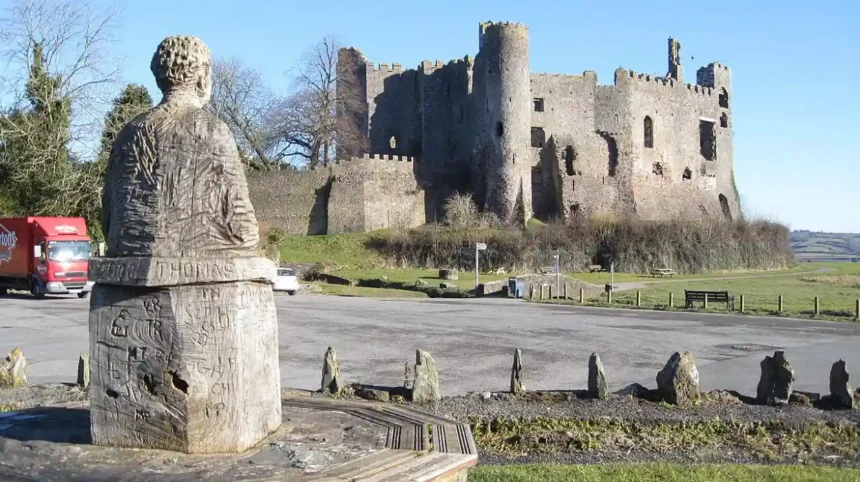
Laugharne uk/local/swansea/castle/">Castle Click to open side panel for more information is a historic medieval fortress located in the estuary of the River Taf in Carmarthenshire, south-west Wales. Originally established as a ringwork castle in the early twelfth century by the Anglo-Norman lord Robert de Guyenne, the fortification underwent major stone reconstruction phases throughout the medieval and Tudor periods. The site sits dramatically on a rocky outcrop overlooking the tidal marshlands and functions as a prominent heritage landmark managed by Cadw, the Welsh Government historic environment service. Its geographic positioning on the southwest coast of Wales provided strategic maritime control over the Taf estuary during centuries of regional conflict between native Welsh princes and Anglo-Norman lords.
The structural evolution of the fortress reflects successive architectural trends spanning over eight centuries of military and domestic occupation. Initial timber and earthwork defenses erected around 1116 were subsequently replaced by stone curtain walls and round towers during the late twelfth and thirteenth centuries. Sir John Perrot acquired the property in the sixteenth century and converted the medieval stronghold into an elaborate Elizabethan manor house featuring large mullioned windows and formal gardens. During the English Civil War in 1644, Parliamentary forces besieged and captured the structure, rendering it uninhabitable and leaving the picturesque ruins visible today. Modern conservation efforts preserve the remaining stone masonry, window traceries, and terraced gardens for academic study and public heritage tourism.
The strategic geography of the estuary dictated the defensive significance of the fortification from its inception. Norman lords utilized the coastal waterway to transport troops, provisions, and building materials into the heart of Carmarthenshire. Native Welsh leaders frequently targeted the stronghold during rebellions, capturing the site in 1153 under Lord Rhys and later suffering attacks by Llywelyn the Great in the thirteenth century. These military engagements necessitated continuous reinforcement of the gatehouses, moat systems, and arrow loops across the stone perimeter. The interplay between maritime access and terrestrial defense established the location as a crucial administrative and military nexus in medieval Deheubarth.
Academic research and archaeological excavation at the monument have revealed extensive artifact assemblages dating from the medieval and post-medieval eras. Specialists have recovered pottery shards, metalwork, and animal bones that illustrate the daily consumption patterns and military provisions of garrison forces. Architectural analysis confirms that Sir John Perrot utilized high-status building materials imported from England and continental Europe during his Tudor modernization project. Preservation management plans implemented by Cadw incorporate non-invasive geophysical surveys and masonry stabilization techniques to protect the fragile stonework from coastal weathering and root intrusion. These scientific initiatives ensure that structural data remains accessible to historians investigating south Wales fortifications.
The cultural resonance of the monument extends beyond its military architecture due to its profound association with twentieth-century literature. The renowned Welsh poet Dylan Thomas rented the nearby Boathouse and utilized the castle grounds as a private writing retreat and source of inspiration. His famous works, including Portrait of the Artist as a Young Dog and Poem in October, reference the atmospheric ruins and the surrounding tidal landscape of Carmarthenshire. Today, international literary tourists visit the location alongside heritage enthusiasts to explore the intersection of medieval stone masonry and modern poetic legacy. This dual heritage status secures the landmark a unique position within Welsh cultural tourism and educational programming.
How Did Laugharne Castle Function During The Medieval Period?
Laugharne Castle served primarily as a marcher lordship stronghold designed to project Anglo-Norman military power and secure territorial control over southwest Wales. The garrison maintained constant vigilance against native Welsh resistance movements while functioning as an administrative center for collecting local taxes and enforcing feudal law. The constable of the castle commanded a permanent retinue of armed guards, archers, and administrative clerks who managed the day-to-day operations of the surrounding estate. Through defensive architecture and armed patrols, the stronghold successfully dominated the river trade routes and protected regional land routes from hostile incursions.
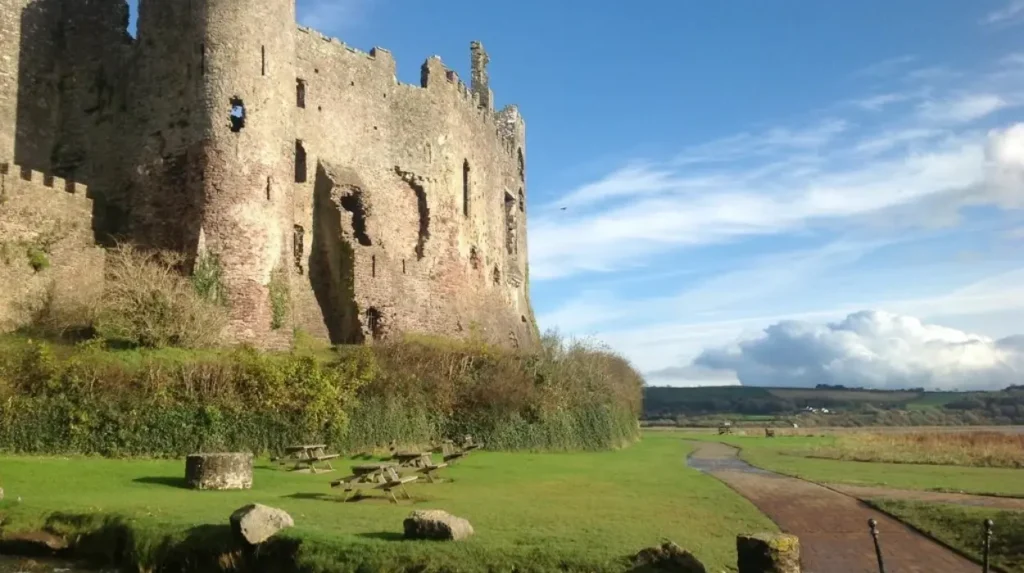
Military capability during the twelfth and thirteenth centuries relied heavily on the vertical defense provided by the curtain walls and mural towers. Defenders utilized narrow arrow slits and crenellated parapets to repel attackers while remaining shielded from incoming missile fire. The principal entrance featured a strongly fortified gatehouse equipped with portcullises and heavy timber doors that could withstand battering rams and fire assaults. If attackers breached the outer ward, they faced a complex kill zone within the interior bailey where crossfire from multiple stone platforms neutralized enemy advances. These sophisticated defensive measures ensured the fortress remained a formidable obstacle during regional skirmishes.
Logistical support for the garrison depended on a steady supply of agricultural produce, livestock, and weaponry delivered via land tracks and estuarine vessels. Storehouses within the inner ward held massive quantities of grain, salt meat, and ale to sustain inhabitants during prolonged sieges by hostile forces. Blacksmiths and armorers maintained workshops on site to repair chainmail, sharpen swords, and forge iron arrowheads for the defending garrison. Animal husbandry and local farming estates requisitioned from tenant farmers provided the necessary calories to maintain fighting forces through harsh winter months. Record-keeping systems administered by castle clerks tracked these inventories to prevent shortages during military campaigns.
The administrative functions of the marcher lordship extended to judicial proceedings, land management, and dispute resolution for the local population. The lord and his appointed bailiffs presided over manorial courts held within the great hall to judge criminal offenses, property disputes, and tax obligations. Fines and revenues collected from these sessions contributed directly to the financial upkeep of the fortifications and the payment of mercenary soldiers. This legal framework reinforced feudal hierarchies and integrated the conquered Welsh territories into the broader Anglo-Norman administrative network. Consequently, the site operated as both a military garrison and a civil governance hub.
The transition of power between Welsh princes and Norman lords frequently altered the operational status and structural integrity of the stronghold. When native forces successfully breached the defenses, they often slighted the stone walls to prevent the enemy from reoccupying a viable military base. Subsequent Norman re-occupation phases required extensive capital investments to rebuild collapsed towers and modernize defensive capabilities according to contemporary military engineering standards. These historical fluctuations demonstrate the volatile nature of frontier politics in medieval Wales and highlight the resilience of stone fortifications. Modern historians analyze these structural phases to reconstruct the timeline of territorial conquest and resistance in the region.
What Caused The Destruction Of Laugharne Castle During The Civil War?
Parliamentary artillery bombardment during the English Civil War in 1644 caused the decisive structural destruction that transformed Laugharne Castle into a ruin. Sir John Laugharne, who initially held the estate for the Royalist cause, fortified the medieval walls and stationed armed troops to resist the advancing parliamentary forces. Colonel Rowland Laugharne, a former resident who switched allegiance to Parliament, led the besieging army that deployed heavy siege guns against the fortress. The intense bombardment shattered the Tudor mansion windows, breached the ancient curtain walls, and forced a surrender that ended military occupation of the site.
The tactical deployment of artillery during seventeenth-century warfare rendered medieval stone fortifications obsolete against gunpowder weapons. Cannons fired iron round shot at high velocities, creating devastating impact fractures in thick limestone masonry that traditional archers and trebuchets could never achieve. Parliamentary commanders positioned their artillery batteries on adjacent high ground overlooking the castle, systematically targeting the vulnerable residential quarters and gatehouse structures. The defenders lacked counter-battery weapons capable of silencing the parliamentary cannon fire, leading to structural collapse across multiple internal buildings. This military engagement marked the final operational chapter of the fortification as a defensible stronghold.
Following the surrender and capture of the property in 1644, Parliament ordered the deliberate slighting of the stronghold to prevent future Royalist uprisings. Slighting involved blowing up strategic sections of the curtain walls with gunpowder and dismantling gatehouse structures to ensure the military utility of the site was permanently destroyed. Local inhabitants subsequently salvaged dressed stone, timber beams, and lead roofing materials for use in nearby residential and agricultural construction projects. The once-grand Elizabethan manor house and medieval keep fell into roofless dereliction, overgrown with ivy and brambles for nearly three centuries. This systematic dismantling preserved the romantic ruin aesthetic that later attracted artists and writers.
The economic fallout from the civil war devastation severely impacted the local economy and administrative importance of the surrounding borough. Without a resident lord or functioning garrison, the town lost its central focus for regional trade, judicial oversight, and military protection. Merchants and artisans who relied on the purchasing power of the castle household were forced to seek alternative economic opportunities in larger Welsh towns. The lands reverted to distant landowners who rented out the agricultural acreage without investing in the preservation of the historic core. Consequently, the ruined monument transformed from a bustling center of power into an abandoned historical relic.
Modern archaeological excavations have uncovered significant layers of civil war debris, including musket balls, cannon fragments, and burned timber beams sealed beneath collapsed masonry. These artifacts provide tangible physical evidence of the 1644 siege and validate historical accounts documented in seventeenth-century military dispatches. Researchers utilize stratigraphical analysis of these destruction layers to date individual building phases and understand the exact mechanics of the parliamentary assault. Today, interpretive signage and museum displays on site educate visitors about the violent events of the English Civil War that shaped the current state of the ruins.
How Does Cadw Protect And Manage Laugharne Castle Today?
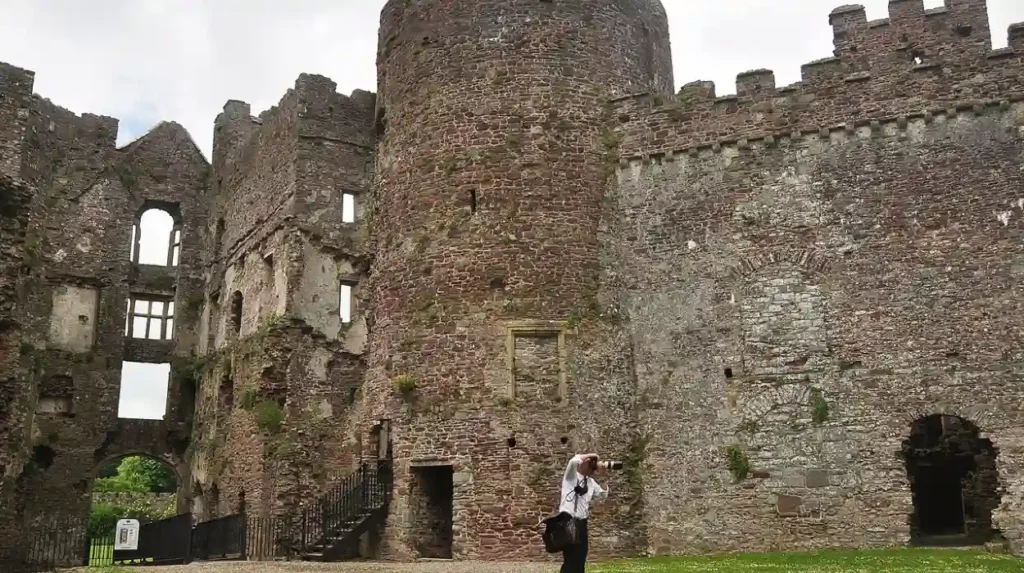
Cadw manages the conservation, public access, and historical interpretation of Laugharne Castle as a scheduled ancient monument of national importance. Professional conservation architects and stonemasons inspect the masonry annually to identify weathering, mortar degradation, and structural instability caused by coastal weather patterns. Intervention strategies prioritize non-destructive stabilization techniques, utilizing traditional lime mortar formulations that match the original medieval composition. These meticulous maintenance protocols ensure that the fragile stone walls and Tudor architectural details survive for future generations of historians and tourists.
Visitor facilities established on site include an informative exhibition center, interpretive audio tours, and accessible pathways through the historic inner and outer wards. Informative displays detail the architectural evolution from Norman ringwork to Tudor mansion, highlighting the lives of historical figures such as Sir John Perrot and Dylan Thomas. Trained heritage guides staff the ticket office and provide educational talks for school groups, university researchers, and international tourists. Safety barriers and protective netting prevent accidental injury from falling masonry while allowing unobstructed viewing of the striking estuarine landscape. These amenities transform a hazardous ruin into a secure, engaging educational destination.
Environmental management strategies implemented by heritage officers protect the local biodiversity and estuarine ecosystem surrounding the castle grounds. The tidal marshlands and limestone walls provide specialized habitats for rare plant species, nesting birds, and invertebrate populations that thrive in coastal microclimates. Conservationists collaborate with ecologists to remove invasive weed species without damaging the historic stone surfaces or disturbing local wildlife habitats. Sustainable tourism initiatives limit visitor congestion during peak summer months to preserve the physical integrity of the lawns and pathways. This balanced approach protects both the cultural heritage and the natural environment of Carmarthenshire.
Financial funding for the upkeep of the monument derives from governmental heritage grants, admission fees, and regional tourism revenue managed by the Welsh Government. Economic impact studies indicate that heritage visitors contribute significantly to the local economy by patronizing nearby bed and breakfasts, cafes, and independent shops. Community engagement programs involve local schools in archaeological projects, creative writing workshops, and historical reenactments that celebrate the cultural heritage of Laugharne. These outreach efforts foster local stewardship and ensure that the monument remains a vibrant cultural asset for the surrounding community. Such sustained investment guarantees the long-term viability of the historic site.
Future preservation planning incorporates advanced digital documentation technologies, including laser scanning and photogrammetric 3D modeling of the entire castle complex. Surveyors create millimeter-accurate digital twins of the stone masonry to monitor minute structural shifts over time and plan precise restoration interventions. Researchers can access these digital archives globally for academic study without risking physical wear and tear on the delicate historic fabric. These technological advancements place Welsh heritage management at the forefront of European archaeological conservation standards. Through continuous innovation and rigorous academic stewardship, the monument endures as an uncompromised symbol of Welsh history.
Frequently Asked Questions
How much does it cost to enter Laugharne Castle?
Admission fees vary depending on the season and visitor age categories, with concessions available for children, students, and seniors. Cadw members enjoy free entry to the site by presenting a valid membership card at the visitor center. Visitors should check the official Cadw website for current ticket pricing before planning their journey.
Is Laugharne Castle accessible for visitors with limited mobility?
Certain areas of the site feature uneven medieval paving, steep grass slopes, and gravel pathways that present mobility challenges. However, accessible parking bays, adapted restroom facilities, and designated viewing platforms provide reasonable access to the outer ward and exhibition spaces. Staff members assist visitors with specific accessibility requirements upon arrival at the main entrance.
Are dogs permitted inside the castle grounds?
Well-behaved dogs kept on short leads are welcome to accompany visitors exploring the outdoor castle grounds and gardens. Dogs are generally excluded from enclosed indoor exhibition rooms and interpretive centers for conservation and hygiene reasons. Water bowls and waste disposal stations are available near the main visitor reception area.
What parking facilities are available near the site?
Public car parking is available within short walking distance of the entrance in Laugharne town center, operated by the local council. Spaces can fill quickly during peak summer tourist seasons and literary festival weekends. Additional parking options exist along nearby streets, subject to local parking restrictions and time limits.
Can visitors access the Dylan Thomas Boathouse from the castle?
A scenic walking path connects the castle grounds to the Dylan Thomas Boathouse situated further along the estuary shoreline. The pedestrian route offers picturesque views of the tidal marshlands and the surrounding Carmarthenshire landscape. The walk takes approximately ten minutes at a moderate pace across paved and natural footpaths.