The National Botanic Garden of Wales situated in Llanarthne Carmarthenshire spans 568 acres of historic Regency landscape and functions as a premier center for plant conservation science and public education. Opened formally in May 2000, the institution combines cutting edge environmental research with preserved 19th century water parks to protect global biodiversity.
The physical geography of the estate encompasses varied terrain including rolling hills, restored lakes, and ancient woodlands. This geographical diversity provides microclimates suitable for cultivating thousands of distinct plant taxa from Mediterranean, temperate, and tropical biomes. Management of the site relies on rigorous ecological surveying and sustainable landscaping techniques to maintain soil health and water purity across the watershed.
Historical records indicate that the land originally formed part of the Middleton Hall estate owned by wealthy entrepreneur Sir William Paxton during the early 19th century. Paxton commissioned architect Samuel Pepys Cockerell to design a grand mansion alongside an intricate hydraulic water park featuring ponds, dams, and stone bridges. Following a devastating fire in 1931 that destroyed the primary manor house, the estate fell into deep neglect until local preservation groups initiated revitalization efforts in the late 20th century.
Modern administration of the site operates under charitable status supported by the Welsh Government and public patronage. Organizational priorities center on halting biodiversity loss through seed banking, genetic research, and public engagement programs. Staff members collaborate with international botanical networks to monitor invasive species and propagate endangered flora facing existential threats from habitat destruction.
Visitors touring the grounds encounter structured zones such as the Wallace Garden, the British Wildlife Centre, and the apothecary garden. These zones feature specialized plantings like medicinal herbs, native Welsh wildflowers, and exotic Mediterranean species. Educational signage throughout the pathways details plant taxonomy, ecological relationships, and the historical evolution of landscape architecture.
Research initiatives conducted at the facility generate critical data regarding pollinator decline and climate change adaptation strategies. Scientists utilize laboratory spaces on site to study plant DNA and test organic pest management protocols applicable to modern agriculture. Publications from the research division inform governmental environmental policies and guide international conservation frameworks.
Future development plans focus on expanding renewable energy integration across all estate operations to achieve complete carbon neutrality. Capital investments target the modernization of research laboratories and the enhancement of digital accessibility for global botanical databases. These forward looking strategies ensure that the institution remains a vital pillar of environmental stewardship and scientific discovery for upcoming generations.
How Does the Great Glasshouse Function Architecturally and Environmentally?
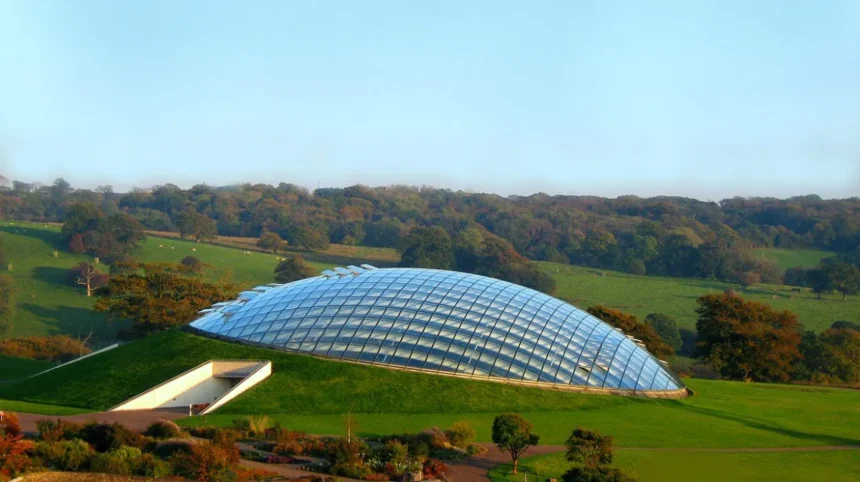
The Great Glasshouse designed by Foster and Partners represents the world largest single span glasshouse enclosing a subterranean exhibition space dedicated to Mediterranean climate flora. Spanning 110 meters in length and 60 meters in width, the elliptical structure utilizes an innovative tubular steel arches framework glazed with low emissivity glass panels.
Engineering mechanisms within the building maintain precise temperature and humidity parameters without relying on heavy fossil fuel consumption. Automated roof vents controlled by computerized weather stations regulate internal airflow and prevent excessive heat accumulation during summer months. Underground thermal mass channels capture solar warmth during peak daylight hours and release it gradually as ambient temperatures drop overnight.
Plant collections housed inside originate from six distinct Mediterranean climate regions including the Mediterranean Basin, Chile, California, South Africa, and southwestern and southern Australia. Exemplary species cultivated within this controlled environment include olive trees, cork oaks, Proteas, and rare coastal succulents. Each planting bed mimics native soil compositions to support healthy root development and natural growth patterns among the diverse specimens.
Water management systems capture rainfall runoff from the massive glass roof surface and channel it into underground storage cisterns for irrigation use. Drip irrigation networks deliver precise moisture quantities directly to plant root zones, minimizing evaporation losses and conserving precious water resources. Nutrient delivery is carefully monitored by horticulturists to replicate natural seasonal nutrient flushes experienced in native habitats.
Visitor pathways meander through topographical elevations that offer sweeping views across the interior landscape while maintaining ADA compliant accessibility standards. Interpretive exhibits positioned strategically along the walkways explain Mediterranean climate adaptations such as sclerophyllous leaves, bulbous root systems, and fire resilient bark. Educational displays highlight the ecological pressures currently facing Mediterranean biomes due to urban expansion and prolonged droughts.
Structural maintenance requires specialized rope access technicians to inspect steel joints, clean exterior glass panels, and service automated climate control actuators regularly. Preventive conservation protocols protect the structural integrity of the building against high winds and heavy precipitation typical of the regional Welsh climate. Ongoing engineering assessments ensure that the architectural envelope continues to deliver optimal environmental performance standards.
Scientific monitoring inside the dome measures carbon dioxide exchange rates and transpiration patterns to evaluate plant health under simulated future climate scenarios. Researchers use these empirical observations to model how Mediterranean ecosystems might respond to rising global temperatures and shifting precipitation regimes. Findings from these controlled trials contribute valuable datasets to global botanical research consortiums.
Long term preservation strategies for the glasshouse involve upgrading glazing materials with advanced nanotechnologies to improve thermal retention and light transmission efficiency. Collaborative engineering projects test new sealant compounds designed to withstand high humidity levels and intense ultraviolet radiation exposure over extended operational lifespans. These technical refinements guarantee the sustained viability of the exhibition for decades of future research and public enjoyment.
What Scientific Conservation Projects Operate Within Waun Las National Nature Reserve?
Waun Las National Nature Reserve comprises 250 acres of organic farm land, species rich grasslands, and ancient woodlands situated within the broader botanical garden estate. Designated as a National Nature Reserve, the area serves as a living laboratory for lowland grassland restoration and sustainable agricultural practices. Conservation staff manage the habitat through traditional conservation grazing using rare breed Welsh Black cattle and hardy sheep flocks.
Ecological surveys conducted across the reserve document hundreds of native plant taxa, invertebrate species, and nesting bird populations. Botanists monitor delicate waxcap fungi assemblages that thrive in unplowed, nutrient poor pastures characteristic of historical Welsh farming landscapes. Long term monitoring plots track shifts in vegetative composition to evaluate the efficacy of organic management methods against agricultural runoff and atmospheric nitrogen deposition.
Pollinator research represents a core scientific pillar within the reserve, particularly concerning DNA barcoding of honey collected from managed and wild bee colonies. Researchers analyze pollen grains trapped in honey samples to identify precisely which floral species foraging insects visit across the Carmarthenshire countryside. This genomic data helps conservationists understand foraging preferences and spatial distribution patterns among declining pollinator populations.
Habitat connectivity projects link fragmented woodland patches through the planting of native hedgerows and the creation of wildlife corridors across the agricultural estate. These linear landscape features provide shelter and migration routes for small mammals, amphibians, and predatory insects necessary for natural pest control. Riparian buffer strips established along watercourses prevent soil erosion and improve aquatic biodiversity within local river systems.
Educational outreach programs translate complex ecological research findings into accessible formats for university students, visiting schools, and agricultural practitioners. Practical workshops demonstrate techniques for soil carbon sequestration, wildflower meadow restoration, and low impact woodland management. Farmers attending these training sessions learn how to integrate biodiversity conservation into economically viable commercial enterprise models.
Government partnerships enable the reserve to participate in national biodiversity action plans aimed at reversing the decline of threatened farmland bird species like curlews and lapwings. Nest monitoring and predator management protocols implemented by conservation wardens significantly improve fledging success rates within designated breeding zones. Data sharing agreements ensure that field observations contribute directly to national conservation databases managed by academic institutions.
Climate resilience initiatives within the reserve focus on establishing diverse tree species mixtures capable of resisting emerging pests and pathogens like ash dieback. Foresters plant structural oak, field maple, and wild cherry saplings to enhance structural complexity and carbon storage capacity within older woodland stands. Soil microbiology studies assess how varying tree species influence subterranean fungal networks essential for nutrient cycling.
Future research directions for Waun Las involve deploying remote sensing technologies and drone imagery to map vegetation health and soil moisture content across large spatial scales. Automated acoustic monitors record bird and bat vocalizations continuously to track population dynamics without human disturbance factors. These technological integrations position the reserve at the forefront of modern applied ecological science.
What Educational and Community Programs Drive Public Engagement?
Public engagement initiatives at the botanical garden reach diverse audiences ranging from early childhood education groups to lifelong learning adult participants. Structured schools programs align directly with the national curriculum for science and geography, offering hands on outdoor learning experiences. Qualified educators lead investigative workshops focusing on plant biology, photosynthesis, water cycles, and sustainable food production systems.
Adult education courses cover specialized horticultural topics including botanical illustration, organic vegetable cultivation, garden design, and traditional coppicing crafts. Professional development modules provide certified training for aspiring landscape gardeners, arborists, and environmental educators seeking career advancement in horticulture. Online learning portals extend course accessibility to international participants unable to attend physical sessions on site.
Community outreach projects actively engage disadvantaged socioeconomic groups and elderly populations through therapeutic horticulture and gardening therapy sessions. Specially designed accessible garden plots allow participants with mobility impairments to engage directly in planting, propagation, and harvesting activities. Health and wellbeing initiatives demonstrate the positive psychological benefits of spending time immersed in natural green environments.
Volunteer programs form the operational backbone of the institution, engaging hundreds of dedicated individuals who contribute thousands of hours annually. Volunteers receive comprehensive training in plant husbandry, guide duties, conservation fieldwork, and archival management under professional staff supervision. This active participatory model fosters strong community ownership and deep civic pride in the preservation of national botanical heritage.
Seasonal events and cultural exhibitions hosted throughout the calendar year attract regional and international visitors, boosting the local Carmarthenshire tourism economy. Festivals celebrating local food producers, artisanal crafts, and botanical arts showcase Welsh cultural identity within a natural setting. Scientific lecture series feature prominent guest speakers discussing pressing global environmental issues, conservation breakthroughs, and evolutionary biology.
Accessibility improvements across all public areas ensure that visitors with visual impairments, neurodivergent needs, or physical disabilities enjoy equitable access to exhibitions and amenities. Sensory gardens feature plants selected for tactile textures, aromatic fragrances, and audible seed pods to enhance experiences for sensory sensitive guests. Multilingual signage and audio guides accommodate international tourists visiting the regional attraction.
Partnerships with regional universities facilitate postgraduate research placements, undergraduate internships, and collaborative public science communication projects. Students gain practical work experience curating living plant collections, managing herbarium archives, and designing interpretive public exhibitions. These academic linkages ensure a continuous pipeline of skilled professionals entering the botanical science and conservation sectors.
Strategic marketing campaigns utilize digital platforms, social media channels, and targeted public relations efforts to promote upcoming events, exhibitions, and research milestones. Analytical tracking of visitor demographics helps administration tailor program offerings to match evolving public interests and educational demands. Sustained community involvement guarantees the long term cultural and economic viability of the botanical institution.
Frequently Asked Questions
What is the history of the National Botanic Garden of Wales?
The site originally formed part of the historic Middleton Hall estate established by Sir William Paxton in the early 19th century. Following a devastating mansion fire in 1931, the grounds deteriorated until local preservationists initiated revitalization efforts. The modern botanical garden officially opened to the public in May 2000 as a registered conservation charity.
How large is the botanical garden in Carmarthenshire?
The institution spans 568 acres of rolling Carmarthenshire countryside featuring landscaped gardens, historic water parks, and natural nature reserves. Within this expansive footprint, visitors explore specialized plant collections, research facilities, and the iconic Great Glasshouse.
What plants can be found inside the Great Glasshouse?
The Great Glasshouse houses thousands of plants originating from six distinct Mediterranean climate regions around the world. Prominent flora includes olive trees, cork oaks, Proteas, and rare succulents adapted to dry summers and mild winters.
How does Waun Las National Nature Reserve protect biodiversity?
Waun Las National Nature Reserve covers 250 acres of organic farmland and species rich grassland managed through traditional conservation grazing. Conservationists conduct DNA barcoding on honey samples, monitor waxcap fungi, and restore native hedgerows to support pollinators and declining bird populations.
Can visitors access the botanical garden throughout the year?
The garden remains open to the public year round with seasonal operating hours adjusted for daylight and weather conditions. Visitors enjoy access to indoor glasshouses, outdoor sculpture trails, seasonal exhibitions, and educational visitor center amenities.