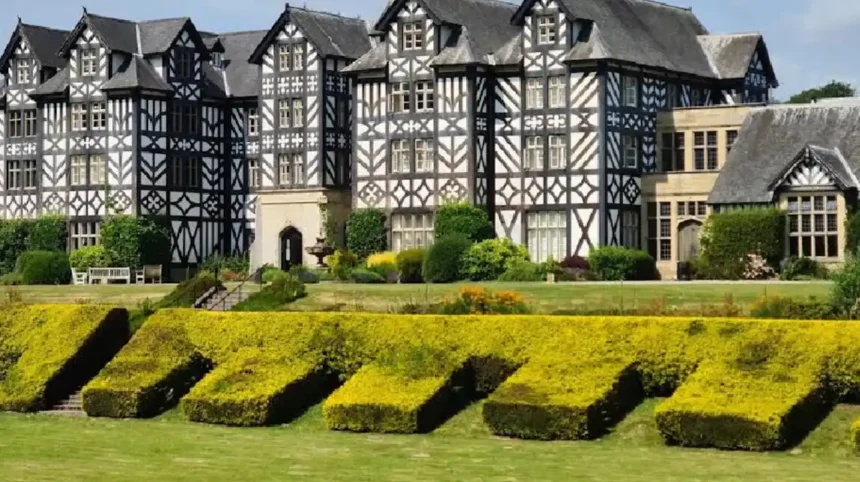
Gregynog Hall Wales is a historic country estate located in the village of Tregynon near Newtown in Powys. The history of settlement on this site dates back to the twelfth century when it was occupied by descendants of Welsh royalty. During the fifteenth century, the Blayney family established the location as a prominent landed estate in Montgomeryshire.
- How Does the Concrete Architecture of Gregynog Hall Wales Function?
- What Role Did the Davies Sisters Play in Establishing Gregynog Hall Wales?
- What Is the Significance of the Gregynog Press at Gregynog Hall Wales?
- What Ecological Features Exist Within the Grounds of Gregynog Hall Wales?
- How Can Tourists and Visitors Access Gregynog Hall Wales Today?
- Frequently Asked Questions
The original medieval mansion underwent substantial redevelopment in the nineteenth century under Charles Hanbury-Tracy, who was the first Baron Sudeley. The Sudeley family modernized the main house and pioneered the structural use of concrete across the surrounding farmland. Financial instability led to the liquidation and division of the original 18000-acre estate in 1913.
In 1920, sisters Gwendoline and Margaret Davies purchased the remaining 750-acre property to establish a dedicated cultural sanctuary. The Davies sisters were grand-daughters of industrialist David Davies and utilized their personal fortune to foster fine arts, music, and social restoration following World War I.
Following Margaret Davies’s death in 1963, ownership transferred to the University of Wales for academic use. In 2019, the property was transferred to the Gregynog Trust, an independent registered charity that currently manages the historic house, national nature reserve, and educational facilities.
How Does the Concrete Architecture of Gregynog Hall Wales Function?
Gregynog Hall Wales features a unique mock-Tudor architectural exterior constructed almost entirely of concrete poured in the 1840s. Architect Charles Hanbury-Tracy utilized early concrete formulations to mimic black-and-white timber-framed designs common in traditional Montgomeryshire farmhouses. This structural choice makes the building one of the earliest existing examples of concrete architecture in modern Western Europe.
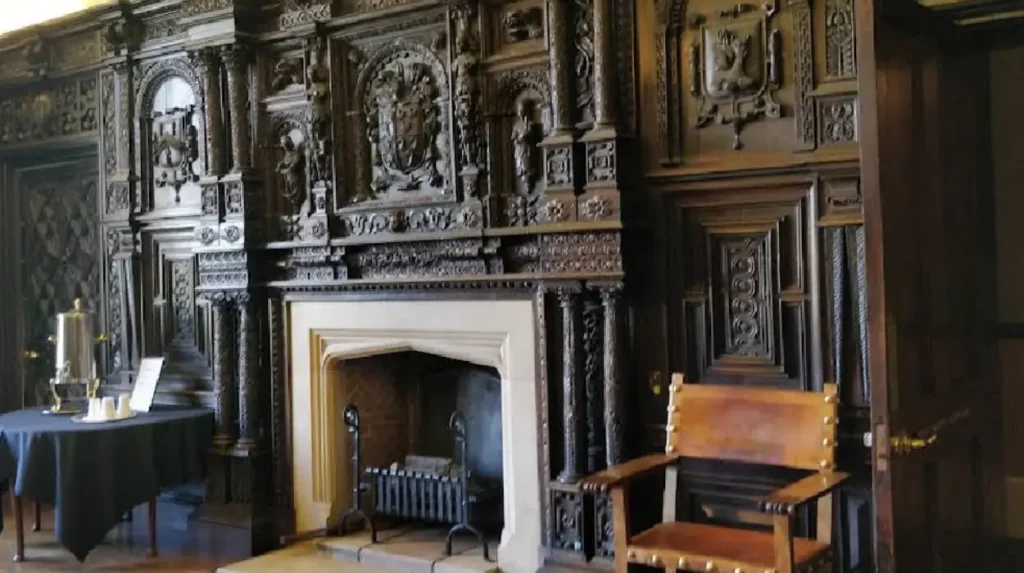
The inner structure of the mansion retains fine woodwork and ornate carved timbering crafted during earlier centuries. The exterior walls feature concrete cladding detailed to resemble oak beams, decorative plasterwork, and traditional masonry motifs. This pioneering material allowed the Sudeleys to construct durable estate buildings and worker cottages throughout Tregynon.
The interior layout incorporates formal reception rooms, a wood-panelled dining hall, and an expansive music room designed for orchestral performances. Structural maintenance involves regular conservation of the concrete facade to prevent moisture ingress while preserving the historical framework. The entire mansion carries Grade I listed building status due to its architectural innovation and historical integrity.
Engineers analyze the estate as a milestone in industrial construction history. The building demonstrates how nineteenth-century estate owners integrated emerging construction technologies into domestic heritage architecture.
What Role Did the Davies Sisters Play in Establishing Gregynog Hall Wales?
Gwendoline and Margaret Davies transformed Gregynog Hall Wales into an internationally recognized hub for art, music, and humanism during the twentieth century. After serving in Red Cross canteens during World War I, the sisters sought to heal societal trauma through cultural engagement. They invested heavily in acquiring masterpiece artworks and hosting cultural gatherings.
The sisters accumulated one of Britain’s finest art collections, focusing heavily on Impressionist and Post-Impressionist masters. Paintings by Claude Monet, Pierre-Auguste Renoir, Édouard Manet, and Vincent van Gogh hung directly on the walls of Gregynog. Upon their deaths, the sisters bequeathed 260 major artworks to the National Museum of Wales in uk/local/cardiff/">Cardiff.
In 1933, the sisters founded the Gregynog Music Festival, which remains the oldest surviving classical music event in Wales. Renowned artists including Gustav Holst, Ralph Vaughan Williams, Edward Elgar, and Benjamin Britten performed inside the mansion’s dedicated Music Room.
The Davies family also funded social welfare, education, and peace campaigns across the United Kingdom. Their vision ensured that rural Mid Wales served as an intellectual meeting point for international diplomats, authors, and artists throughout the interwar era.
What Is the Significance of the Gregynog Press at Gregynog Hall Wales?
The Gregynog Press was established at the estate in 1922 by Gwendoline and Margaret Davies to promote fine printing and book arts. The press became one of the most respected private presses in twentieth-century Britain, publishing limited editions of classic literature and Welsh texts. The initiative employed skilled typographers, wood engravers, and bookbinders directly on the estate grounds.
The press produced books using hand-operated printing machinery, rag paper, and custom-designed typefaces. Illustrations featured fine wood engravings created by famous artists such as Robert Gibbings, Agnes Miller Parker, and Blair Hughes-Stanton. The binding shop created bespoke leather bindings featuring intricate gold tooling and artistic inlay work.
Between 1923 and 1940, the press issued 42 distinct titles in strictly limited quantities, often restricted to three hundred copies per edition. The publications focused heavily on Welsh literature, poetry, and religious texts, publishing works in both the Welsh and English languages.
The operations ceased temporarily during World War II but were revitalized in 1974 under the name Gwasg Gregynog. Scholars evaluate the press as a critical movement in preserving traditional bookbinding techniques and expanding the visibility of Welsh literature worldwide.
What Ecological Features Exist Within the Grounds of Gregynog Hall Wales?
The 750-acre grounds of Gregynog Hall Wales encompass a Site of Special Scientific Interest and form part of the National Forest for Wales. The property features ancient woodland known as The Great Wood, which contains oak trees that have grown uninterrupted for over five centuries. The most famous specimen is the Gregynog Oak, measuring nine meters in circumference and dating back at least five hundred years.
The ancient woodland provides habitats for rare lichen species, saproxylic beetles, and diverse bat populations. The grounds contain a diverse arboretum, sunken gardens, water lily ponds, and formal Grade I listed historic parklands. Environmental researchers utilize the estate to study woodland ecology and ancient forest conservation techniques.
Managed trails guide visitors across parklands, past historical earthworks, and through protected conservation zones. Environmental policies enforced by the Gregynog Trust ensure strict habitat protection for protected species including red kites, otters, and pied flycatchers.
How Can Tourists and Visitors Access Gregynog Hall Wales Today?
Gregynog Hall Wales operates as a public visitor center, historic garden, conference site, and event venue throughout the calendar year. The surrounding grounds, walking trails, cafe, and outdoor parklands remain open daily to the public. Visitors can access designated walking paths that navigate through the Grade I listed gardens, ancient oak forests, and formal sunken courtyard.
The mansion offers venue spaces for academic conferences, private events, and weddings within its historic function rooms. On-site accommodation includes courtyard apartments and traditional guest rooms located within the main hall. Guided tours of the house are scheduled during specific cultural events, allowing access to the historic Music Room and library collections.
The site hosts the annual Gregynog Music Festival every summer, maintaining its historic tradition of classical musical excellence. Visitors can access the estate via car via the B4389 road from Tregynon, with vehicle parking available on site.
Frequently Asked Questions
What makes the architecture of Gregynog Hall unique?
Gregynog Hall features early ornamental concrete construction applied during the 1840s. The concrete was molded to imitate traditional black-and-white timber framing. This makes the building one of the oldest surviving concrete structures in modern Europe.
Who were the Davies sisters and why are they famous?
Gwendoline and Margaret Davies were wealthy Welsh philanthropists and art collectors. They transformed Gregynog Hall into a renowned arts, printing, and music center in 1920. Their impressionist art collection was later donated to the National Museum of Wales.
Is Gregynog Hall open to the general public?
Yes, the grounds, ancient woodlands, gardens, and courtyard cafe are open daily to visitors. The hall itself is accessible during public events, guided tours, and private bookings.
How old is the oldest tree at Gregynog Hall?
The famous Gregynog Oak located in The Great Wood is over 500 years old. It measures nine meters in circumference and stands within a National Nature Reserve.
Is the Gregynog Music Festival still active?
Yes, the Gregynog Music Festival is held every June at the estate. Established in 1933, it remains the oldest surviving classical music festival in Wales.