

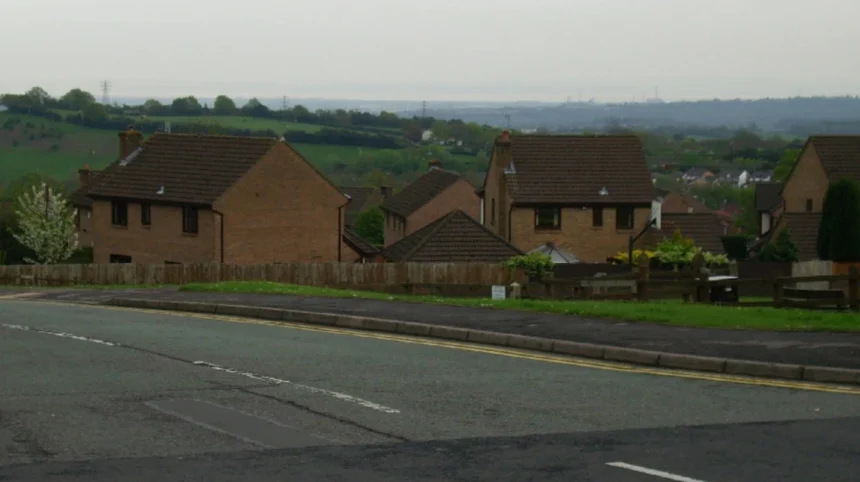
South Wales Great Britain is an essential economic, cultural, and historic region forming the southern portion of Wales in the United Kingdom. Home to approximately two million residents, it encompasses major urban centers like uk/local/cardiff/">Cardiff and Swansea, rugged valley terrain, and extensive coastal plains along the Bristol Channel.
- What Is the Geographic Scope and Location of South Wales Great Britain?
- How Did Industrialization Shape the History of South Wales Great Britain?
- What Are the Key Cities and Population Centers in South Wales Great Britain?
- What Drives the Modern Economy of South Wales Great Britain?
- What Transportation Infrastructure Connects South Wales Great Britain?
- Frequently Asked Questions
What Is the Geographic Scope and Location of South Wales Great Britain?
South Wales Great Britain comprises the southern geographical area of Wales, bounded by the Bristol Channel to the south, the English border to the east, and Mid Wales to the north. The region stretches from Monmouthshire in the east through Glamorgan to Carmarthenshire and Pembrokeshire in the west.
The topography consists of three distinct terrain zones: the coastal plain, the industrial valleys, and the northern upland plateau. The coastal plain contains the primary population centers, including Cardiff, Newport, and the Vale of Glamorgan. The central area features steep sandstone valleys carved by the Taff, Rhymney, Ogmore, and Tawe rivers flowing southward toward the sea. The northern perimeter is defined by the Bannau Brycheiniog National Park, where Pen y Fan reaches an elevation of 886 meters above sea level.
Geologically, the region lies upon the South Wales Coalfield, a structural basin rich in Palaeozoic carboniferous limestone, ironstone, and coal seams. The maritime climate brings annual precipitation ranging from 1,000 millimeters along coastal fringes to over 2,000 millimeters in upland areas. Temperatures remain temperate throughout the year, with average means between 9.5 and 11 degrees Celsius.
How Did Industrialization Shape the History of South Wales Great Britain?
South Wales Great Britain transformed from a rural pastoral land into a global industrial center during the eighteenth and nineteenth centuries due to rich coal deposits and iron ore reserves. Merthyr Tydfil became the largest iron-producing town in the world by the 1830s.
The discovery and extraction of high-grade anthracite and steam coal turned the Rhondda Valley into a major extraction node, causing its population to grow from 3,000 in 1860 to over 160,000 by 1910. Infrastructure networks expanded rapidly to support mineral transportation. Canals and early railway lines connected inland mines directly to maritime shipping hubs. The Port of Cardiff became one of the busiest coal-exporting ports globally, handling over 10 million tons of coal annually at its industrial peak in 1913.

Immigration surged as thousands of workers arrived from England, Ireland, Scotland, and continental Europe to work in deep-pit mines and metal foundries. Dense terraced housing was built along narrow valley slopes to accommodate this rapidly expanding workforce. The decline of heavy manufacturing and deep coal mining during the mid-to-late twentieth century caused major socioeconomic shifts, prompting structural economic regeneration programs across all local authority districts.
What Are the Key Cities and Population Centers in South Wales Great Britain?
Cardiff, Swansea, and Newport serve as the principal urban anchors and administrative centers of South Wales Great Britain. Cardiff is the capital city of Wales and functions as the national political, economic, and cultural centre.
Cardiff covers an area of roughly 140 square kilometers and holds a population exceeding 360,000 residents. The city houses the Welsh Parliament at the Senedd building, major broadcast headquarters, national museum facilities, and financial service firms. Swansea, situated further west along Swansea Bay, is the second-largest city with over 240,000 residents. Swansea functions as an educational hub centered around Swansea University and serves as the gateway to the Gower Peninsula.
Newport sits close to the English border along the River Usk, maintaining a population of over 150,000 inhabitants. Newport has developed into a high-technology manufacturing and compound semiconductor cluster. Outside these principal coastal cities, significant valley urban centers include Merthyr Tydfil, Aberdare, Pontypridd, and Caerphilly. These valley towns retain dense residential populations tied closely to regional transportation corridors connecting directly into Cardiff and Newport.
What Drives the Modern Economy of South Wales Great Britain?
The economy of South Wales Great Britain has transitioned from heavy mineral extraction into advanced manufacturing, public administration, financial services, medical technology, and green energy generation. Service sector employment represents over 80 percent of total regional workforce activity.

Cardiff acts as the main driver for commercial service industries, housing corporate offices for banking, insurance, and legal practices. Strategic public sector investment has established regional specialized industry hubs, such as the compound semiconductor enterprise domain in Newport. Automotive manufacturing, aerospace engineering, and defense technology maintain facilities across Bridgend, Caerphilly, and RCT districts.
Tourism contributes over two billion pounds annually to the regional economy, supported by heritage sites, coastal resorts, and national parks. Renewable energy generation has expanded through onshore wind projects, marine energy initiatives along the Bristol Channel, and industrial decarbonization programs centered around the Port Talbot steel manufacturing complex. Higher education institutions generate significant regional revenue through research grants and international student enrollments across four major universities.
What Transportation Infrastructure Connects South Wales Great Britain?
South Wales Great Britain is linked to the rest of the United Kingdom through integrated motorway networks, deep-water ports, international airport terminals, and electrified mainline railways.
The M4 motorway serves as the primary east-west arterial road highway, entering Wales via the Severn Bridges near Chepstow and continuing past Newport, Cardiff, and Swansea to its terminus at Pont Abraham. Rail travel relies on the South Wales Main Line, which offers direct high-speed passenger rail service between London Paddington, Newport, Cardiff Central, and Swansea. Regional rail transit is delivered through the South Wales Metro project, an integrated public transport network converting valley line corridors into high-frequency electrified routes.
Maritime transport passes through five major commercial ports operated by Associated British Ports, including Cardiff, Newport, Barry, Port Talbot, and Swansea. Port Talbot handles heavy bulk cargo for steel production, while Cardiff and Newport process timber, agricultural goods, and containerized freight. Air travel is supported by Cardiff Airport at Rhoose, providing scheduled international flights, domestic UK connections, and charter aviation services across Europe.
Frequently Asked Questions
What are the main counties that make up South Wales?
South Wales includes historic counties such as Glamorgan and Monmouthshire, alongside unitary authorities like Cardiff, Newport, Swansea, Caerphilly, and Rhondda Cynon Taf. In broader geographic contexts, western areas like Carmarthenshire and Pembrokeshire are also grouped under South West Wales.
Is Cardiff the capital city of South Wales and the nation?
Cardiff serves as the official capital city of Wales as well as the largest primary urban hub within South Wales. It hosts the country’s national administrative center, the Welsh Parliament (Senedd), and major economic institutions.
How far is South Wales from London by train?
Direct high-speed train services along the South Wales Main Line connect London Paddington to Cardiff Central in under two hours. Services continue west to Swansea, offering fast transport between England and Wales.
What is South Wales famous for historically?
South Wales is historically famous for its central role in the Industrial Revolution, leading the world in iron production and coal extraction. Ports in Cardiff and Swansea were among the world’s highest-volume exporters of coal in the early twentieth century.
What natural attractions are located in South Wales?
The region contains diverse natural landmarks, including Bannau Brycheiniog (Brecon Beacons) National Park, the Gower Peninsula Area of Outstanding Natural Beauty, and the Glamorgan Heritage Coast.