

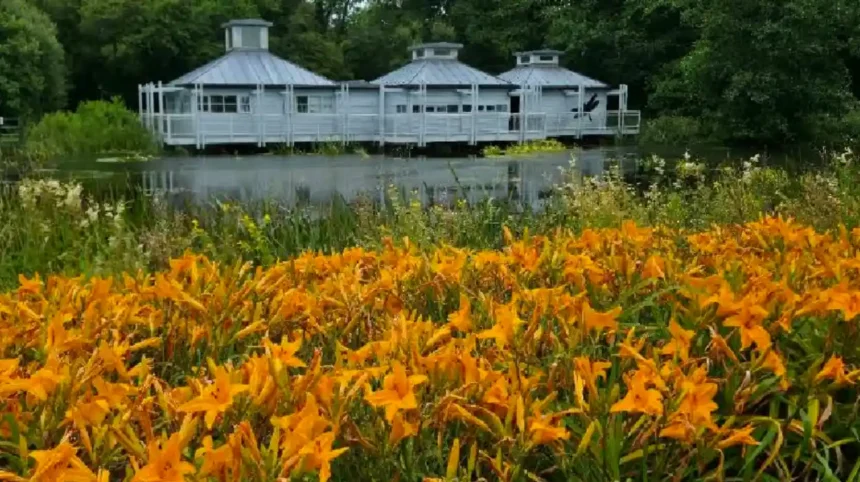
The national botanic garden of wales is a major botanical research institution and visitor attraction opened in May 2000 in Carmarthenshire. It spans 568 acres of historic parkland, housing over 8,000 distinct plant species for international conservation, education, and ecological study.
- What unique architectural features define the national botanic garden of wales?
- How do the plant collections at the national botanic garden of wales support conservation?
- What key public attractions can visitors explore at the national botanic garden of wales?
- Frequently Asked Questions
- What are the main opening hours and admission details for visitors?
- Is the National Botanic Garden of Wales accessible for disabled visitors?
- How long does a typical visit to the botanic garden take?
- Are dogs allowed inside the National Botanic Garden of Wales grounds?
- How do visitors reach the garden using public transportation?
The institution sits within the historic Middleton Hall estate, which originated in the seventeenth century under the ownership of Sir Henry Middleton. The property underwent significant development in the late eighteenth century when William Paxton acquired the land and commissioned architect Samuel Pepys Cockerell to construct a grand mansion and elaborate water park. The estate fell into decline during the twentieth century following a destructive fire in 1931 that reduced the main mansion house to ruins.
The Millennium Commission selected the site in the late 1990s as a landmark project to celebrate the new millennium in Wales. Construction officially began to transform the abandoned agricultural grounds into the first national botanic garden created in the United Kingdom for over one hundred years. Architectural firm Foster and Partners designed the central glass structure, establishing an internationally recognized model for sustainable architecture.
Today, the facility functions as a hub for scientific study and biodiversity preservation, maintaining seed banks, DNA barcoding records, and native flora recovery programs. The research department collaborates with international botanical gardens to safeguard endangered plant species threating extinction from habitat destruction and climate change. The site preserves both the natural heritage of South Wales and historic landscape architecture spanning three centuries of continuous human development.
What unique architectural features define the national botanic garden of wales?
The primary structure is the Great Glasshouse, designed by Foster and Partners, which stands as the single-span glass house in the world. It measures 110 meters long by 60 meters wide, housing Mediterranean climate plants inside an elliptical dome structure.
The Great Glasshouse utilizes an aluminum frame supported by twenty-four arches anchored into a concrete ring beam set directly into the natural landscape. The exterior consists of 785 individual double-glazed glass panels, engineered to maximize natural sunlight penetration while minimizing structural heat loss during cold winter months. An automated computer control system manages temperature, ventilation, and humidity by operating dynamic roof vents positioned throughout the curved superstructure.
Heating for the massive internal volume comes from an eco-friendly biomass boiler fueled by locally sourced wood chips, reducing reliance on fossil fuels. Below the main viewing floor lies a massive subterranean service level containing rainwater storage tanks, filtration systems, and climate control electronics. Rainwater harvesting off the glass roof supplies thousands of liters of recycled water directly into the irrigation network serving the plant collections.
Additional notable architectural elements include the tropical Tropical House, designed by John Welch, and the restored Paxton Tower located on an adjacent hill overlooking the Tywi Valley. The slate-lined Principality House serves as administrative headquarters, blending modern glass and stone construction with traditional Welsh building materials. The integration of modern glass design into historical earthworks creates an efficient environment for maintaining controlled climates year-round.
How do the plant collections at the national botanic garden of wales support conservation?

The living collections encompass over 8,000 plant species organized into geographical regions, including rare Mediterranean plants, native Welsh species, and endangered tropical flora. These collections support DNA barcoding, seed saving, and habitat restoration across Western Europe.
The main Mediterranean collection represents six global regions characterized by hot, dry summers and cool, wet winters: the Mediterranean Basin, California, Central Chile, the Cape Region of South Africa, Southwestern Australia, and South Australia. These regions account for less than two percent of the land area of Earth yet contain over twenty percent of the plant biodiversity worldwide. Preserving these species ensures the survival of specialized plant genetic codes threatened by ongoing urbanization and climate shifts.
Scientific work at the botanical garden includes the Welsh Flora project, which seeks to catalog and preserve the genetic profiles of every wild plant species native to Wales. Researchers utilize DNA barcoding technology to create a universal reference library for plant identification, assisting conservationists in identifying rare species from soil or seed samples. The institution also maintains a dedicated seed facility storing viable seeds from endangered Welsh plants, such as the cotoneaster cambricus.
Educational programs operate alongside conservation efforts, informing over 100,000 visitors and school children annually regarding ecological stewardship and plant preservation methods. The facility collaborates with the IUCN Species Survival Commission, providing expertise and biological material for international ecosystem restoration projects. Detailed recordkeeping tracks the lineage and origin of every plant specimen growing within the grounds, creating a verifiable record for academic study.
What key public attractions can visitors explore at the national botanic garden of wales?
Visitors can explore the British Birds of Prey Centre, the restored Regency Restoration landscape, the Wallace Garden, and the Apothecary Garden. The site offers immersive outdoor walks, interactive exhibitions, family learning trails, and seasonal floral displays year-round.
The British Birds of Prey Centre provides daily flying displays and educational talks featuring native raptors, including golden eagles, red kites, barn owls, and peregrine falcons. The raptor center focuses on avian conservation, rehabilitation of injured wild birds, and research into local bird populations throughout the Carmarthenshire countryside. Interactive flying demonstrations educate the public regarding the crucial ecological role predatory birds play in maintaining balanced natural ecosystems.
The Regency Restoration project represents a major landscape conservation effort, restoring the historical water park created by William Paxton between 1795 and 1810. The restored area features interconnected lakes, cascading waterfalls, stone bridges, and restored footpaths that accurately recreate the original nineteenth-century romantic landscape design. Visitors walk through designated nature reserves, ancient oak woodlands, and biological sites of special scientific interest integrated throughout the 568-acre perimeter.
The Wallace Garden celebrates the work of evolutionary biologist Alfred Russel Wallace through organized plantings showing plant evolution and taxonomic classification. The nearby Apothecary Garden presents historic medicinal plants grouped by their historical uses in treating human ailments, linking traditional herbalism with modern pharmacological science. Family-oriented attractions include sensory gardens, interactive water features, and indoor learning centers designed to engage visitors of all ages.
Frequently Asked Questions
What are the main opening hours and admission details for visitors?
The site opens daily at 10:00 AM year-round, closing at 6:00 PM during summer months and 4:00 PM during winter. Standard admission tickets can be purchased online or at the visitor gate, with discounts available for children, families, seniors, and educational groups.
Is the National Botanic Garden of Wales accessible for disabled visitors?
Yes, the facility is fully accessible, featuring paved wheelchair paths, accessible restrooms, and motorized mobility scooters available for pre-booking. The Great Glasshouse and main visitor centers feature level access routes and ramps for easy navigation.
How long does a typical visit to the botanic garden take?
A full visit typically takes between 3 to 5 hours to explore the main attractions, including the Great Glasshouse, Birds of Prey Centre, and restored Regency landscape. Visitors planning to walk the full outer woodland trails can spend an entire day on site.
Are dogs allowed inside the National Botanic Garden of Wales grounds?
Registered assistance dogs are permitted throughout all areas of the garden at all times. Regular family dogs are permitted on designated Doggy Days, held every Monday and Friday, provided they remain on a short leash.
How do visitors reach the garden using public transportation?
Regular bus services connect the site to nearby towns, including Carmarthen and Llanelli, which both feature main train stations. Taxis are available from Carmarthen station, located approximately nine miles west of the main garden entrance.