
Beaumaris Wales is a historic coastal town located on the eastern coast of the Isle of Anglesey along the Menai Strait. Established in 1295 by King Edward I of England, the town is globally recognized for its remarkably preserved medieval architecture, civic heritage, and concentric military fortifications.
- What Is the Origin and Early History of Beaumaris Wales?
- How Did Beaumaris Castle Become a World Heritage Site?
- What Civic Role Did Beaumaris Play in Anglesey’s Development?
- How Did Maritime Trade and Tourism Shape Modern Beaumaris Wales?
- What Key Architectural and Historical Landmarks Exist in Beaumaris?
- How Does Beaumaris Wales Contribute to the Regional Economy Today?
- Frequently Asked Questions
- What is the best time of year to visit Beaumaris Wales?
- How do visitors reach Beaumaris Wales using public transport?
- Is Beaumaris Castle fully accessible to visitors with disabilities?
- Are dog-friendly accommodations and attractions available in Beaumaris?
- How long does it take to explore the main attractions in Beaumaris?
The town covers a strategic geographical position that connects maritime transport routes across the Irish Sea with the mainland of North Wales. Beaumaris serves as a key heritage destination, drawing international tourists, historians, and researchers interested in medieval fortifications, maritime commerce, and Welsh legal history.
What Is the Origin and Early History of Beaumaris Wales?
The origin of Beaumaris Wales dates back to 1295 following the English conquest of Wales under King Edward I. The town was established as a planned settlement alongside its famous uk/local/swansea/castle/">castle to establish English administrative and military control over the Isle of Anglesey.
The name Beaumaris originates from the French terms beau marais, which translate directly to fair marshland. King Edward I selected this flat coastal wetland because it provided access to deepwater channels along the Menai Strait. Construction began under the direction of Master James of St. George, who deployed over three thousand skilled laborers to construct the town grid, defensive walls, and deep-water dock system. The settlement quickly displaced the nearby native Welsh commercial center of Llanfaes, absorbing its trade operations and turning Beaumaris into the dominant economic hub of northern Anglesey. During the fourteenth century, royal charters granted the town exclusive trading privileges, solidifying its status as an English borough within rural Wales.
How Did Beaumaris Castle Become a World Heritage Site?
Beaumaris Castle achieved UNESCO World Heritage status in 1986 as part of the Castles and Town Walls of King Edward in Gwynedd listing. The structure represents the pinnacle of concentric castle design, featuring perfect symmetrical geometry and multi-layered defensive walls.
Architectural historians consider Beaumaris Castle the most sophisticated military fortification built in late thirteenth-century Britain. The structure features an inner ward protected by six massive towers and two major D-shaped gatehouses, enclosed by an outer wall with twelve circular towers and a water-filled moat. The outer wall provided over three hundred firing positions for archers, creating an impenetrable defensive perimeter. A dedicated tidal dock allowed supply ships to unload cargo directly into the fortress during sieges, ensuring continuous resupply from the sea. Although construction halted in 1330 due to financial constraints and Scottish military campaigns, the unfinished site remains the definitive architectural model of concentric medieval engineering.
What Civic Role Did Beaumaris Play in Anglesey’s Development?
Beaumaris served as the primary administrative and judicial headquarters for the county of Anglesey for over five hundred years. The town housed the county court, the regional gaol, and the administrative bodies responsible for local governance and law enforcement.
The civic infrastructure of Beaumaris expanded significantly during the eighteenth and nineteenth centuries to support its judicial authority. The Beaumaris Courthouse, constructed in 1614 and renovated in 1785, served as the principal location for the Anglesey Quarter Sessions and Assize Courts. Adjacent to the judicial court, the Beaumaris Gaol was constructed in 1829 by architect Joseph Hansom. The prison implemented advanced Victorian penal methods, incorporating solitary cell blocks, a treadwheel for hard labor, and execution facilities. The closure of the prison in 1878 marked the transition of Beaumaris from a penal administrator to a preserved historical repository, allowing these civic structures to survive as public museums.
How Did Maritime Trade and Tourism Shape Modern Beaumaris Wales?
Maritime commerce and nineteenth-century coastal tourism transformed Beaumaris Wales into a modern recreational destination. The town evolved from an active commercial port exporting slate, copper, and agricultural goods into a seaside resort for Victorian travelers.
The maritime transport sector expanded rapidly following the construction of the Beaumaris Pier in 1846. Steamships operating from Liverpool transported thousands of visitors across the Irish Sea, establishing Beaumaris as a fashionable health resort known for maritime leisure. The town developed Victorian terraces, public esplanades, and hotel accommodations to cater to influxes of seasonal tourists. Local maritime industries shifted from heavy cargo transport to recreational yachting and commercial fishing. The Royal Anglesey Yacht Club, established in 1885, anchored the local economy around sailing events along the Menai Strait. These historical commercial shifts created the present economic framework, where tourism, hospitality, and maritime recreation sustain local businesses.
What Key Architectural and Historical Landmarks Exist in Beaumaris?
Beaumaris Wales contains a high concentration of preserved historic buildings spanning the medieval, Tudor, Georgian, and Victorian architectural eras. The town street layout retains its original Edwardian grid pattern, featuring protected heritage structures throughout the municipal boundaries.

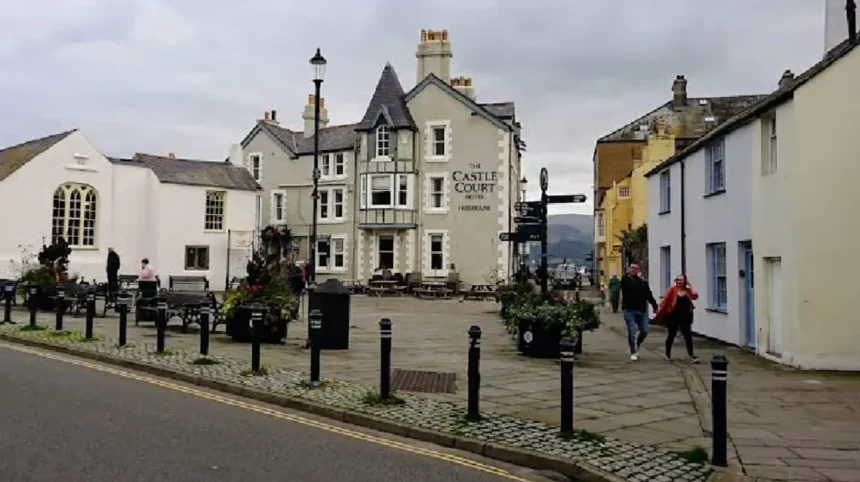
The urban core displays remarkable architectural diversity across multiple centuries of continuous development. The Tudor Rose building represents one of the oldest timber-framed residential structures in Wales, dating back to the late fourteenth century. St. Mary and St. Nicholas Church, constructed in the fourteenth century, houses the stone sarcophagus of Princess Siwan, the daughter of King John of England and wife of Llywelyn the Great. The Bulls Head Inn, established in 1472, hosted notable historical figures, including Charles Dickens and Queen newport/victoria/">Victoria. Victorian developments along the seafront include pastel-colored townhouses and neoclassical public buildings that frame the coastline. Preservation laws enforce strict conservation standards across the town, maintaining building facades and structural integrity.
How Does Beaumaris Wales Contribute to the Regional Economy Today?
Beaumaris Wales operates as a primary tourism and cultural hub within the broader economy of North Wales and Anglesey. The local economy relies on heritage visitor attractions, retail commerce, marine services, and hospitality businesses.
Cadw, the historic environment service of the Welsh Government, manages Beaumaris Castle, which attracts approximately seventy-five thousand visitors annually. Visitor spending supports independent retail shops, artisan food producers, coastal tour operators, and boutique accommodations. The town harbour generates revenue through boat moorings, pleasure cruises to Puffin Island, and angling charters across the Menai Strait. Local governance initiatives focus on balancing heritage preservation with sustainable tourism growth, ensuring infrastructure supports seasonal visitor volume. Regional economic data shows that tourism in Beaumaris directly sustains hundreds of hospitality jobs across Anglesey, reinforcing the town’s status as a vital driver of regional economic stability.
Frequently Asked Questions
What is the best time of year to visit Beaumaris Wales?
The peak visiting season runs from May through September, when weather conditions along the Menai Strait are mild and outdoor attractions operate full schedules. Spring and early autumn offer lower visitor volumes while maintaining access to historical sites. Winter visits provide quiet access to historic streets, though outdoor boat tours may operate on restricted schedules.
How do visitors reach Beaumaris Wales using public transport?
Visitors can reach Beaumaris by taking a direct train to Bangor Railway Station on the North Wales Coast Line. From Bangor, local bus services run frequently across the Menai Suspension Bridge directly into central Beaumaris. Car access is available via the A55 expressway connecting to the A545 coastal road.
Is Beaumaris Castle fully accessible to visitors with disabilities?
Beaumaris Castle provides ground-level access to the outer ward, moat grounds, and visitor center. Due to the historical nature of the medieval structure, access to the upper battlements and narrow tower staircases requires climbing steep stone steps. Accessible parking and facilities are located nearby in the town center.
Are dog-friendly accommodations and attractions available in Beaumaris?
Beaumaris is widely recognized as a dog-friendly destination, with pets allowed on leads inside Beaumaris Castle grounds and along the seafront promenade. Many local cafes, pubs, and self-catering accommodations welcome dogs, though visitors should verify individual business policies before traveling.
How long does it take to explore the main attractions in Beaumaris?
A comprehensive visit to Beaumaris takes between one and two days to explore the main historical sites. Visitors typically spend two to three hours at Beaumaris Castle, followed by tours of the Courthouse, Gaol, pier, and town center. Additional time allows for coastal walking trails and boat excursions along the Menai Strait.