Wales Blaenau Ffestiniog is an historic slate quarrying town situated in Gwynedd, North Wales, within the Moelwynion mountain range. The settlement evolved rapidly during the nineteenth century from a sparse upland farming community into the global epicenter of slate extraction.
The physical landscape of Blaenau Ffestiniog sits inside an elevated bowl roughly 225 meters above sea level. Surrounded by steep peaks like Moelwyn Mawr and Manod Mawr, the valley contained vast seams of high-quality Ordovician slate deposits formed over 450 million years ago. Early agricultural settlements gave way to intensive industrial extraction in the late 1700s when miners discovered subterranean slate beds.
Before 1800, small-scale surface quarrying operated around Ceunant y Diphwys under local partnerships. Industrialists William Turner and William Casson expanded operations significantly by acquiring leases in 1800, leading to large-scale infrastructure investments. The population grew from a few farming families to over 11,000 residents by 1881 as workers migrated from across Wales.
The town earned the title of the slate capital of the world due to its immense production output. Quarry complexes such as Oakeley, Llechwedd, and Maenofferen produced millions of tons of roofing slate for international export. The urban layout developed as ribbon housing along transport routes, creating tight rows of stone terraces that match the geological surroundings.
How Did Industrial Slate Extraction Shape The Local Infrastructure And Transport Networks?
Slate extraction required specialized transportation systems to move heavy stone products from landlocked mountain quarries to international maritime shipping ports. Engineers constructed gravity-fed tramways, inclined planes, and narrow-gauge railways to traverse the steep terrain.
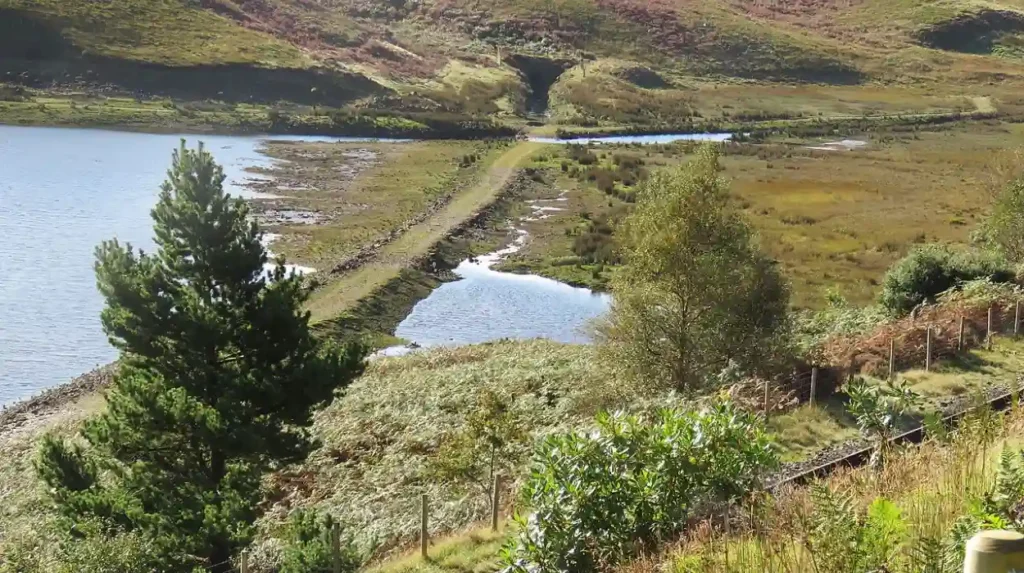
The Ffestiniog Railway opened in 1836 as a horse-drawn gravity line designed to carry slate downhill to the coastal port of Porthmadog. Steam locomotives were introduced on the railway in 1863, marking a historic leap in narrow-gauge rail engineering. The railway transported finished slate tiles directly to docks, enabling global shipment to Europe, North America, and Australia.
Underground mining techniques advanced rapidly as surface deposits depleted during the mid-nineteenth century. Quarry workers excavated massive subterranean chambers connected by tunnels, levels, and vertical shafts. Oakeley Quarry became the largest underground slate mine in the world, featuring 26 distinct working levels and over 50 miles of underground rail track.
Civic infrastructure expanded alongside industrial transport networks to support the growing labor force. The town hall, known as the Old Market Hall, opened in 1864, alongside dozens of chapels, schools, and commercial establishments. Standard-gauge connections via the Conwy Valley Line in 1879 further linked the region to nationwide trade networks.
What Led To The Economic Decline Of The Slate Industry In The Twentieth Century?
The slate industry in Blaenau Ffestiniog faced severe economic headwinds during the twentieth century due to shifts in global construction markets and international trade disruption. Production declined steadily following a major industry recession during the late 1890s. World War I caused severe labor shortages as thousands of experienced quarrymen enlisted in the armed forces. Overseas shipping routes were interrupted, leading to lost export markets that never fully recovered. Concurrently, alternative building materials like manufactured clay tiles, asbestos roofing, and concrete gained market dominance due to lower production costs.
Competition from foreign slate quarries operating in Spain and South America reduced global market prices further. Spanish slate manufacturers offered cheaper, mass-produced alternatives that undercut Welsh prices in post-war reconstruction projects. Local companies attempted consolidation, with Oakeley and Llechwedd absorbing surrounding smaller mines, but workforce numbers continued to drop.
By the mid-twentieth century, major operations began closing systematically across the valley. The original Ffestiniog Railway line suspended commercial freight services in 1946 following the steep decline in quarry production. Small-scale slate extraction continues today, but industrial operations no longer form the primary economic driver of the region.
How Has UNESCO Recognition Impacted The Cultural Heritage And Tourism Of The Region?
In July 2021, UNESCO inscribed the Slate Landscape of Northwest Wales as a World Heritage Site, highlighting Blaenau Ffestiniog as a primary component. This designation recognizes the extraordinary cultural, technological, and architectural impact of Welsh slate mining on global industrialization.
The UNESCO status revitalized regional identity by preserving industrial ruins, slate waste heaps, and historical transport lines. Heritage tourism grew rapidly as former industrial sites transformed into world-class visitor attractions. Llechwedd Slate Caverns opened deep mine tours that carry visitors 500 feet underground aboard Britain’s steepest passenger funicular railway.
Adventure tourism operators repurpose industrial quarry voids for recreational use. Zip World Llechwedd features zip lines over slate caverns alongside Bounce Below, an underground trampoline network built inside former mining chambers. Antur Stiniog operates 14 downhill mountain bike trails built directly across repurposed slate quarry waste heaps.
Cultural preservation efforts also maintain the Ffestiniog Railway as a major heritage tourism asset. Restored steam locomotives carry over 200,000 visitors annually along the historic route to Porthmadog. Tourism creates stable employment in hospitality, outdoor recreation, and cultural heritage management across Gwynedd.
Frequently Asked Questions
What is Blaenau Ffestiniog famous for?
Blaenau Ffestiniog is globally famous for its nineteenth-century slate quarrying industry, earning it the title of the slate capital of the world. Today, it is recognized as part of a UNESCO World Heritage Site and serves as a major hub for adventure tourism and heritage railways.
Can you go underground in the slate mines at Blaenau Ffestiniog?
Yes, visitors can explore historic slate mines at Llechwedd Slate Caverns through guided underground deep mine tours. The site features Britain’s steepest mining cable railway, which takes guests 500 feet below the surface into massive hand-carved chambers.
How do you reach Blaenau Ffestiniog by public transport?
You can reach the town by taking the scenic Conwy Valley railway line from Llandudno Junction or via the historic heritage Ffestiniog Railway from Porthmadog. Regular local bus services also connect the town to surrounding destinations across Eryri National Park.
What outdoor activities are available in Blaenau Ffestiniog?
The area offers mountain biking at Antur Stiniog, underground trampolining at Bounce Below, and zip lining at Zip World Llechwedd. Hikers can also explore extensive mountain trails leading through Cwmorthin, the Moelwynion range, and the Snowdonia Slate Trail.
Why are the slate waste heaps still visible around the town?
Slate extraction produced massive amounts of waste rock because only about ten percent of quarried slate was usable for high-quality roofing tiles. The remaining ninety percent was piled on surrounding mountainsides, creating the dramatic slate landscapes that define the area today.