Key Points
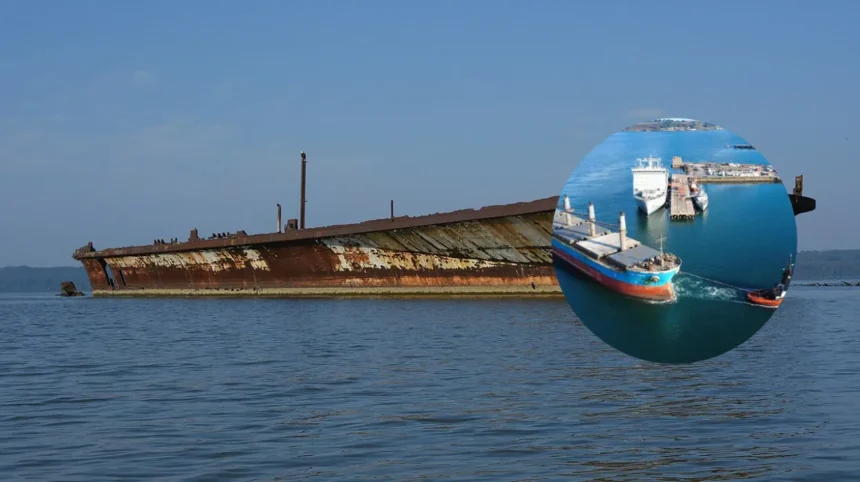
- ASL Leban, a Handysize bulk carrier damaged by fire, has berthed at the Falmouth shipyard for repairs.
- Three tugs were deployed to escort the ship into the docks including Morva, Mercia and Cannis.
- The fire occurred in the ship’s number three cargo hold during the loading of scrap metal at Newport, South Wales in early October.
- Based on SWFRS’ recommendations, the relevant cargo hold was sealed off and water from aerial platforms were used to spray the sides of the ship.
- SWFRS stated that the fire was extinguished within 24 hours.
- Falmouth Packet said that ASL Leban is the second bulk carrier that required repairs in Falmouth after loading scrap metal from the Newport scrap terminal.
- In April 2026, there was a similar fire accident involving another bulk carrier, Nord Houston.
- The details from vessel tracking are that ASL Leban is a Marshall Islands flag bulk carrier with an IMO number 9547178, built in 2014 and measures around 178 meters long.
Wales (Wales Times) November 2026 — The fire-damaged Handysize bulk carrier ASL Leban has arrived in Falmouth for repairs after a major fire broke out while it was loading scrap cargo at uk/local/newport/">Newport, South Wales, earlier in October. As reported by the Falmouth Packet, the vessel was brought into the docks with the assistance of three harbour tugs, Morva, Mercia and Cannis.
The ship’s arrival marks the latest stage in the response to an incident that began aboard the vessel during loading operations at Newport docks. According to VesselTracker, the fire started on 1 October 2026 while scrap cargo was being loaded, producing heavy smoke in the surrounding area.
The Falmouth Packet reported that the blaze occurred in the vessel’s number three cargo hold. The report said that, following advice from South Wales Fire and Rescue Service, the hold was sealed, while water delivered from aerial platforms was used to cool the ship’s side.
How was the Newport fire brought under control?
The emergency response involved South Wales Fire and Rescue Service working alongside Associated British Ports (ABP) and other partner agencies. VesselTracker reported that members of the public were asked to avoid the area, while people affected by smoke were advised to keep windows and doors closed.
The fire service also asked people not to fly drones over the scene because they could affect firefighting operations. It said a drone would be used to support the response.
Natural Resources Wales was also present on 1 October, according to VesselTracker, supporting the fire service and advising on measures to minimise the environmental impact.
The Falmouth Packet reported that SWFRS confirmed the fire had been extinguished after 24 hours.
Why has ASL Leban come to Falmouth?
The vessel has now arrived at a Falmouth shipyard for repair work. The Falmouth Packet described ASL Leban as a fire-damaged Handysize bulk carrier, and said its arrival followed the major fire in its number three cargo hold during scrap loading at Newport.
ASL Leban is listed by VesselTracker as a cargo ship flying the flag of the Marshall Islands, with IMO number 9547178 and MMSI number 538005604. The service lists the vessel as 178 metres long and 29 metres wide.
Marine vessel-data provider MyShipTracking similarly identifies ASL Leban as a bulk carrier with a gross tonnage of 22,850 tonnes and a deadweight tonnage of 37,000 tonnes. It records the ship as built in 2014 and sailing under the Marshall Islands flag.
Is this the second similar Newport fire?
Yes. According to the Falmouth Packet, ASL Leban is the second bulk carrier to suffer fire damage requiring repairs at Falmouth after loading scrap at the Newport scrap terminal.
The newspaper reported that the first was the bulk carrier Nord Houston, which caught fire in similar circumstances in April 2026.
The report did not provide further details about the cause of either fire, the extent of damage to ASL Leban, the expected duration of repairs, or whether any investigation has been opened. No such claims should therefore be inferred from the available reporting.
What is known about the vessel’s history?
VesselTracker’s incident log records earlier events involving the vessel under a former name. It says the ship, then named Ikan Leban, ran aground on the Paraná River in Argentina in December 2019 while carrying maize loaded at San Lorenzo; it was refloated the following day with tug assistance.
The same service also records that ASL Leban was boarded by three people at Chattogram anchorage in Bangladesh on 30 March 2024. It reported that nothing was stolen and no injuries were reported.
These earlier incidents are separate from the October 2026 Newport fire and do not establish any cause or responsibility for the more recent blaze.
Background of the development
The ASL Leban incident began on 1 October 2026 at Newport docks, where the vessel was loading scrap cargo. VesselTracker reported that heavy smoke developed during the operation, prompting public-safety advice and a multi-agency response involving ABP, SWFRS and Natural Resources Wales.
Firefighters closed the cargo hatches and cooled the ship’s hull with water, according to VesselTracker. The response continued into 2 October, and SWFRS later confirmed that the fire had been extinguished after 24 hours.
Falmouth has now become the repair location for the vessel. The Falmouth Packet noted that this is the second bulk carrier to require repairs in the town after a fire while loading scrap at Newport, following Nord Houston in April.
Prediction: What it means for the maritime community
For shipowners, operators, insurers and port users, the arrival of ASL Leban in Falmouth is likely to focus attention on cargo-handling safety, fire response procedures and repair capacity at UK ports. The reported sequence fire during scrap loading, sealing of the affected hold, cooling of the hull and eventual transfer to a repair yard illustrates the operational disruption that a cargo-hold fire can create beyond the immediate emergency response.
For Falmouth’s maritime sector, the vessel’s arrival may mean work for local repair and support services, while also adding to the port’s recent experience with fire-damaged bulk carriers. The Falmouth Packet’s reference to Nord Houston suggests that such incidents are becoming a recurring operational concern for operators using Newport’s scrap terminal.
For local residents and businesses, the principal immediate issues remain safety, smoke management and environmental protection during any future incident. The response to the October fire included public advice to avoid the area, close windows and doors if affected by smoke, and avoid drone flights that could interfere with firefighting.