
Key Points
- Researchers from Amgueddfa Cymru – Museum Wales and Cardiff University discovered a four-letter code ANCE on a 16th-century brass padlock.
- The padlock was salvaged from the shipwreck of the Ann Francis, which was driven ashore near Port Talbot, Wales, after a violent storm on December 28, 1583.
- The researchers used micro-CT scanning technology for exploring the lock mechanism without damaging it.
- Dr. David Williams from the Cardiff University’s Musculoskeletal Biomechanics Research Facility has generated 3D images revealing how the internal notches were matched with the letters on the lock.
- According to experts, this padlock was used to secure a captain’s chest containing Spanish silver, expensive textiles, or even maritime letters.
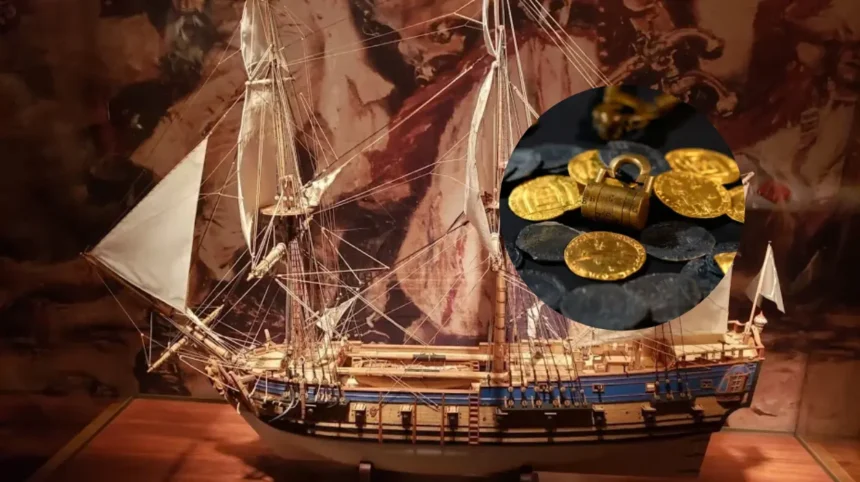
- This padlock was recovered next to Spanish silver coins and brass coin-checking weights along with other items of the Ann Francis treasure hoard.
- The hoard was discovered within 21 years – from 1996 to 2017 – by metal detectorist Peter Hughes.
- This padlock is displayed now in the National Waterfront Museum, Swansea, together with other items of the treasure hoard.
- Meaning of the code and its selector remain unknown.
Wales (Wales Times) November 07, 2026 – Scientists have revealed the four-letter combination of a 400-year-old brass padlock recovered from the wreck of the Ann Francis, a merchant ship lost off the Welsh coast in 1583. The code, ANCE, was identified after researchers used medical-style CT scanning to inspect the lock’s internal mechanism without opening or damaging it.
The discovery was made by a team from Amgueddfa Cymru – Museum Wales and uk/local/cardiff/">Cardiff University. According to reporting by The Independent, the padlock had remained sealed since the Ann Francis was wrecked off the South Wales coast more than four centuries ago.
As reported by Asharq Al-Awsat, the researchers believe the intricate device once secured a captain’s chest containing Spanish silver, high-value textiles, or sensitive maritime correspondence before the ship ran aground in the Bristol Channel.
How Was the 400-Year-Old Lock Code Cracked?
Museum conservators asked engineers at Cardiff University’s School of Engineering to examine the padlock using micro-computed tomography, a scanning technique more commonly used to study bones and other body tissues. The scans produced detailed 3D images of the lock’s internal mechanism.
Dr David Williams, a research associate at Cardiff University’s Musculoskeletal Biomechanics Research Facility, said the images allowed him to identify the exact combination. As reported by Asharq Al-Awsat, he stated: “By creating a detailed 3D image of the internal mechanism, I could see how the notches lined up with the letters and identify the exact combination.”
He added that the use of the technology on a historic padlock was unusual for his team. “We normally use this technology to study bones and other biological structures, so investigating a 400-year-old padlock was certainly a first for us,” Dr Williams said, according to Asharq Al-Awsat.
After the museum team tested the proposed code, Dr Williams described receiving confirmation that it had worked as “incredibly satisfying”. He said: “It’s not every day you get to solve a 400-year-old mystery.”
The BBC reported that Dr Williams said the first scan revealed the letters, while a second scan encountered difficulties. The eventual analysis identified the sequence ANCE, which was then tested by museum specialists and successfully opened the lock.
What Was the Ann Francis Carrying?
The Ann Francis was returning from a trading voyage to Spain when it was caught in a severe storm on the evening of 28 December 1583. High winds drove the vessel off course before it grounded and broke apart on Margam Beach, near Port Talbot.
The brass padlock was discovered close to a stash of Spanish silver coins and a pair of brass coin-checking weights. Researchers believe it may have protected valuable cargo or personal possessions aboard the vessel.
As reported by Asharq Al-Awsat, the lock forms part of the wider Ann Francis treasure hoard, which was recovered between 1996 and 2017 by metal detectorist Peter Hughes over a 21-year period. The Independent also reported that the hoard was recovered during that period.
The displayed collection includes rare gold coins from the reign of Ferdinand and Isabella of Spain and an Elizabethan boatswain’s whistle, alongside the newly unlocked padlock.
Why Is This Padlock Important?
Alastair Willis, Senior Curator for Numismatics and the Welsh Economy at Amgueddfa Cymru, said Elizabethan combination locks were known in Britain, but this example was especially significant. As reported by Asharq Al-Awsat, Willis stated:
“Elizabethan combination locks are known in Britain, but this one is in exceptionally good condition and is associated with a dated wreck, making it a unique find and the code a tantalizing mystery to solve.”
The direct association with the Ann Francis allows researchers to date the lock with unusual precision. The BBC reported that the object’s proximity to the wreck and its connection to the wider collection provided a strong context for dating it.
Despite the successful opening, the meaning of ANCE remains unresolved. As reported by Asharq Al-Awsat, Willis said: “Of course, now we’ve solved it, we are left wondering if the code meant something to its owner.”
The Times of India similarly reported that the identity of the person who set the code and the meaning of the letters remain unknown.
Where Can the Lock Be Seen?
The cracked padlock is now on public display at the National Waterfront Museum in Swansea. It is shown alongside other recovered items from the Ann Francis hoard, including Spanish coins and an Elizabethan boatswain’s whistle.
Several outlets reported that the artefacts are part of the museum’s Tides of Treasure exhibition. Popular Mechanics reported that the lock and the wider hoard are displayed in that exhibition, while other reports said the display is scheduled to run until September 2027.
Background of the Development
The Ann Francis was an English merchant vessel travelling back from Spain when it was overwhelmed by a storm on 28 December 1583. The ship was blown off course and wrecked at Margam Beach, near Port Talbot, on the South Wales coast.
The brass combination lock was later recovered as part of the Ann Francis treasure hoard. Metal detectorist Peter Hughes recovered material from the site between 1996 and 2017, according to The Independent and Asharq Al-Awsat.
The recent breakthrough followed collaboration between museum specialists and engineers at Cardiff University. Rather than forcing the historic mechanism, the team used micro-CT imaging to create a 3D view of its interior, allowing them to work out the alignment of its internal parts and identify the code.
The find is regarded as particularly valuable because Elizabethan combination locks have been found in Britain before, but few can be linked so directly to a securely dated shipwreck.
Prediction: What This Means for Visitors and Researchers
For museum visitors in Wales and beyond, the revealed code is likely to make the Ann Francis display more engaging by turning a sealed historic object into a story that can be explained in a clear, visual way. The padlock’s display at the National Waterfront Museum gives the public an opportunity to see an artefact whose internal workings have now been reconstructed through modern imaging.
For archaeologists, conservators and museum researchers, the case may encourage further use of non-invasive imaging on fragile maritime artefacts. The method allowed the team to identify the combination without damaging the padlock, which is especially important for objects recovered from shipwrecks and held in public collections.
For heritage audiences, the discovery may also renew interest in the Ann Francis hoard and the history of Elizabethan trade between Britain and Spain. The lock’s code has been revealed, but its meaning remains unknown, leaving researchers with a further historical question about the people and cargo connected to the wreck.