

remove links in whole article
- Key Points
- How will the Llanelli flats development be designed?
- When will work start on the Crown Buildings conversion?
- Who is behind the Llanelli office-to-flats scheme?
- What role is Carmarthenshire Council playing in the development?
- Why is the former DWP office being reused instead of demolished?
- Background to the Crown Buildings regeneration
- Predictions: How could this development affect Llanelli residents and the local housing market?
Llanelli office block conversion: 27 flats with rooftop garden planned
Key Points
- An old concrete office block in Llanelli dubbed Crown Buildings is to be refurbished to provide 27 affordable homes with a roof garden.
- The project is being developed by Hacer Developments and work on it is expected to commence in the next one to two months, taking about 15 months for completion.
- “Biophilic” architecture is central to the project, with the green design including vegetation, solar panels and other low carbon energy installations on the five-storey structure.
- Carwyn Davies, the Managing Director of Hacer Developments, called the project “a great regeneration and community project” and said it was their first spin off from the Swansea project.
- Planning permission, subject to conditions, has been received from Carmarthenshire Council, while the Section 106 agreement between the council and the developer has been finalized.
- The exterior of the building will be refurbished while a smaller adjoining vacant building will be demolished for construction of a car park.
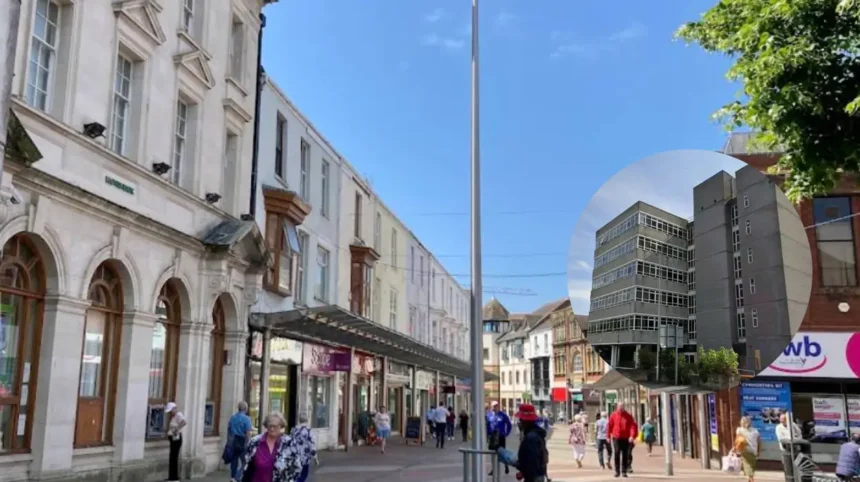
- Crown Buildings, which used to house the Department for Work and Pensions, will not be demolished but will be retained.
Wales (Wales Times) August 19, 2026 – Work to transform a dated office block into affordable flats with a rooftop garden in Llanelli could get under way in weeks, according to plans outlined by the developer behind the scheme. There will be 27 flats at the new-look Crown Buildings in a project expected to take around 15 months to complete. Key to the scheme is greenery on the roof and elsewhere on the five-storey building and low-carbon energy systems including solar panels, with the exterior also set to be modernised.
The company behind the project, Hacer Developments, is already completing a larger scheme in uk/local/swansea/">Swansea’s Oxford Street consisting of a 12-storey tower, 50 flats, a four-storey greenhouse, rooftop gardens, commercial and education space, and a landscaped courtyard, part of which is replacing the former Woolworths store. Carwyn Davies, Hacer Developments’ managing director, said this “biophilic” – roughly translating as people’s drive to connect with nature – design was a key element for both the Llanelli and Swansea projects.
“This one in Llanelli will be our first spin-off project,” Mr Davies said. “I think it’s got great regeneration and community potential. We’re quite excited to roll out the concept.”
How will the Llanelli flats development be designed?
The Crown Buildings scheme places a strong emphasis on sustainability and environmental performance. Mr Davies said reusing rather than knocking down buildings boosted a development’s environmental credentials because existing materials like concrete, which takes a lot of energy to make, were retained. “We’ve got to start thinking about that,” he said.
Crown Buildings used to be a Department for Work and Pensions office. “It’s well-built with a concrete frame – why would you want to destroy that?” said Mr Davies. A smaller empty adjacent building will, however, be demolished and a car park created.
The design incorporates greenery on the roof and elsewhere on the five-storey building, alongside low-carbon energy systems including solar panels. The exterior will also be modernised as part of the conversion works.
When will work start on the Crown Buildings conversion?
Mr Davies said a binding agreement called a Section 106 agreement between Hacer Developments and Carmarthenshire Council, which has given planning permission with conditions, has been finalised. “We are hoping to start work in the next one to two months,” he said.
“A new market is planned in the town centre and the council has done up the [former] YMCA building. We’re probably the first private sector people coming in,” Mr Davies added, situating the Crown Buildings scheme within wider regeneration activity in Llanelli.
The project is expected to take around 15 months to complete once work begins.
Who is behind the Llanelli office-to-flats scheme?
Hacer Developments is the company leading the Crown Buildings conversion. The firm is simultaneously completing a larger mixed-use scheme on Oxford Street in Swansea, which includes a 12-storey tower, 50 flats, a four-storey greenhouse, rooftop gardens, commercial and education space, and a landscaped courtyard.
Carwyn Davies, managing director of Hacer Developments, has publicly framed the Llanelli project as a “spin-off” from the Swansea scheme, indicating that the company intends to replicate elements of its biophilic, low-carbon approach in other towns. “This one in Llanelli will be our first spin-off project,” he said. “I think it’s got great regeneration and community potential. We’re quite excited to roll out the concept.”
What role is Carmarthenshire Council playing in the development?
Carmarthenshire Council has granted planning permission for the Crown Buildings conversion, subject to conditions. A Section 106 agreement – a legally binding planning obligation between the developer and the local authority – has been finalised between Hacer Developments and the council.
The council has also been active in wider town-centre regeneration efforts. Mr Davies noted that a new market is planned in Llanelli town centre and that the council has refurbished the former YMCA building, adding: “We’re probably the first private sector people coming in.”
Separately, the Local Democracy Reporting Service reported that the council, which owns an empty building in the area, said it was “currently in discussions with developers regarding the site and hopes to finalise arrangements later this year”, indicating ongoing interest in reusing vacant stock as part of broader regeneration.
Why is the former DWP office being reused instead of demolished?
The decision to retain Crown Buildings rather than demolish it is rooted in both structural and environmental considerations. The building, which formerly housed a Department for Work and Pensions office, is described by Mr Davies as “well-built with a concrete frame”. “Why would you want to destroy that?” he asked.
From a sustainability perspective, Mr Davies argued that reusing existing structures improves a development’s environmental credentials because materials such as concrete which require significant energy to produce – are retained rather than replaced. “We’ve got to start thinking about that,” he said.
While the main office block will be converted, a smaller empty adjacent building will be demolished to make way for a car park.
Background to the Crown Buildings regeneration
Crown Buildings in Llanelli has been a prominent but underused structure in the town in recent years, having previously served as a Department for Work and Pensions office before becoming vacant. The building’s robust concrete construction and central location have made it a candidate for reuse rather than demolition, in line with wider shifts in planning policy that encourage the adaptation of existing commercial stock to address housing needs.
Carmarthenshire Council has identified the area around Crown Buildings as a priority for regeneration, with council chiefs having long sought to revitalise this part of Llanelli. The Local Democracy Reporting Service noted that the empty building is “one element of a wider project to reinvigorate the area”, and that the council was in discussions with developers with a view to finalising arrangements.
Hacer Developments’ involvement marks one of the first private-sector interventions in this phase of town-centre renewal, following public-sector works such as the refurbishment of the former YMCA building and plans for a new market. The company’s experience with a larger biophilic scheme in Swansea has informed the approach taken in Llanelli, with the developer describing the Crown Buildings project as its “first spin-off” from that model.
Predictions: How could this development affect Llanelli residents and the local housing market?
If delivered as planned, the conversion of Crown Buildings into 27 affordable flats is likely to have several effects on Llanelli residents and the local housing market. The addition of 27 new homes, designated as affordable, will increase the supply of housing in the town centre, potentially easing pressure on local waiting lists and reducing reliance on temporary or unsuitable accommodation for some households.
The emphasis on biophilic design, rooftop greenery and low-carbon energy systems may also set a benchmark for future residential conversions in the area, encouraging other developers to adopt similar sustainability standards. Over time, this could contribute to improved energy performance and lower running costs for residents in newly converted buildings, while supporting Carmarthenshire Council’s wider climate and regeneration objectives.
From a market perspective, the successful delivery of the Crown Buildings scheme could signal increased investor confidence in Llanelli’s town centre, particularly if it is followed by additional private-sector projects. However, the overall impact on house prices and rental levels will depend on the scale of subsequent development, the mix of tenures delivered, and the extent to which new supply matches local demand.
For residents, the presence of a rooftop garden and enhanced public realm around the building may improve perceived quality of life in the immediate area, provided that management arrangements ensure long-term maintenance and access. If the project proceeds on schedule, with work starting within one to two months and completion within around 15 months, its effects could become visible in the local housing market and streetscape by late 2027 or early 2028.