

Key Points
- Jamestown firefighters saved a man who slipped and became trapped on rocks near Beavertail Road on Thursday evening
- The rescue team was dispatched to 435 Beavertail Road around 5:20 p.m. after reports that there was an injured man trapped on the rocks
- A drone assisted the firefighters in locating the man’s position under a rock wall that leads to the beach area
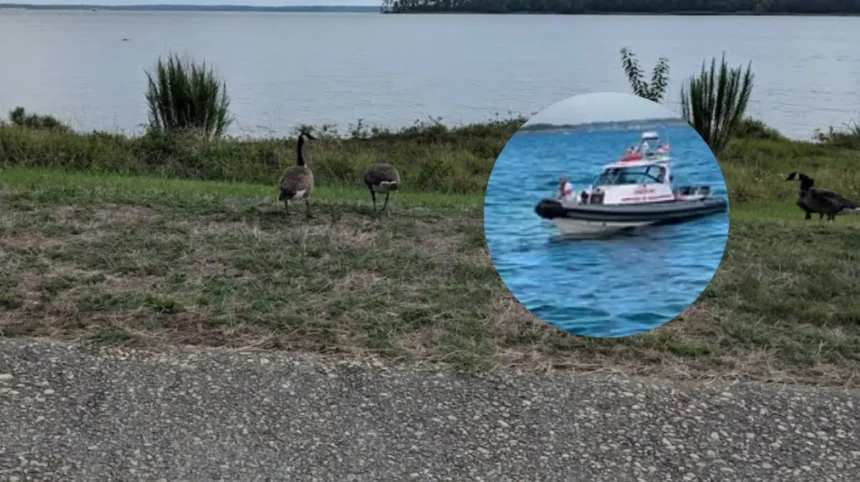
- The rescue swimmer found the trapped man and then transported him to the Marine 1 rescue boat
- The man was taken to Newport where he was treated further for his injuries and then taken to hospital
- According to fire officials, the man only had minor injuries from the fall
- This information was released by the Jamestown Volunteer Fire Department
Wales (Wales Times) September 15, 2026 — Emergency crews successfully rescued a man who fell and became trapped on rocky shoreline terrain near Beavertail Road in Jamestown on Thursday evening, according to official statements from the Jamestown Volunteer Fire Department. The incident unfolded at approximately 5:20 p.m. when firefighters received emergency calls reporting an injured individual stranded on rocks in the coastal area.
- Key Points
- How did firefighters locate the trapped man?
- What rescue methods were employed to save the injured man?
- Where was the man taken after the water rescue?
- Why was drone technology crucial in this rescue?
- Who responded to the emergency call on Beavertail Road?
- Background of coastal rescue operations in Jamestown
- Prediction: How might this development affect coastal emergency response planning?
As reported by the editorial team at Coastal ABC, crews were dispatched to the vicinity of 435 Beavertail Road following the distress call. Firefighters immediately began searching the shoreline area and located the man positioned below a steep cliff face, according to the Jamestown Volunteer Fire Department’s official account of the rescue operation.
How did firefighters locate the trapped man?
The rescue operation employed modern technology to successfully locate and extract the injured man from the hazardous rocky terrain. According to coverage by Turn to 10 News, firefighters utilised a drone during the search operation, which proved instrumental in helping crews pinpoint the exact location of the trapped individual along the challenging shoreline geography.
The deployment of drone technology represents an increasingly common practice among fire departments across the United States for search and rescue operations in difficult-to-access terrain. The aerial perspective provided by the drone allowed Jamestown firefighters to identify the man’s position below the steep cliff, where conventional ground-based search methods might have taken considerably longer to locate him.
What rescue methods were employed to save the injured man?
Once the man’s location was confirmed through drone surveillance, the Jamestown Volunteer Fire Department deployed specialised water rescue personnel to reach the trapped individual. According to statements obtained by Coastal ABC, a trained rescue swimmer was deployed to reach the man on the rocks.
The rescue swimmer successfully reached the injured man, secured him using appropriate safety equipment, and facilitated his movement to the department’s Marine 1 rescue boat, as detailed in reporting by Turn to 10 News. This multi-stage rescue operation required coordination between ground crews, drone operators, and marine rescue personnel to ensure the safe extraction of the trapped individual from the hazardous coastal environment.
Where was the man taken after the water rescue?
Following the successful extraction from the rocky shoreline, the Marine 1 rescue boat transported the injured man across the water to uk/local/newport/">Newport, according to official statements from fire officials cited by both Coastal ABC and Turn to 10 News. Upon arrival in Newport, the man received additional medical treatment from emergency medical personnel before being transferred to a hospital for further evaluation and care.
Fire officials confirmed to reporters that the man sustained only minor injuries during the fall and subsequent period of being trapped on the rocks. The relatively minor nature of his injuries, despite the potentially dangerous circumstances of being stranded on coastal rocks below a steep cliff, was attributed to the swift response time of emergency crews and the successful execution of the rescue operation.
Why was drone technology crucial in this rescue?
The use of drone technology in this Jamestown rescue operation highlights the evolving capabilities of modern fire departments in conducting search and rescue missions. According to fire service publications, drone technology has become an increasingly valuable tool for fire departments nationwide, offering aerial perspectives that can dramatically reduce search times in complex terrain.
The Jamestown Volunteer Fire Department’s successful deployment of a drone in this incident demonstrates how smaller municipal fire departments are adopting technologies previously available primarily to larger urban fire services. The ability to quickly deploy an aerial asset to survey difficult coastal terrain proved decisive in locating the trapped man efficiently, potentially preventing a more serious medical outcome had the search taken longer.
Who responded to the emergency call on Beavertail Road?
The emergency response to the incident at 435 Beavertail Road involved multiple units and specialised personnel from the Jamestown Volunteer Fire Department. According to official department statements obtained by local media outlets, the response included ground search crews who initially surveyed the shoreline area, drone operators who provided aerial reconnaissance, and marine rescue personnel including the rescue swimmer who physically reached the trapped man.
The Marine 1 rescue boat, which played a critical role in extracting the man from the rocks and transporting him to Newport for medical treatment, represents a significant marine rescue capability maintained by the Jamestown fire department for coastal emergency responses. The coordinated effort between different specialised units within the volunteer fire department exemplifies the integrated approach required for successful water rescue operations in Rhode Island’s coastal communities.
Background of coastal rescue operations in Jamestown
Jamestown, situated on Conanicut Island in Narragansett Bay, has a long history of coastal rescue operations due to its extensive shoreline and rocky coastal geography. The Jamestown Volunteer Fire Department maintains specialised marine rescue capabilities, including the Marine 1 rescue boat deployed in this incident, to respond to water-related emergencies along the town’s coast.
Beavertail Road, where this rescue occurred, runs along the southwestern shore of Jamestown and provides access to some of the town’s most rugged coastal terrain. The area’s steep cliffs and rocky shoreline present particular challenges for rescue operations, making the deployment of specialised equipment such as drones and rescue swimmers essential for successful outcomes in emergency situations.
Rhode Island’s coastal communities, including Jamestown, experience regular water rescue calls throughout the year, with fire departments maintaining year-round readiness for marine emergencies. The state’s extensive coastline, featuring numerous rocky outcrops, steep cliffs, and challenging tidal conditions, requires fire departments to maintain specialised training and equipment for water rescue operations.
Prediction: How might this development affect coastal emergency response planning?
This successful rescue operation in Jamestown is likely to influence emergency response planning for coastal communities throughout Rhode Island and similar coastal regions. The effective use of drone technology in locating the trapped man demonstrates the practical value of aerial reconnaissance in search and rescue operations, potentially encouraging other municipal fire departments to invest in similar capabilities.
For coastal residents and visitors, the incident underscores the importance of exercising caution when navigating rocky shoreline areas, particularly near steep cliffs where falls can result in individuals becoming trapped in difficult-to-access locations. The relatively minor injuries sustained by the rescued man, despite the potentially dangerous circumstances, may be attributed to the swift emergency response facilitated by the fire department’s investment in specialised rescue technology and training.
Emergency management officials in coastal communities may review this incident as a case study in effective multi-modal rescue operations, potentially leading to enhanced coordination protocols between ground crews, drone operators, and marine rescue personnel. The successful outcome of this rescue operation could also influence public safety messaging regarding coastal hazards, emphasising both the risks present in rocky shoreline environments and the capabilities of local emergency services to respond effectively to such incidents.
For the Jamestown Volunteer Fire Department specifically, this operation validates their investment in marine rescue capabilities and drone technology, potentially supporting future budget requests for similar equipment and training. The department’s ability to successfully execute a complex rescue operation involving multiple specialised units demonstrates the value of comprehensive emergency preparedness for coastal communities facing diverse rescue scenarios throughout the year.