

Key Points
- Bishop Dorrien Davies, the Lord Bishop of St Davids, is due to be installed as Dean of the Royal Chaplaincy for Wales.
- The installation will take place at 3pm on Tuesday, 8 September, at St Davids Cathedral.
- The service will be held on Accession Day, commemorating the accession of King Charles III.
- The King appointed Bishop Dorrien as Dean of the newly established Royal Chaplaincy for Wales.
- The chaplaincy has six King’s Honorary Chaplains, representing the six dioceses of the Church in Wales.
- The six senior clerics received their insignia from the King during the Royal Maundy service at St Asaph Cathedral in April.
- The Church in Wales said it is the first time its clerics have been appointed as King’s Honorary Chaplains.
- The Royal Family will not attend the service at St Davids, but members of the public may be admitted after invited guests have been seated.
- The honorary chaplains may be invited to preach at a Royal Chapel and take part in civic events, Royal visits and occasions within Wales’s lieutenancies.
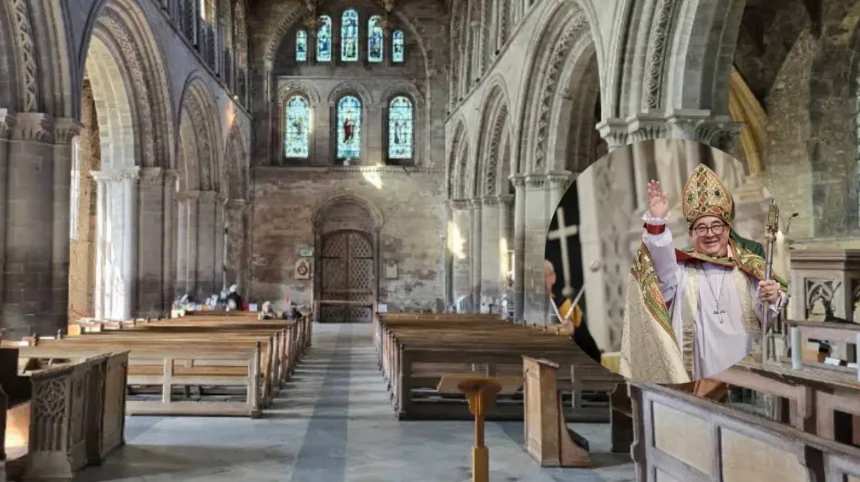
St Davids (Wales Times) August 25, 2026 — Bishop Dorrien Davies is set to be installed as Dean of the Royal Chaplaincy for Wales during an Accession Day service at uk/local/st-davids/">St Davids Cathedral on Tuesday, 8 September. The Right Reverend Dorrien Davies, who is the Lord Bishop of St Davids, was appointed to lead the newly formed chaplaincy by King Charles III.
- Key Points
- Why is Bishop Dorrien being installed as Dean of the Royal Chaplaincy for Wales?
- When and where will the installation service take place?
- What will King’s Honorary Chaplains do in Wales?
- Who is Bishop Dorrien Davies?
- What are St Davids Cathedral’s links with the monarchy?
- What happens at the Accession Day service?
- Background: How did the Royal Chaplaincy for Wales develop?
- Prediction: How could the appointment affect Welsh congregations and communities?
The installation is due to begin at 3pm at the Cathedral Church of Saint Andrew and Saint David in Pembrokeshire. The Church in Wales has said the occasion will combine the formal installation of the Dean with a service marking Accession Day, the anniversary of the King’s accession to the throne.
As reported in a Church in Wales provincial news notice published on 17 August, Bishop Dorrien’s appointment forms part of a new Royal Chaplaincy for Wales comprising six King’s Honorary Chaplains, with one chaplain selected from each of the Church in Wales’s six dioceses.
Why is Bishop Dorrien being installed as Dean of the Royal Chaplaincy for Wales?
Bishop Dorrien has been appointed by the King as Dean of the new Royal Chaplaincy for Wales. His installation will formally place him in the senior role within the chaplaincy, which brings together six senior Church in Wales clerics appointed as King’s Honorary Chaplains.
According to the Church in Wales, the six honorary chaplains were selected in recognition of their distinguished service. They received their insignia of office directly from the King during the Royal Maundy service held at St Asaph Cathedral in April.
The appointment is a new development for the Church in Wales. Honorary King’s Chaplains have traditionally been appointed from the Church of England and the Church of Scotland, although honorary chaplains can also be drawn from other Christian denominations. The Church in Wales said the latest appointments represent the first occasion on which clergy from its own dioceses have held these roles.
The newly created chaplaincy has one King’s Honorary Chaplain for each of the six dioceses within the Church in Wales. The arrangement gives each diocese representation in the royal chaplaincy structure while establishing Bishop Dorrien as its Dean.
When and where will the installation service take place?
The installation service is scheduled to take place at 3pm on Tuesday, 8 September, at St Davids Cathedral. The cathedral is formally known as the Cathedral Church of Saint Andrew and Saint David and is located in St Davids, Pembrokeshire.
The date has been selected for a service marking Accession Day. The occasion will recognise the day on which King Charles III became monarch, following the death of Queen Elizabeth II.
The Church in Wales has confirmed that no members of the Royal Family are expected to attend the service. However, it said members of the public wishing to attend will be admitted after invited guests have taken their seats, subject to available space.
No further public attendance arrangements, including any requirement for tickets or advance registration, were included in the Church in Wales announcement. People planning to attend would therefore need to check any later guidance issued by St Davids Cathedral or the Diocese of St Davids.
What will King’s Honorary Chaplains do in Wales?
The Church in Wales said the King’s Honorary Chaplains will wear distinctive scarlet cassocks and badges displaying the Royal cypher. Their roles will connect them with royal, civic and local events during their appointments.
Each honorary chaplain will be invited to preach at a Royal Chapel during their period in office, according to the Church in Wales announcement. They may also be invited by the Lord-Lieutenant for their county to participate in national, civic and local events, as well as Royal visits taking place across the lieutenancies of Wales.
The role does not replace the chaplains’ existing diocesan or parish responsibilities. Instead, it recognises their service and gives them a formal place within a royal chaplaincy serving Wales.
Bishop Dorrien’s role as Dean places him at the head of this group of six chaplains. The Church in Wales announcement did not set out further operational details on how the Dean and honorary chaplains will work together after the installation.
Who is Bishop Dorrien Davies?
The Right Reverend Dorrien Davies is the 130th Bishop of St Davids. He was elected bishop in November 2023, consecrated in January 2024 and enthroned at St Davids Cathedral in February 2024, according to the Diocese of St Davids.
Born in 1964 in Abergwili, near Carmarthen, Bishop Dorrien is a graduate of the University of Wales, Lampeter. He was ordained deacon in 1988 and priest in 1989.
Before becoming Bishop of St Davids, he served his curacy in Llanelli and later worked as Vicar in Ystrad Aeron and St Dogmaels. His cathedral and diocesan roles included becoming a Canon of St Davids Cathedral in 2007, Canon Residentiary in 2010 and Archdeacon of Carmarthen in 2017. He held the archdeacon role until his election as bishop.
The Diocese of St Davids states that Bishop Dorrien is a native Welsh speaker. The diocese covers Carmarthenshire, Ceredigion and Pembrokeshire, placing St Davids Cathedral at the centre of one of Wales’s largest diocesan areas.
What are St Davids Cathedral’s links with the monarchy?
The Church in Wales said St Davids Cathedral has historic links with the Royal Family through the Tudor dynasty. It also holds a distinctive constitutional and ceremonial connection to the Sovereign.
Since the Reformation, the Sovereign has held the stall of the First Canon Cursal at the cathedral. The stall is one of the seats used by members of the Cathedral Chapter in the Quire. The Church in Wales described St Davids as unique among cathedrals in the United Kingdom in retaining this arrangement.
The cathedral setting is therefore significant for the installation of the first Dean of the Royal Chaplaincy for Wales. The service brings together the cathedral’s historic royal association and the creation of a formal chapel structure for the Church in Wales.
The Church in Wales also said Bishop Dorrien’s appointment recognises the King’s relationship with Wales. Before becoming monarch, King Charles was the longest-serving Prince of Wales. The Church cited the use of Welsh during the Coronation, the commissioning of the Cross of Wales and the continuation of the Royal Harpist tradition as examples of Welsh language and culture being given prominence at royal occasions.
What happens at the Accession Day service?
The 8 September service is expected to centre on two elements: the observance of Accession Day and Bishop Dorrien’s installation as Dean of the Royal Chaplaincy for Wales.
The Church in Wales has confirmed the date, time, venue and public admission arrangement, but it has not published a full order of service in its announcement. It has also not announced a list of speakers, readings, music or participating clergy beyond the installation of Bishop Dorrien.
The absence of Royal Family members does not alter the formal nature of the appointment, which was made by the King. The six honorary chaplains’ earlier presentation to the King at the Royal Maundy service at St Asaph Cathedral also forms part of the sequence of events leading to the September installation.
Background: How did the Royal Chaplaincy for Wales develop?
The Royal Chaplaincy for Wales follows the appointment of six King’s Honorary Chaplains from the Church in Wales, one for each of its dioceses. The Church in Wales has described the appointments as the first time its clergy have been selected as honorary chaplains to the monarch.
The honorary chaplaincy tradition has historically involved senior clergy from the Church of England and Church of Scotland, with appointments also possible from other denominations. The Welsh appointments provide a formal structure through which Church in Wales clergy can participate in relevant royal, national, civic and local occasions.
Bishop Dorrien’s appointment as Dean creates the senior leadership position for this new Welsh chaplaincy. His scheduled installation at St Davids Cathedral on 8 September will be the public ecclesiastical ceremony marking that appointment.
Prediction: How could the appointment affect Welsh congregations and communities?
The immediate effect for congregations and communities connected to the Church in Wales is likely to be greater visibility for the six honorary chaplains at official events in their respective areas. The Church in Wales has said the chaplains may be invited to take part in civic occasions, Royal visits and events involving county Lord-Lieutenants.
For people in the Diocese of St Davids, Bishop Dorrien’s installation may bring additional ceremonial attention to St Davids Cathedral and its historic links with the Crown. Public access to the service, after invited guests are seated, may also allow local worshippers and visitors to observe the occasion directly.
For the Church in Wales, the creation of the chaplaincy provides representation within a royal honorary chaplaincy structure that had not previously included its clergy. The longer-term practical impact will depend on future invitations, services and civic events involving the Dean and the six honorary chaplains.