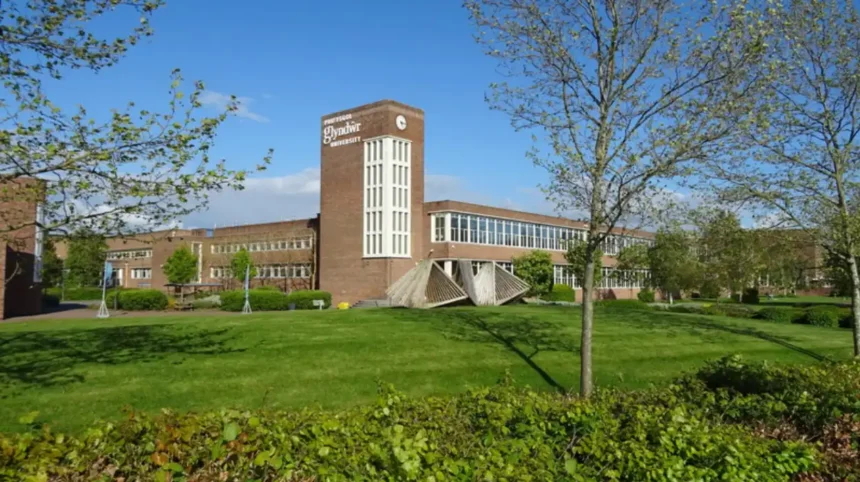
Glyndwr University Wales is a public higher education institution situated in uk/local/wrexham/">Wrexham, North Wales, officially rebranded as Prifysgol Wrecsam or Wrexham University in September 2023. The university holds full degree-awarding powers granted by the Privy Council of the United Kingdom and operates under statutory British education regulations.
- How Is the Degree Program Structure Organized Across Academic Faculties?
- What Research Capabilities and Industry Partnerships Support the University?
- Where Are the Campuses Located and What Infrastructure Is Provided?
- How Do Students Apply and What Are the Entry Requirements?
- What Career Support and Employment Outcomes Do Graduates Achieve?
- Frequently Asked Questions
- Is Glyndwr University a recognized higher education institution in the UK?
- What is Glyndwr University most famous for in North Wales?
- Where are the campuses of Glyndwr University located?
- What are the entry requirements for international students at Glyndwr University?
- Why did Glyndwr University change its name to Wrexham University?
The origin of higher learning on this site traces back to the establishment of the Wrexham School of Science and Art in 1887. The institution evolved through multiple administrative iterations, becoming Denbighshire Technical College in 1927, North East Wales Institute of Higher Education in 1975, and gaining full university status as Glyndwr University in 2008. The modern institution enrolled 6,045 active students across undergraduate and postgraduate qualifications in the 2024 academic cycle. The university maintains three campuses: the main Plas Coch campus in Wrexham, the Regent Street campus housing creative arts, and a specialist equine center at Northop.
Academic accreditation across its degree programs is monitored by the Quality Assurance Agency for Higher Education in the United Kingdom. Higher learning frameworks prioritize practical vocational skills, industry integration, and applied research. Tuition fees adhere to standard Welsh Government statutory fee caps, charging £9,000 annually for full-time Welsh undergraduate learners and £9,250 for non-Welsh domestic students. International student tuition ranges from £11,800 to £13,000 per academic year depending on laboratory requirements.
How Is the Degree Program Structure Organized Across Academic Faculties?
Glyndwr University Wales structures its teaching frameworks into four primary academic faculties that deliver career-oriented diploma, bachelor, and master qualifications. The degree architecture covers applied sciences, business administration, creative arts, health sciences, computing, and engineering modules.
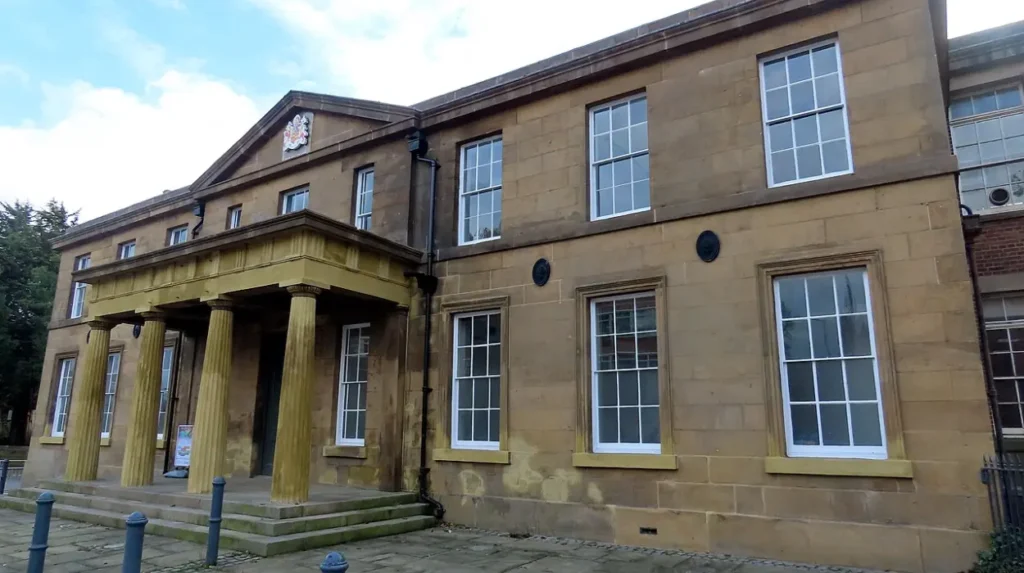
The Faculty of Art and Design operates from the historic Regent Street facility in Wrexham town center. This faculty provides studio-based training in fine art, graphic design, illustration, game design, and animation. The Faculty of Social and Life Sciences manages degree programs in nursing, occupational therapy, social work, criminology, and psychology, maintaining direct clinical placement partnerships with Betsi Cadwaladr University Health Board.
The Faculty of Arts, Science and Technology delivers technical training across computer science, cyber security, electrical engineering, aeronautical engineering, and environmental management. This faculty operates specialist laboratories equipped with flight simulators, composite material testing rigs, and advanced computing clusters. The Faculty of Business manages undergraduate and postgraduate options including Business Management, Human Resource Management, and Masters of Business Administration programs. Degree delivery options incorporate three-year full-time study, four-year foundation degrees, part-time professional routes, and distance learning platforms.
What Research Capabilities and Industry Partnerships Support the University?
Credit: Donald Judge
Glyndwr University Wales conducts applied research through specialized innovation centers that serve regional industrial sectors in North Wales and the West Midlands. Research frameworks emphasize optic design, advanced manufacturing, materials engineering, social policy, and sustainable environmental systems.
The OpTIC Technology Centre located in St Asaph functions as a primary research hub under university management. The facility specializes in ultra-precision optical engineering, thin-film coating, and optoelectronic device fabrication. Researchers at the OpTIC facility constructed ultra-precision mirror segments for the European Extremely Large Telescope project managed by the European Southern Observatory. This precision engineering program secured £10,000,000 in collaborative funding grants between 2010 and 2020.
Industrial collaboration extends to global manufacturing corporations operating within the North Wales economic corridor. The university maintains formal training partnerships with Airbus Aerospace in Broughton, Raytheon Technologies, and JCB. Degree apprenticeships delivered in partnership with industrial manufacturers enable students to earn salary wages while completing Bachelor of Engineering or Bachelor of Science degrees. Applied research output directly informs module curricula across all technical faculties.
Where Are the Campuses Located and What Infrastructure Is Provided?
Glyndwr University Wales operates three distinct geographic campus sites across North Wales designed to deliver teaching and student accommodation. The main campus at Plas Coch sits on Mold Road in Wrexham (postcode LL11 2AW), occupying 32 hectares of academic facilities, athletic grounds, and residential halls.
Plas Coch contains the Edward Llwyd Centre library, offering 150,000 physical volumes alongside electronic journal access, digital study pods, and specialized research rooms. The campus houses the Catrin Finch Centre, an international conference venue, alongside student residential halls including Wrexham Village, providing self-catered ensuite accommodation for 321 students. Sports facilities on site include a full-size indoor sports hall, fitness suite, and outdoor synthetic pitches.
The Regent Street campus located near Wrexham city center houses specialized workshop infrastructure for ceramic production, printmaking, digital fabrication, and fine art studios. The Northop campus in Flintshire covers 96 hectares of countryside dedicated to animal care studies, veterinary nursing, and equine management. Northop infrastructure features indoor riding arenas, outdoor equine arenas, animal rehabilitation units, and outdoor laboratory facilities.
How Do Students Apply and What Are the Entry Requirements?
Glyndwr University Wales manages student applications through the Universities and Colleges Admissions Service or via direct online university applications. Prospective domestic candidates applying for full-time undergraduate programs submit applications by the national UCAS deadline in late January.
Undergraduate entry requirements specify UCAS tariff point totals ranging from 80 to 112 points for standard three-year bachelor degrees. These tariff points convert to A-level grades between BBC and CDD, or BTEC Extended Diploma grades between Merit and Distinction. Specific vocational programs such as Bachelor of Science Nursing or Occupational Therapy require GCSE passes in English Language, Mathematics, and Science at Grade 4 (Grade C) or higher alongside interview selection processes.
International applicants must demonstrate English language proficiency through standardized test scores. The university requires an overall Academic IELTS score of 6.0 with no individual sub-test component below 5.5, or an equivalent TOEFL score. Alternative entry pathways include four-year integrated foundation degree courses designed for applicants with alternative qualifications or non-standard educational backgrounds. Mature applicants over 21 years old undergo holistic assessment based on professional experience and prior learning profiles.
What Career Support and Employment Outcomes Do Graduates Achieve?
Glyndwr University Wales operates an active Careers and Employability Service designed to assist students with professional placement, resume formulation, and interview preparation. The university embeds practical vocational training, work placements, and real-world client briefs into academic degree structures.
Higher Education Statistics Agency outcome data indicates that 92 percent of university graduates enter full-time employment or further professional study within 15 months of completing their degree programs. Graduates secure employment across public sector bodies, NHS trusts, regional school districts, engineering firms, and private corporate enterprises. The career service operates an online portal linking local businesses with current students seeking part-time employment, summer internships, and graduate positions.
Work-based learning modules require students in business, computing, and social care disciplines to complete structured work placements with external employers. The university also operates startup incubation programs, providing enterprise workspace, business guidance, and small seed funding grants for students attempting to establish commercial businesses or freelance enterprises upon graduation.
Frequently Asked Questions
Is Glyndwr University a recognized higher education institution in the UK?
Glyndwr University Wales is a fully recognized public university in North Wales holding UK degree-awarding powers granted by the Privy Council. The institution was rebranded as Wrexham University in late 2023. It offers fully accredited undergraduate, postgraduate, and professional qualifications that follow standard British higher education quality frameworks.
What is Glyndwr University most famous for in North Wales?
Glyndwr University is well known for its industry-focused degree courses in engineering, creative arts, nursing, and computer science. Its OpTIC Technology Centre in St Asaph gained international recognition by producing mirror components for the European Extremely Large Telescope project. The university is also known for its strong links to local industries like Airbus.
Where are the campuses of Glyndwr University located?
The university operates three main campus locations across North Wales. The principal campus is Plas Coch located on Mold Road in Wrexham. Creative art programs are housed at the dedicated Regent Street campus in Wrexham center, while equine and animal care studies are based at the Northop campus in Flintshire.
What are the entry requirements for international students at Glyndwr University?
International applicants must meet academic grade equivalents for their country alongside recognized English language qualifications. Standard entry requires an IELTS Academic score of 6.0 overall with no band below 5.5, or equivalent TOEFL results. Tuition fees for international students range between £11,800 and £13,000 per academic year.
Why did Glyndwr University change its name to Wrexham University?
Glyndwr University officially rebranded to Wrexham University in September 2023 to align its identity closely with the region. The name change was designed to improve international brand recognition, simplify naming for global students, and build on the growing global profile of Wrexham.