
Key Points
- A woman was evacuated from Ramsey Island after suffering a broken arm in a medical emergency.
- St David’s All Weather Lifeboat Norah Wortley launched at 1.06pm on Monday, July 27.
- The lifeboat reached the scene just five minutes later.
- An assessment was carried out in the harbour before the casualty was transferred to the lifeboat.
- She was taken to the boathouse and then handed over to the St David’s Coastguard Rescue Team.
- The woman was later taken to hospital for further treatment.
- The lifeboat was refuelled and back on service by 2pm.
St David’s (Wales Times) July 28, 2026 – A woman was evacuated from Ramsey Island after suffering a broken arm in a medical emergency, with St David’s All Weather Lifeboat Norah Wortley launching at 1.06pm on Monday, July 27 and arriving on scene five minutes later
What happened on Ramsey Island?
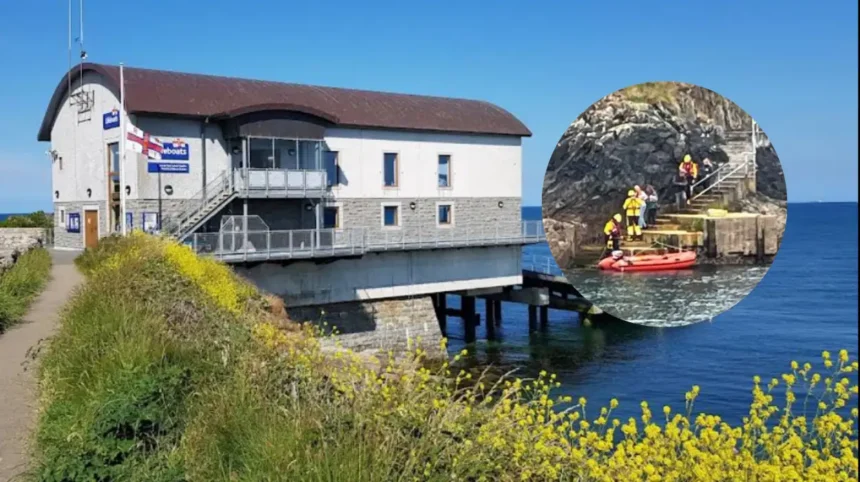
A woman suffered a broken arm and required evacuation from Ramsey Island following a medical emergency. The incident prompted a swift response from St David’s All Weather Lifeboat Norah Wortley, which was launched to assist after the emergency call was received. The casualty was assessed in the harbour before being transferred to the lifeboat for the journey back.
The evacuation shows how quickly rescue teams can respond when someone is injured in a remote coastal location. In this case, the timeline was tight from the moment of launch to arrival on scene, and the casualty was moved efficiently through the rescue chain. The reported sequence was clear: assessment, transfer, return to the boathouse, handover to Coastguard personnel, and onward travel to hospital.
How quickly did the rescue happen?
The response was rapid. Norah Wortley launched at 1.06pm and arrived just five minutes later, which indicates the rescue team was able to reach the scene without delay. The casualty was then transferred to the lifeboat and taken back to the boathouse, where she was handed over to the St David’s Coastguard Rescue Team.
That short response time is significant because broken arm injuries can still require urgent care, particularly if there is severe pain, swelling, or a risk of further complications. The report also says the lifeboat was refuelled and ready for service again by 2pm, showing the crew restored operational readiness quickly after the callout.
What happened after the transfer?
After the woman was brought to shore, the next stage of care was handled by the St David’s Coastguard Rescue Team. She was then taken to hospital for further treatment, which suggests the immediate rescue phase ended once she was safely out of the isolated island setting. This handover is a standard part of emergency response when several agencies share responsibility.
The report does not mention any wider incident, additional casualties, or search operation, which suggests this was a single-patient evacuation. The focus was on moving the injured woman safely and efficiently from Ramsey Island to professional medical care.
Why was the lifeboat response important?
This rescue matters because Ramsey Island is not the sort of place where emergency help can simply arrive by road. A lifeboat is often the fastest and safest way to move an injured person from an offshore or inaccessible location. In this case, the lifeboat service provided the bridge between the island and hospital care.
The fact that the casualty was assessed before transfer also shows that the crew followed a measured emergency procedure rather than rushing straight into transport. That approach helps ensure the injured person is stable enough for the journey and that the right services are ready once they reach shore.
How did the operation conclude?
The operation appears to have ended efficiently, with the lifeboat refuelled and back on service by 2pm. That detail suggests the crew completed the rescue, returned to station duties, and reset the boat within roughly an hour of launch. It also reflects the preparedness expected of a volunteer or rescue team handling time-sensitive emergencies.
The report gives a complete rescue chain from emergency call to hospital transfer. That sequence is important because it shows how local lifeboat and Coastguard teams work together in coastal emergencies.
Background of the development
Ramsey Island sits off the coast of Pembrokeshire and is known for its remote setting, where injuries can quickly become more serious because access is limited. In such locations, emergency planning depends heavily on marine rescue services and Coastguard support. This incident illustrates why those services remain essential for visitors and outdoor users.
The report adds to a wider pattern of coastal rescue stories in which speed, coordination, and the availability of trained crews determine how smoothly a medical emergency is handled. Even a relatively common injury such as a broken arm can become a major logistical problem when it happens on an island.
Prediction
For visitors to Ramsey Island, this rescue is likely to reinforce the need for caution on uneven ground, coastal paths, and remote terrain. It may also encourage a greater awareness of how quickly a minor accident can require a multi-agency evacuation in a hard-to-reach place.
For local rescue teams, the incident shows the value of maintaining fast launch capability, close coordination with Coastguard services, and quick turnaround after callouts. For the public, the likely effect is a stronger understanding that emergency cover on the coast is not only for dramatic rescues, but also for everyday injuries that still need urgent treatment.