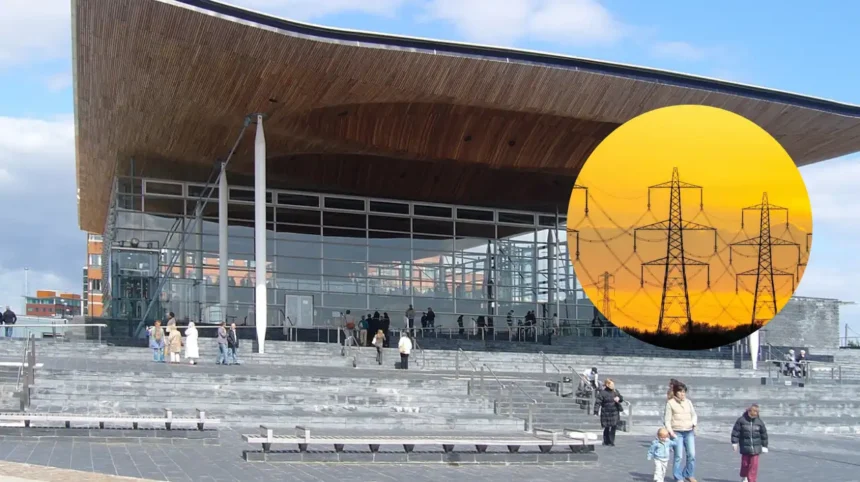
Key Points
- The Welsh government has started consultations over its “undergrounding first approach” to new electricity transmission lines within its jurisdiction.
- Under this new policy, no large steel lattice towers will be used for the construction of new lines up to 132 kilovolts.
- The ministers have decided to bury cables underground, and allow wooden towers or “equivalent, less intrusive infrastructure” if it is impossible to underground cables.
- The Welsh government believes that undergrounding can help to reduce visual pollution, protect the landscape and local amenities, increase resistance to harsh weather conditions and reduce negative impacts on birds and wildlife.
- Consultations note that undergrounding is usually more expensive and can cause construction impacts.
- Green Gen Cymru has proposed three big power-line routes in parts of Carmarthenshire, Ceredigion, Powys, and Shropshire.
- Green Gen claims that undergrounding costs 4.5 times more than overhead lines and an additional £500 million for the Towy Usk project.
- Adam Price, Energy Minister, has said that Wales needs new grid infrastructure, and it needs to be designed in a way to minimize the impact on communities and environment.
- Campaigners from Llandovery have welcomed the consultation, while political parties had different views on costs, landscapes, and grid delivery.
Liverpool (Liverpool standard) October 25, 2026 – The Welsh government has announced plans to ban traditional steel pylons for new electricity lines it controls, in favour of an “undergrounding-first approach” that would bury cables beneath the landscape. The policy, set out in a consultation launched on Friday, would apply to new lines up to 132 kilovolts and would permit wooden poles or other less intrusive overhead infrastructure only where burying cables is not feasible.
- Key Points
- What Is Wales Proposing to Ban?
- Why Does the Welsh Government Support Underground Cables?
- Which Pylon Projects Are Affected?
- How Much Could Undergrounding Cost?
- What Has Green Gen Cymru Said?
- How Have Campaigners Responded?
- What Do Political Parties Say?
- When Does the Consultation End?
- Background of the Development
- Prediction: How Could This Affect Rural Communities and Energy Projects?
What Is Wales Proposing to Ban?
As reported by Cemlyn Davies, Wales political correspondent, for Yahoo News, the Welsh government plans to prohibit the use of large steel lattice pylons to support new electricity lines up to 132 kilovolts. The proposals form part of a consultation on the government’s policy for electricity infrastructure.
The consultation document says undergrounding electricity circuits could “reduce the visual impact of electricity infrastructure, helping to protect landscapes and local amenity”. It also states that buried cables may be less vulnerable to severe weather and could reduce potential impacts on birds and other wildlife.
However, the Welsh government has also acknowledged the practical trade-offs. Its consultation document says undergrounding is “generally considered more expensive to install and maintain and could create construction impacts during installation”.
Why Does the Welsh Government Support Underground Cables?
The Welsh government says it wants electricity infrastructure to be designed in a way that limits harm to landscapes, communities and the environment. Energy Minister Adam Price said the changes needed in how Wales generates and uses energy will require new grid infrastructure, but that such infrastructure can affect the communities and environment that host it.
“We want to see infrastructure that is sensitively designed to minimise impacts on the environment and the communities that host them, while offering the maximum benefits for Wales,” Mr Price said.
The proposed policy would not remove all overhead infrastructure. Where undergrounding is not feasible, the Welsh government would allow wooden poles or “equivalent, less intrusive infrastructure” to support cables.
Which Pylon Projects Are Affected?
The plans come after proposals for a network of pylons in the Towy Valley faced strong local opposition. Local Plaid Cymru politicians spoke against the proposals, while campaign groups raised concerns about the effect on landscapes, farming and tourism.
Green Gen Cymru has proposed three major power-line routes connecting onshore wind farms planned by its sister company, Bute Energy, with the wider grid network. According to Yahoo News, the proposals affect parts of Carmarthenshire, Ceredigion, Powys and Shropshire.
The company has previously said it would invest nearly £1bn by 2030. It has also faced opposition from groups representing hundreds of landowners, who took the company to court in 2025.
How Much Could Undergrounding Cost?
Green Gen Cymru has consistently said that burying its cables would cost, on average, 4.5 times more than running them overhead. The company says this would add £500m to the cost of the Towy Usk project between Carmarthenshire and Powys.
Welsh Labour’s environment, rural affairs, energy and transport spokesperson, Vikki Howells, said burying cables can cost five times as much as overhead lines, making electricity more expensive and decarbonisation more difficult. She said the sensible approach was to choose the right engineering solution for the right landscape, while keeping undergrounding available where landscape, environmental or other circumstances justify it.
The consultation itself recognises that underground cables can be more expensive to install and maintain. It also notes that installation can create construction impacts.
What Has Green Gen Cymru Said?
Green Gen Cymru welcomed the consultation. Andrew Hardcastle, the company’s executive director, said it welcomed the Welsh government’s recognition of the importance of delivering the electricity infrastructure Wales needs in a way that is sensitive to landscapes, environment and communities.
“Like all grid companies across the UK, we believe there is no one-size-fits-all solution to developing new electricity networks,” Mr Hardcastle said.
He said the company’s approach was to use “the right infrastructure in the right place”, drawing on underground cables, wooden poles and its recently announced lower-profile monopoles. Green Gen said it was pleased that the consultation recognises the potential role of less visually intrusive overhead infrastructure, including monopoles, and invites evidence on their use.
The company recently unveiled a “slim and compact” 22-metre, or 72-foot, pylon designed “with the Welsh landscape in mind”.
How Have Campaigners Responded?
Campaigners in Llandovery welcomed the Welsh government’s move. Eirian Edwards, a campaigner with the Llandovery Pylon Group, said the group welcomed the government “seriously looking at undergrounding as the preferred option” to protect landscapes and people’s livelihoods.
“If infrastructure has to be planned, then we’re not against that process at all,” Ms Edwards said. “We realise that we need to strengthen our local grid, but certain projects that are planned do not fulfil that at all.”
Dyfan Walters, a farmer in Llandovery and member of the Llandovery Pylon Group, called the announcement “a positive day for us”. He said campaigners support and understand that infrastructure is required, but believe putting it underground would mean less impact on agriculture and tourism.
“In a world where there’s an ever-changing climate, having that resilience – having infrastructure placed underground – is a sensible way forward,” Mr Walters said.
What Do Political Parties Say?
Plaid Cymru ministers favour burying cables underground. Prohibiting large steel lattice pylons for new lines up to 132 kilovolts was also a Plaid Cymru manifesto pledge before May’s Senedd election.
Reform’s Senedd spokesperson for rural affairs, Laura Anne Jones, said the party would continue to push for new power lines to be placed underground wherever possible.
“Reform will always stand up for our countryside and fight against its industrialisation,”
she said.
Welsh Labour’s Vikki Howells raised concerns about cost, saying undergrounding could make electricity more expensive and decarbonisation more difficult. She argued that the right engineering solution should be selected for the right landscape.
The Welsh Conservatives welcomed the policy consultation. The party’s environment spokesperson, Andrew RT Davies, said Wales needs a modern electricity network to support economic growth, but communities should not have to accept “eyesores” across natural landscapes, which must be conserved.
When Does the Consultation End?
The Welsh government’s consultation will run until 15 January 2027. During that period, the government is seeking evidence on its proposed undergrounding-first policy and on the potential role of less visually intrusive overhead infrastructure, including monopoles.
The outcome could shape how future electricity lines are designed and approved in Wales, particularly for projects connecting new renewable energy generation to the national grid.
Background of the Development
The announcement follows sustained opposition to pylon proposals in parts of rural Wales, especially the Towy Valley. Green Gen Cymru’s proposed routes would connect planned onshore wind farms, developed through its sister company Bute Energy, to the wider grid network across Carmarthenshire, Ceredigion, Powys and Shropshire.
Local campaign group the Llandovery Pylon Group has argued that underground cables would reduce impacts on farming, tourism and the landscape. Green Gen, meanwhile, has argued that undergrounding carries substantially higher costs and has developed a lower-profile monopole design in response to concerns about traditional steel lattice pylons.
The consultation also follows a Plaid Cymru manifesto commitment before May’s Senedd election to prohibit large steel lattice pylons for new lines up to 132 kilovolts.
Prediction: How Could This Affect Rural Communities and Energy Projects?
For rural communities, the consultation could lead to fewer traditional steel pylons in sensitive landscapes if the Welsh government adopts an undergrounding-first policy. Residents and landowners may gain greater scope to argue for buried cables, wooden poles or lower-profile monopoles where new grid infrastructure is proposed.
For renewable energy developers and grid companies, the policy could increase planning complexity and project costs. Green Gen’s estimate that undergrounding costs 4.5 times more than overhead lines suggests that developers may need to balance landscape protection against the affordability and delivery timetable of grid connections.
For Wales’s wider energy transition, the consultation may encourage more site-specific infrastructure decisions. If adopted, the policy could protect visual amenity and improve resilience to severe weather, but it could also make some projects more expensive and potentially slower to deliver, depending on the final balance struck between undergrounding and less intrusive overhead options.