Key Points
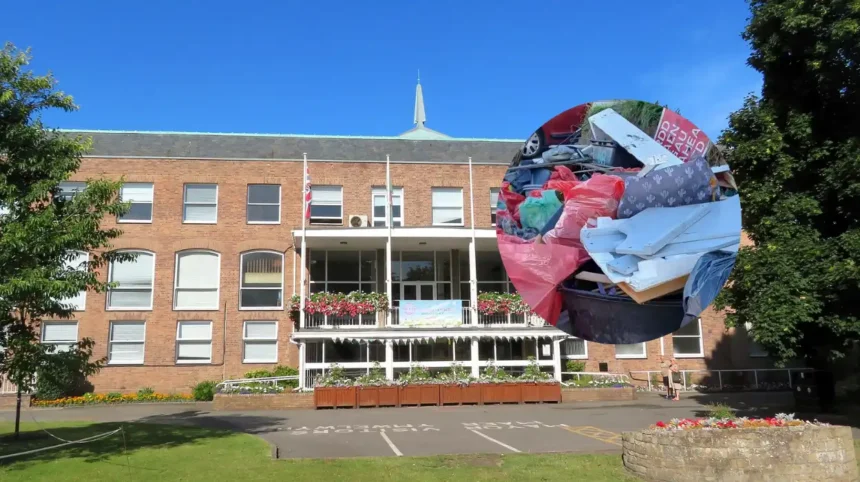
- Volunteers, among whom there are litter pickers of Wrexham, have collected about 60 bags of fly tipped waste behind Montgomery Road in Wrexham.
- Among the waste that was collected, there were found such items as a tent, air fryer, pushchair, lawn mower, ground sheets, bags full of rubbish, and wood from fences and sheds.
- About 12 nitrous oxide (NO2) canisters were also discovered during the clearance.
- Among all the 60 bags that were collected, 15 were removed for recycling.
- Some larger items that were dumped required removal.
- The Deputy Leader of Wrexham Council and Lead Member for Environment, Councillor David A Bithell, praised volunteers and criticized fly tipping.
- According to Councillor Bithell, there is no excuse for fly-tipping because Wrexham recycling sites are available to use all seven days a week.
- He added that he responded to Welsh Government consultation which suggested raising the maximum fixed penalty for fly-tipping to £5,000.
- There were 1,689 fly-tipping reports received by Wrexham Council in April 2025-March 2026 period.
Wrexham (Wales Times) November 03, 2026 — Volunteers have cleared approximately 60 bags of fly-tipped waste from land behind Montgomery Road in uk/local/wrexham/">Wrexham, removing household items, building materials and nitrous oxide canisters from the site. As reported by LeaderLive, the clean-up was carried out by Wrexham litter pickers and other volunteers, who collected the bags alongside several larger discarded objects.
The haul included a tent, an air fryer, a pushchair and a lawn mower. Volunteers also found multiple ground sheets, containers filled with rubbish, wood from fences and sheds, and approximately 12 NO2 canisters.
Of the approximately 60 bags collected, 15 were taken away for recycling. A number of larger dumped items still needed to be collected after the volunteer clean-up.
What did Wrexham Council say?
David A Bithell, Wrexham Council’s Deputy Leader and Lead Member for Environment, thanked Wrexham litter pickers and the other volunteers who took part. He described the quantity of rubbish left at the site as “shocking” and questioned how people could leave such a mess and blight the environment.
As reported by LeaderLive, Councillor Bithell said: “It’s shocking, words can’t describe how people can leave such a mess and blight the environment.”
He added that he had recently responded to a Welsh Government consultation which included proposals to increase the maximum fixed penalty for fly-tipping to £5,000.
“We are facing a pandemic in fly tipping where these issues are becoming widespread,”
Councillor Bithell said. “
We have free access to our neighbourhood recycling sites seven days a week, so there is no excuse.”
How widespread is fly-tipping in Wrexham?
The clean-up comes amid continuing concerns about illegally dumped waste across the Wrexham county borough. Wrexham Council said it received 1,689 reports of fly-tipping between April 2025 and March 2026.
The council describes fly-tipping as illegal and says it damages local communities, creates unnecessary clean-up costs and can have a serious environmental impact. It encourages residents to use official recycling centres, bulky waste collection services or licensed waste carriers.
Wrexham Council’s household recycling centres are at Bryn Lane on Wrexham Industrial Estate, The Lodge in Brymbo, and Wynnstay Bank in Plas Madoc. The council says commercial or industrial waste is not accepted at these sites.
What penalties can fly-tippers face?
Anyone caught fly-tipping in Wrexham can be issued with a £400 fixed penalty notice, according to Wrexham Council. Householders who fail to meet their duty of care when disposing of waste may receive a £300 fixed penalty notice or an unlimited fine if prosecuted.
The council says more serious cases can be taken to court, where offenders could face a fine of up to £50,000 or a 12-month prison sentence.
Councillor Bithell said in a council statement: “There is absolutely no excuse for fly-tipping in Wrexham, especially when residents have access to recycling centres and proper ways to dispose of their waste.”
He added: “Dumping rubbish in public places is selfish, irresponsible and completely unacceptable. It blights our communities, costs money to clear up, and is unfair on the residents who take pride in where they live.”
Why does the Montgomery Road site keep attracting waste?
The latest clean-up follows previous volunteer action behind Montgomery Road. As reported by LeaderLive in August, volunteers had earlier removed around 220 bags of rubbish and several larger items from the same area.
During that earlier effort, volunteers also removed a sofa, four bicycles, a traffic cone, a rocking chair, a pram, two car seats, a cot and two shopping trolleys from the River Gwenfro and surrounding area. The clean-up was supported by Wrexham Council litter pickers, who helped report waste for collection.
Liz Vernon, a volunteer, said residents had reported that the area had deteriorated again after the earlier clean-up. She said:
“Last year we cleared approximately 220 bags of rubbish and various large items from the rear of Montgomery Road.”
What can residents do with unwanted waste?
Wrexham Council advises residents with waste to dispose of to use recycling centres, arrange a collection, or ensure that any private waste carrier is licensed. It says licensed waste carriers can be found through Natural Resources Wales.
The council also operates an online “Report Fly tipping” form for residents who see illegally dumped waste. It says tackling fly-tipping remains a priority and that enforcement action can and will be taken against those who dump waste illegally.
Background of the development
Fly-tipping has been a recurring issue in Wrexham, with the council repeatedly urging residents to use legitimate disposal routes. In June 2026, Wrexham Council reminded residents that there was “no excuse” for fly-tipping after concerns about waste being dumped in public areas across the county borough.
The council’s September 2026 plans for recycling and waste services included deploying more cameras across the county borough to tackle fly-tipping. Councillor Bithell, who was appointed Lead Member for Environment at that time, said the council recognised that more needed to be done to improve recycling performance.
The Montgomery Road area has previously been identified by volunteers as a location where large quantities of waste accumulate. The latest collection of approximately 60 bags adds to earlier volunteer efforts in the same area, where around 220 bags and numerous bulky items were removed.
Prediction: what it means for Wrexham residents
For Wrexham residents, the development is likely to keep attention on both the availability of legitimate waste-disposal services and the enforcement measures available to the council. The reported proposal to raise the maximum fixed penalty for fly-tipping to £5,000 could increase the potential financial consequences for people caught dumping waste, although it remains a proposal within a Welsh Government consultation rather than an implemented penalty.
Residents who use recycling centres, bulky-waste collections or licensed carriers are unlikely to be directly affected by enforcement action. However, those arranging for waste removal should ensure that whoever takes their rubbish is properly licensed, as Wrexham Council says householders can face penalties if they fail their duty of care when disposing of waste.
For neighbourhoods around Montgomery Road, continued volunteer clean-ups may improve the immediate appearance of the area, but the return of dumped waste after previous efforts indicates that local residents and community groups may continue to face repeated clear-up work. Wrexham Council’s reported use of additional cameras could increase the chances of identifying offenders, while residents can report incidents through the council’s online form.