

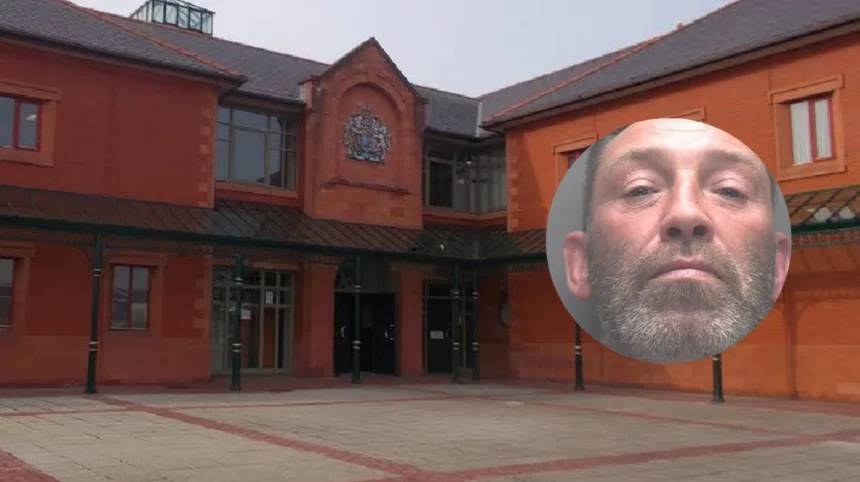
Key Points
- Daniel Griffiths, 52, a man from Pwllheli, received a 42-day jail term for breaching a Domestic Violence Protection Order.
- According to North Wales Police, Daniel Griffiths followed a woman onto the bus and kept following her while going to her house.
- The order against his contacting that woman was made on 1 September 2026.
- The event happened on 12 September while the woman was waiting for a bus.
- That woman felt distressed because Daniel Griffiths followed her from the bus to her house.
- Griffiths appeared before Llandudno Magistrates’ Court on Monday, 21 September 2026.
- According to North Wales Police, it will use its powers in order to protect women and girls from any violence.
Wales Police (Wales Times) September 22, 2026 – Daniel Griffiths, a 52-year-old man from Pwllheli, has been jailed for 42 days after following a woman he was prohibited from contacting, breaching a Domestic Violence Protection Order.
- Key Points
- When was the protection order issued?
- What did North Wales Police say?
- What was the police response?
- What sentence did Daniel Griffiths receive?
- What is known about the court case?
- Why was the order important in this case?
- What have other reports said about the case?
- Background: Domestic Violence Protection Orders in England and Wales
- Prediction: How could this affect people protected by similar orders?
According to the Daily Post, Griffiths targeted the woman on 12 September while she was waiting for a bus. He followed her onto the bus and then continued following her after she left it, moving towards her home address.
The incident breached the conditions of an order issued to prevent Griffiths from contacting the woman. North uk/police/">Wales Police said the woman was left feeling distressed as a result of his actions.
Griffiths appeared at Llandudno Magistrates’ Court on Monday, 21 September. The court subsequently imposed a 42-day prison sentence for the breach.
When was the protection order issued?
The Domestic Violence Protection Notice was issued on 1 September 2026, according to a statement from North Wales Police cited by the Daily Post.
The police said the notice prevented Griffiths from contacting the woman. Despite that restriction, officers said he approached her while she was waiting for public transport less than two weeks later.
The reported sequence of events was:
- The protection notice was issued on 1 September.
- Griffiths allegedly approached the woman on 12 September as she waited for a bus.
- He followed her onto the bus.
- He continued following her after she got off.
- He followed her towards her home address.
- The conduct was treated as a breach of the protection order.
- Griffiths appeared before Llandudno Magistrates’ Court on 21 September.
- He was jailed for 42 days.
The police account does not provide further details about the previous circumstances that led to the order. It also does not identify the woman, in keeping with the protection of victims involved in domestic abuse-related proceedings.
What did North Wales Police say?
A North Wales Police spokesperson said Griffiths had been issued with a Domestic Violence Protection Notice on 1 September, preventing him from contacting the woman.
The spokesperson said:
“The 52-year-old was issued with a DVPN on 1 September which prevented him from contacting a woman. However, on 12 September, Griffiths targeted the woman as she was waiting for a bus.”
The spokesperson added:
“He followed her onto the bus and then continued to follow her off the bus and towards her home address.”
North Wales Police said the conduct breached the conditions of the order and left the woman distressed.
What was the police response?
District Inspector Iwan Jones said North Wales Police would continue using available powers to protect women and girls from violence.
Jones said:
“We will continue to utilise all powers available to us to protect women and girls from violence.”
He also warned that court orders intended to protect individuals must be respected.
Jones said:
“Any disregard of court orders put in place to protect individuals will not be tolerated and we will act to bring perpetrators to court.”
The statement places the case within the force’s wider response to domestic abuse, harassment and violence against women and girls. It also underlines the police position that breaches of protective orders can result in enforcement action and prosecution.
What sentence did Daniel Griffiths receive?
Daniel Griffiths was jailed for 42 days after appearing at Llandudno Magistrates’ Court on 21 September 2026.
The Daily Post reported that the sentence followed his breach of the Domestic Violence Protection Order. The available reports do not give further information about whether the court imposed additional requirements, nor do they set out the full evidence presented during the hearing.
The sentence means Griffiths was detained after the court found that he had breached restrictions preventing him from contacting the woman.
A report by MonFM described the incident as Griffiths following the woman home after flouting a protective order. Its report said he had been given a Domestic Violence Protection Order in court on 1 September, with the aim of deterring him from contacting the victim.
The Cambrian News also reported that a Pwllheli man had been jailed after breaching a domestic violence protection order. Its report identified the defendant as Daniel Griffiths of Llannor, Pwllheli.
What is known about the court case?
Griffiths appeared at Llandudno Magistrates’ Court on Monday, 21 September 2026. The reports identify the order, the alleged breach and the 42-day custodial sentence.
The Daily Post report focuses on the police account and does not include a full transcript of the hearing. It therefore does not disclose every submission made by the prosecution or defence, whether Griffiths entered a particular plea, or whether the magistrates gave additional reasons for the sentence.
The court proceedings followed an incident reported to have taken place on 12 September, when the woman was travelling by bus. The alleged conduct was not described as a single accidental encounter. Police said Griffiths followed the woman onto the bus and then continued following her after she left, towards her home.
That alleged continuation of the contact was central to the reported breach of the order.
Why was the order important in this case?
A Domestic Violence Protection Order is intended to provide immediate protection where police and magistrates believe restrictions are necessary to protect someone from domestic violence or the threat of violence.
Domestic Violence Protection Orders can restrict an offender from contacting a victim and may impose other protective conditions. The orders are designed to address situations in which immediate safeguards are needed, including circumstances where a criminal charge and bail conditions may not provide sufficient protection.
A breach of a Domestic Violence Protection Order is a civil contempt of court and can be punishable by a fine or imprisonment of up to two months.
In Griffiths’ case, police said the order specifically prevented him from contacting the woman. Following her onto public transport and continuing towards her home was reported as a breach of those conditions.
The order therefore formed the legal basis for the enforcement action reported in the case. The available reports do not state whether any separate criminal allegations were brought in connection with the previous circumstances that led to the order.
What have other reports said about the case?
The case was covered by several North Wales media outlets.
The Daily Post reported that Griffiths followed the woman onto a bus and then towards her home, and included statements from North Wales Police and District Inspector Iwan Jones. It reported that Griffiths was jailed for 42 days after appearing at Llandudno Magistrates’ Court.
The Cambrian News reported that Daniel Griffiths, of Llannor, Pwllheli, was jailed for breaching a domestic violence protection order.
MonFM reported that Griffiths had been jailed after flouting a protective order by following a woman home. It said the order had been made in court on 1 September and was intended to stop him contacting the victim.
The reports broadly agree on the key facts: Griffiths was subject to a protective order, he followed the woman, the order was breached and the court imposed a 42-day prison sentence. The detailed account of the bus journey and the police quotations comes from the Daily Post report.
Background: Domestic Violence Protection Orders in England and Wales
Domestic Violence Protection Notices and Domestic Violence Protection Orders were introduced to provide an immediate protective response following domestic abuse incidents.
A Domestic Violence Protection Notice can be issued by police where officers have reasonable grounds to believe that a person has been violent towards, or threatened violence against, an associated person and that immediate protection is necessary. A police application for a Domestic Violence Protection Order must then be made to a magistrates’ court.
A Domestic Violence Protection Order may prevent an alleged offender from contacting the protected person. Depending on the circumstances, it can also prevent the person from returning to a property or require them to leave a shared home.
The orders were rolled out across all 43 police forces in England and Wales from 8 March 2014. They were intended to fill a gap in protection where there might not be enough evidence to charge a suspect immediately, or where bail conditions would not otherwise provide the required safeguards.
A Domestic Violence Protection Order can last for between 14 and 28 days. Breaching the order is a civil contempt of court and can result in imprisonment for up to two months.
The order reported in the Griffiths case was issued on 1 September. Police said it prohibited him from contacting the woman, and the reported following incident occurred on 12 September.
Prediction: How could this affect people protected by similar orders?
The Griffiths case is likely to reinforce the message that protective orders must be treated as legally binding restrictions, rather than informal warnings. For people protected by such orders, the reported 42-day sentence may offer reassurance that police can act when alleged breaches are reported and supported by evidence.
The case may also encourage police forces to continue monitoring and enforcing orders where a protected person reports unwanted contact, following or intimidation. North Wales Police’s statement indicates that the force intends to use available powers to protect women and girls from violence.
For people subject to Domestic Violence Protection Orders, the case demonstrates the potential consequences of ignoring restrictions. Any prohibited contact, including following a protected person in public or towards their home, may be investigated as a breach. The precise legal consequences will depend on the wording of the order, the evidence and the court’s assessment.
The case could also increase public awareness of the importance of reporting suspected breaches promptly. A person who believes an order has been breached should seek help from the police or an appropriate domestic abuse support service. In an emergency, people in the UK should call 999.
The available reports do not establish any wider change in sentencing policy as a result of this individual case. Its immediate significance is narrower: a Pwllheli man received a 42-day custodial sentence after the court dealt with a reported breach of an order intended to prevent contact with a woman.