

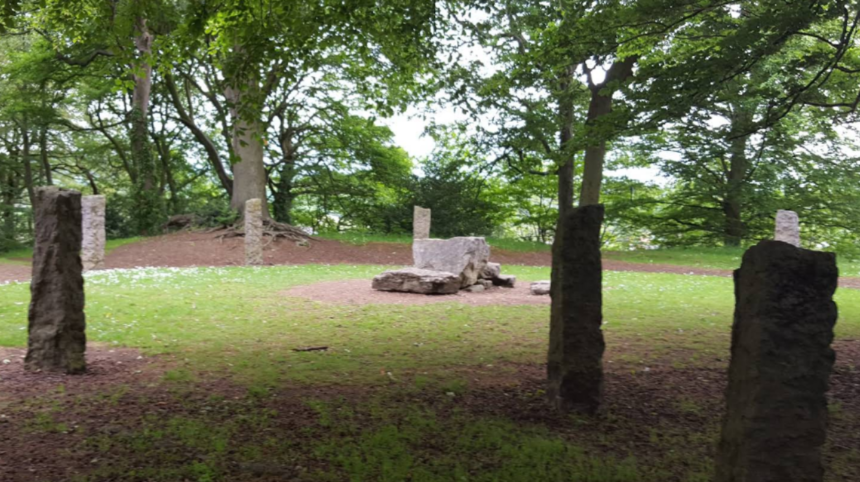
Mold uk/local/swansea/castle/">Castle in Flintshire, Wales, is a medieval Norman fortification built during the late 11th century to establish military control over northeast Wales following the Norman invasion. Although only earthwork remains survive today, the castle played a significant role in the medieval history of the Welsh Marches and the conflict between Norman lords and Welsh princes.
What Is Mold Castle in Flintshire, Wales?
Mold Castle was a Norman motte-and-bailey castle constructed around 1077 by Robert of Rhuddlan to strengthen Norman authority in northeast Wales. The castle served as a military fortress, administrative centre, and symbol of Norman power before repeated Welsh attacks led to its decline.
Mold Castle stands on elevated ground overlooking the town of Mold in the county of Flintshire, northeast Wales. The castle formed part of a wider network of Norman fortifications established after the Norman Conquest of England in 1066. These castles protected important routes, secured conquered territory, and enabled Norman rulers to administer their expanding lands. Mold Castle became one of the earliest defensive strongholds in the region and remained strategically important throughout the medieval period.
The name “Mold” originates from the Norman French term Mont-Haut, meaning “high hill.” Over time, the pronunciation evolved into the modern name. The castle occupied a commanding position above surrounding valleys, allowing defenders to observe approaching armies and protect nearby settlements. This elevated location reflected the military planning commonly used by Norman castle builders across Britain.
Why Was Mold Castle Built?
Mold Castle was built to secure Norman control over northeast Wales, defend newly conquered territory, and monitor important travel routes. The fortress also functioned as an administrative centre where Norman officials collected taxes, enforced laws, and demonstrated political authority over the surrounding region.
During the late eleventh century, the Welsh border remained unstable as Norman forces expanded westward. Powerful Norman nobles received land from King William I in exchange for maintaining military control. Robert of Rhuddlan became one of the leading commanders responsible for extending Norman influence across north Wales.
The construction of Mold Castle allowed Norman soldiers to establish a permanent military presence in Flintshire. From this stronghold they defended local settlements, organised patrols, and launched campaigns into neighbouring Welsh territories. The castle also encouraged the development of trade and agriculture by providing greater security for people living nearby.
Norman castles were carefully positioned to dominate roads, rivers, and fertile land. Mold Castle fulfilled each of these objectives, making it an essential element of the defensive frontier known as the Welsh Marches.
How Did the History of Mold Castle Develop During the Middle Ages?
Mold Castle experienced repeated warfare throughout the Middle Ages as Norman rulers and Welsh princes fought for control of northeast Wales. Several attacks, rebuilding projects, and changes in ownership reflected the continuing struggle between England and Wales during the medieval period.
Soon after its construction, Mold Castle became a target for Welsh resistance. Local rulers opposed Norman expansion and organised military campaigns against frontier castles. Historical records describe several assaults that damaged the fortifications and forced the Norman garrison to strengthen its defences.
One of the most significant events occurred during the twelfth century when the forces of the Welsh prince Owain Gwynedd challenged Norman authority across north Wales. The surrounding region witnessed frequent battles, shifting alliances, and periods of rebuilding as control changed between opposing forces.
Throughout the thirteenth century, political conditions continued to evolve until the campaigns of King Edward I transformed the military landscape of Wales. Edward ordered the construction of large stone castles, including nearby Flint Castle, which replaced many earlier timber fortifications in strategic importance. As these newer castles emerged, Mold Castle gradually lost its military role and eventually fell into decline.
What Were the Main Features of Mold Castle?
Mold Castle followed the classic Norman motte-and-bailey design, combining an artificial mound, defensive ditch, enclosed courtyard, timber buildings, and protective earthworks. This layout enabled rapid construction while providing effective defence against medieval attacks.
The motte formed the highest point of the castle. Builders created a large earthen mound topped by a wooden tower that served as the final defensive position during enemy assaults. From this elevated structure, guards maintained clear views across the surrounding countryside and communicated with nearby settlements.
The bailey occupied the enclosed area beside the motte. A strong timber palisade surrounded this space, protecting essential buildings such as soldiers’ barracks, storage facilities, workshops, kitchens, and administrative offices. The entrance included a heavily defended gate controlled by armed guards.
A deep ditch surrounded much of the castle, creating an additional obstacle for attacking forces. Earth excavated from the ditch helped form the defensive banks supporting the timber walls. Although timber required regular maintenance, it allowed Norman engineers to complete castles quickly during military campaigns.
Today, visitors can still recognise sections of the surviving earthworks despite the disappearance of the original timber structures. These remains provide valuable archaeological evidence of early Norman military engineering in Wales.
Frequently Asked Questions
Who built Mold Castle and why?
Robert of Rhuddlan, a Norman nobleman and military commander, built Mold Castle shortly after the Norman Conquest. The castle was designed to defend Norman territory, control key routes through northeast Wales, and strengthen Norman authority in the Welsh Marches.
Can you visit Mold Castle today?
Yes. Visitors can explore the surviving earthworks of Mold Castle throughout the year. Although no original buildings remain, the site offers excellent views of the surrounding area and provides insight into the layout of an early Norman motte-and-bailey castle. Information panels help explain its historical significance.
What happened to Mold Castle?
Mold Castle experienced repeated attacks during conflicts between the Normans and Welsh princes. After larger stone castles, including Flint Castle, were built in the late thirteenth century, Mold Castle lost its military importance. The timber structures gradually disappeared, leaving only the defensive earthworks visible today.
Why is Mold Castle historically important?
Mold Castle experienced repeated attacks during conflicts between the Normans and Welsh princes. After larger stone castles, including Flint Castle, were built in the late thirteenth century, Mold Castle lost its military importance. The timber structures gradually disappeared, leaving only the defensive earthworks visible today.