
Key Points
- A prolonged spell of hot, dry weather across Wales exposed buried archaeological sites as crop marks and parch marks became visible from the air.
- Newly visible remains included an unknown Celtic site near Tywyn in Gwynedd, prehistoric settlements in Monmouthshire, a suspected Roman fortress, and a Roman watch tower on the coast.
- Archaeologists also reported a “new” Roman fortress and town between Caerwent and Caerleon appearing in the dry conditions.
- The Royal Commission on the Ancient and Historical Monuments of Wales recorded the sites before they disappeared again when rain returned.
- Specialists said the drought conditions created a rare opportunity to identify long-buried monuments, farms, forts, and settlements that had been hidden beneath grass and crops for centuries.
- The discovery is expected to support further archaeological research on the ground in the months that followed.
Wales (Wales Times) July 24, 2026 – The prolonged heat and drought across Wales exposed buried archaeological remains by making differences in vegetation growth visible as crop marks, allowing aerial archaeologists to detect long-hidden sites from above.
As reported by Toby Driver of the Royal Commission on the Ancient and Historical Monuments of Wales, the dry spell revealed “long lost buried archaeological sites” that appear only fleetingly in crops when conditions are exceptionally dry. The evidence was visible in fields where soil above buried ditches retained more moisture than surrounding ground, creating greener, taller growth that outlined ancient structures.
What was found in Wales?
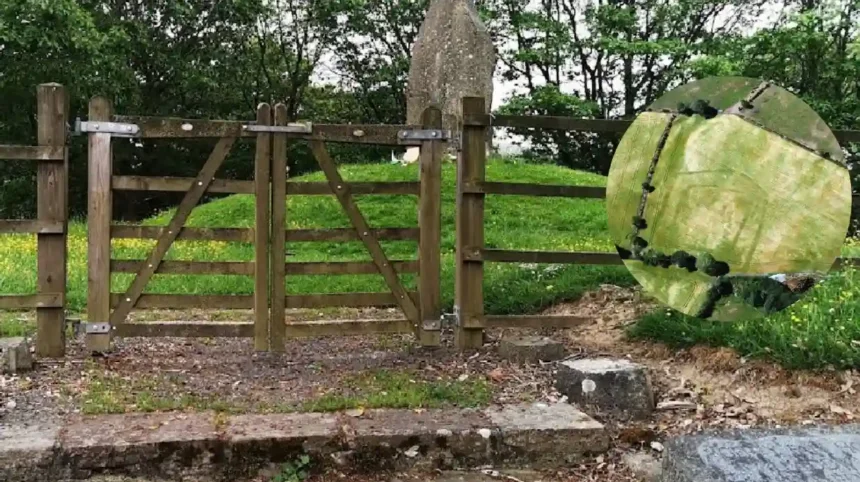
The Wales discoveries were spread across several areas and included both previously known and new features. In Gwynedd, an unknown Celtic site appeared near Tywyn in the shadow of a uk/local/swansea/castle/">castle ruin, while another Celtic settlement emerged on the valley floor between Castell y Bere and Craig yr Aderyn. In Monmouthshire, prehistoric settlements were seen alongside a suspected Roman fortress, and aerial archaeologists also identified a possible Roman watch tower on the nearby coast.
Further south, the dry conditions revealed what was described as a “new” Roman fortress and town between Caerwent and Caerleon. Separate reporting also noted that the heatwave exposed dozens of lost and hidden ruins across Wales, with the Royal Commission stating that scores of long-buried sites had been revealed again as crop marks. These marks were especially valuable because they could be recorded before changing weather erased them.
Why do crop marks appear?
Crop marks form when buried walls, ditches, pits, or foundations affect the way plants grow above them. Ditches usually hold more moisture and nutrients, so crops above them can become greener and taller than the surrounding field. By contrast, buried stone or compacted ground can leave crops thinner or weaker, creating visible patterns from the air.
This means dry summers can turn fields into temporary maps of ancient activity. Historic England and Welsh heritage specialists have used aerial photography for years because it helps identify buried remains and judge whether they need protection from ploughing or development. The Welsh case showed how exceptional weather can reveal entire landscapes rather than isolated finds.
Why does it matter?
The findings matter because they add to the record of human activity across Wales, including prehistoric, Roman, and early medieval periods. Each visible mark can point archaeologists to a site that may otherwise remain undocumented, helping build a clearer picture of settlement, defence, burial, and land use over many centuries.
They also matter for preservation. Once identified, these remains can be studied, mapped, and in some cases protected from damage caused by farming or construction. A temporary drought therefore becomes an opportunity not only for discovery, but also for conservation planning.
Background
Britain has long seen archaeological discoveries emerge during exceptionally dry summers, when stressed vegetation exposes the outlines of hidden structures. Similar patterns were reported across Wales and the wider UK in the same period, with archaeologists noting new crop marks, buried settlements, and traces of older landscapes.
In Wales, aerial survey work has been especially important because many ancient sites are invisible at ground level until weather conditions change. The Royal Commission on the Ancient and Historical Monuments of Wales has regularly recorded such marks from the air, building a better understanding of buried heritage before natural conditions conceal it again.
Prediction
For local communities, the main effect of this development is likely to be stronger heritage interest and more detailed mapping of nearby historical landscapes. For landowners and planners, newly identified sites may bring closer scrutiny before any digging, building, or intensive cultivation takes place.
For archaeologists, future dry spells could produce more discoveries, especially in areas where buried remains are already suspected. The practical impact will be most visible in Wales’ rural areas, where crop marks can quickly shift a field from ordinary farmland into a source of historical evidence.