

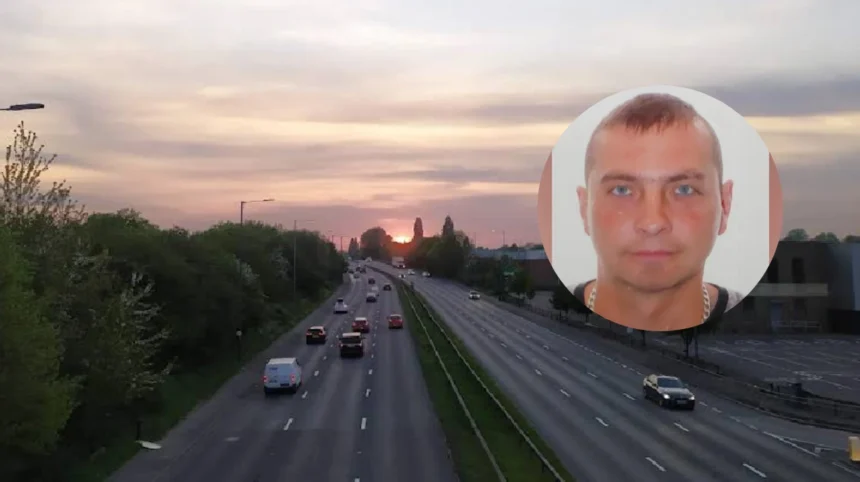
Key Points:
- 44-year-old Gerard Trojanowski was killed after being hit by several cars in an accident that occurred on the A40 road in Carmarthen.
- The accident occurred between the PC World roundabout and the Abergwili roundabout at about 21:50 BST on 28th July 2026.
- In its description of the accident, Dyfed-Powys Police characterized the accident as a six-car crash which involved a police patrol car.
- He was characterized by his family as a loving husband and father as well as a kind and generous individual with a big heart.
- The section of the A40 involved was closed for about 24 hours.
- The incident was reported to the Independent Office for Police Conduct due to the involvement of a police car in the accident.
- Police have continued to seek for more information from witnesses.
Wales Live Traffic & Travel (Wales Times) August 08, 2026 — Dyfed-Powys Police said that officers were called to the A40 after concerns were raised about a pedestrian on the carriageway. The incident occurred between the PC World roundabout and the Abergwili roundabout at about 21:50 BST.
- Key Points:
- Who was Gerard Trojanowski?
- Why was the police vehicle referred to the IOPC?
- What have police said about the investigation?
- How long was the A40 closed?
- What is known and what remains unconfirmed?
- What does the family’s tribute mean for the story?
- Background: Why is the IOPC involved?
- Prediction: How could the investigation affect Carmarthen road users?
Gerard Trojanowski died after being struck by multiple vehicles, including a marked police car, on the A40 in Carmarthen on 28 July 2026. His family has since paid tribute to the 44-year-old, describing him as a loving husband and father and a “wonderful and generous person with a good heart”.
According to the initial police account, officers arrived after receiving information about a person on the road. Several vehicles had collided with the pedestrian, including a marked police vehicle that was carrying out a routine patrol. Dyfed-Powys Police described the incident as a six-vehicle collision.
The pedestrian was pronounced dead at the scene. At the time of the initial reports, police were working to establish his identity and inform his next of kin. The force also confirmed that no arrests had been made.
The A40 was closed in both directions while emergency services and investigators worked at the scene. Motorists were advised to avoid the area and use alternative routes. Both lanes later reopened, although reports said that part of the road remained closed for almost 24 hours after the fatal collision.
Who was Gerard Trojanowski?
Gerard Trojanowski was a 44-year-old man who lived in the Merthyr Tydfil area. His identity was confirmed after the initial police appeal for information and the process of notifying his family.
In a statement, Trojanowski’s relatives remembered him as a “loving husband and father”. They also described him as a “wonderful and generous person with a good heart” and said that he would always remain in their memories. The family asked for privacy while they mourned his death.
The family tribute provides the first public description of Trojanowski following the crash. It focuses on his role within his family and his character, rather than on the circumstances of the collision. The statement does not provide further details about his employment, wider family or personal life.
Trojanowski was also described as a loving father and husband in other reports covering the family tribute. The confirmed information is that he was aged 44, died on the A40 and was remembered by relatives as a kind and generous family man.
Why was the police vehicle referred to the IOPC?
Dyfed-Powys Police referred the incident to the Independent Office for Police Conduct, commonly known as the IOPC, after confirming that one of the vehicles involved was a marked police car.
The referral was described by the force and regional reports as mandatory because a police vehicle was involved in a fatal incident. The referral does not, by itself, establish fault or indicate that any officer has committed an offence. It allows the circumstances involving the police vehicle and the wider collision to be considered through the appropriate independent oversight process.
The police vehicle was reported to have been on routine patrol when it was involved in the collision. Publicly available reports do not establish the precise sequence in which the vehicles struck the pedestrian, the speed of the vehicles, the road conditions or the reason the pedestrian was on the carriageway.
Those points are likely to form part of the investigation. Until the police investigation and any IOPC assessment are completed, it would be inappropriate to draw conclusions about responsibility.
What have police said about the investigation?
Dyfed-Powys Police said it was investigating a six-vehicle road traffic collision. Officers appealed to anyone who witnessed the incident or had relevant information to contact the force.
The appeal includes people who may have been travelling on the A40 at the time of the collision. Drivers with dashcam recordings may also have information that could assist investigators, particularly if their footage captured vehicles travelling towards or away from the area shortly before the crash.
Reports identified the location as the stretch of the A40 between the PC World roundabout and the Abergwili roundabout. Police asked anyone with information to contact Dyfed-Powys Police by calling 101 and quote reference 442 of 28 July. The force also indicated that people could contact it through its online channels, email or social media.
No arrests had been reported in the available coverage. Police have not publicly confirmed whether any driver has been interviewed under caution, whether vehicles have been examined in detail or whether investigators have reached conclusions about how the collision unfolded.
How long was the A40 closed?
The collision caused major disruption on the A40 near Carmarthen. Both lanes were closed while emergency services dealt with the scene and investigators examined the road.
The initial reports said the closure was expected to last for an extended period, with drivers told to avoid the area. A later update confirmed that the lanes had reopened by Wednesday evening. Other reports said that the affected section was closed for almost 24 hours.
The closure was necessary because the incident involved a pedestrian and six vehicles, including a police car. Investigators would have needed to preserve the scene, record evidence and recover the vehicles before the road could be fully reopened.
The reports do not state the exact length of the road closure in hours, nor do they provide a full account of the traffic delays caused in Carmarthen and surrounding areas. They do confirm that motorists were advised to find alternative routes while the investigation continued.
What is known and what remains unconfirmed?
The confirmed information is that the collision happened at about 21:50 BST on 28 July on the A40 between the PC World and Abergwili roundabouts. A pedestrian was struck by multiple vehicles, including a marked police car, and died at the scene. Dyfed-Powys Police classified the incident as involving six vehicles and referred itself to the IOPC.
The victim was later identified as Gerard Trojanowski, aged 44. His family issued a tribute describing him as a loving husband and father, and as a wonderful and generous person with a good heart.
Several important details remain unavailable in the published reports. These include the exact sequence of impacts, the movements of each vehicle, the condition of the road and lighting, whether the pedestrian had been seen by drivers before the first collision, and whether any vehicle was travelling above the speed limit.
There is also no public finding in the available coverage that assigns blame to any driver or to the police officer operating the patrol vehicle. The IOPC referral should therefore be treated as part of the oversight process rather than as evidence of wrongdoing.
What does the family’s tribute mean for the story?
The family’s statement shifts the focus from the road collision to the person who died. Rather than identifying Trojanowski only as the victim of a fatal crash, the tribute records his place within his family and the qualities relatives associated with him.
Their description of him as a loving husband and father indicates the effect of the death on those closest to him. The reference to his generosity and kind heart adds a personal account of his character, while the request for privacy makes clear that the family does not wish to discuss further private details at this stage.
For news coverage, the distinction between confirmed facts and family recollection remains important. The circumstances of the crash are being examined by police and the IOPC, while the family’s words provide their personal remembrance of Trojanowski.
The available reports do not contain any further family statement or detail about funeral arrangements. No such information should be inferred from the tribute.
Background: Why is the IOPC involved?
The IOPC is the independent body responsible for overseeing the police complaints system in England and Wales. In this case, Dyfed-Powys Police made a referral because a police vehicle was involved in a fatal road collision.
The referral enables the circumstances involving the police vehicle to be assessed through the relevant independent process. It does not automatically mean that the police vehicle caused the death, and it does not amount to a criminal finding.
The crash occurred on the A40 in Carmarthen, between two roundabouts named in police reports. The road is an important route through the area, which meant that its closure affected local traffic while emergency and investigative work took place. The reports do not establish whether road design, visibility or other environmental factors contributed to the collision.
Prediction: How could the investigation affect Carmarthen road users?
For people who use the A40 near Carmarthen, the immediate effect is likely to be continued requests for information and possible further disruption if investigators need to revisit the scene or examine additional evidence. Drivers who witnessed the collision or recorded the road on dashcam may be encouraged to provide material to police.
The IOPC referral could also lead to greater public scrutiny of the police vehicle’s movements and response. However, the outcome cannot be predicted until investigators assess the evidence and publish any findings.
For Trojanowski’s family, the next stage will determine whether more information about the circumstances of his death can be established. For local motorists, the confirmed advice remains to report relevant information to Dyfed-Powys Police and avoid speculation about responsibility while the investigation is continuing.