

The North Wales Mental Hospital in Denbigh was built between 1844 and 1848 to provide dedicated psychiatric care for Welsh-speaking patients across North Wales. It addressed severe gaps in public healthcare and operated continuously as a major medical institution until its complete closure in 1995.
- Why Was North Wales Mental Hospital Established in Denbigh?
- How Did Treatments Evolve at North Wales Mental Hospital Over Time?
- What Architectures and Facilities Made Up North Wales Mental Hospital?
- Why Did North Wales Mental Hospital Permanently Close in 1995?
- What Is the Current Status of the Abandoned Site in Denbigh?
- Frequently Asked Questions
- What condition was required for admission to nineteenth-century Welsh asylums?
- How did language policies impact patient care at Denbigh Asylum?
- What role did the hospital farm play in daily patient routines?
- Are there public tours available at the former North Wales Hospital site?
- Where can researchers access historic patient records from Denbigh Hospital?
The foundation of the North Wales Mental Hospital stemmed from a national investigation into the treatment of pauper lunatics across England and Wales during the early 1840s. Prior to its establishment, mentally ill individuals in North Wales were routinely sent to English asylums where staff did not speak Welsh, creating severe communication barriers and worsening patient outcomes. Prominent regional figures, including Dr. Samuel Hitch, advocated for a local institution that offered care in the native language. Architect Thomas Fulljames designed the original structure in a Tudor-Gothic style, and the facility officially opened its doors in October 1848 as the North Wales Counties Lunatic Asylum.
The initial capacity of the asylum was designed for 200 patients, supported by subscriptions from five North Wales counties: Denbighshire, Flintshire, Caernarvonshire, Merionethshire, and Anglesey. As regional populations expanded, demand for psychiatric admissions grew dramatically over the late nineteenth and early twentieth centuries. Major structural expansions took place in 1865, 1881, and between 1897 and 1905 to add new residential blocks, dining halls, chapels, and isolation wards. By the mid-1950s, the facility reached its operational peak, accommodating over 1,500 patients and employing hundreds of local medical workers, administrative staff, and maintenance personnel.
The clinical methodologies practiced at the North Wales Mental Hospital reflected broader shifts in Western psychiatric medicine throughout the nineteenth and twentieth centuries. Early treatments were centered on the principles of moral management, emphasizing structured routines, agricultural labor on the hospital farm, and chapel services. In the twentieth century, the institution adopted clinical interventions such as malarial therapy, insulin shock therapy, electroconvulsive therapy, and leucotomy procedures. The introduction of antipsychotic medications like chlorpromazine in 1953 fundamentally altered patient care by allowing symptom management without long-term physical restraint.
The decline of the institutional asylum model began following Minister of Health Enoch Powell’s landmark Water Tower speech in 1961, which advocated for the modern care in the community strategy. Deinstitutionalization policies aimed to integrate psychiatric care into outpatient clinics and localized social services rather than isolated regional complexes. The health authority formally announced a phased closure plan for the Denbigh site in 1987. Operations were systematically scaled down over eight years, and the hospital permanently shut down in August 1995, leaving the historic Grade II* listed complex vacant.
Following its operational closure, the abandoned building suffered extensive fire damage, structural collapse, and vandalism over several decades. The local council executed compulsory purchase orders to secure the land and prevent total loss of the heritage site. Modern redevelopment plans approved in the 2020s focus on converting the preserved historic facade into residential housing while remediating the surrounding grounds. The physical transformation of the site marks the final transition from a nineteenth-century institutional asylum into a contemporary residential environment.
Why Was North Wales Mental Hospital Established in Denbigh?
The North Wales Mental Hospital was established in Denbigh in 1848 to solve severe regional shortages in psychiatric care and eliminate language barriers for Welsh-speaking patients. It provided localized humanitarian treatment under the County Asylums Act.
During the early nineteenth century, public provision for mental healthcare in Wales was virtually non-existent, leaving vulnerable individuals in poorhouses or prisons. The Metropolitan Commissioners in Lunacy conducted a comprehensive survey in 1842 that exposed substandard conditions for Welsh pauper lunatics across the region. Families who could afford care sent relatives to English asylums like Gloucester, where patients suffered from extreme isolation due to English-only medical staff. Dr. Samuel Hitch published public appeals demanding a dedicated facility where staff spoke Welsh and understood local customs.
In response to public pressure, a committee of regional landholders, businessmen, and clergy met at the Denbigh General Infirmary in October 1842 to organize a unified response. Five northern counties formed a joint financial partnership to fund the purchase of twenty acres of land in Denbigh. Denbigh was chosen because of its central geographical location, clean rural air, and convenient transport links across North Wales. Architect Thomas Fulljames designed a full Tudor-Gothic estate with dedicated wards, administrative blocks, gardens, and utility systems.
The institution opened in October 1848 under the official name of the North Wales Counties Lunatic Asylum. It established a new medical paradigm for Wales by guaranteeing that doctors, nurses, and attendants communicated directly in the Welsh language. This cultural alignment was considered vital for effective moral treatment, allowing patients to participate in regular social activities, therapeutic work, and religious services. The founding of the asylum represented a crucial shift from punitive restraint toward structured medical institutionalization across the United Kingdom.
How Did Treatments Evolve at North Wales Mental Hospital Over Time?

Medical treatments at the North Wales Mental Hospital evolved from nineteenth-century moral therapy to mid-twentieth-century somatic interventions and modern psychopharmacology. Care methods closely tracked wider developments in global psychiatric research.
During the mid-nineteenth century, the hospital operated primarily under the moral management model pioneered by Quaker reformers at the York Retreat. Patients engaged in daily physical labor on the hospital farm, worked in workshops, and attended organized social events like annual balls. Hydrotherapy was introduced in 1871, featuring specialized Turkish baths to treat conditions like melancholia and severe anxiety. Restraint was strictly monitored, and physical exercise in landscaped courtyards formed a major component of daily care routines.
The early twentieth century introduced biological and physical therapies designed to directly alter brain function and nervous system responses. Malarial therapy was adopted in 1924 to treat general paralysis of the insane caused by advanced neurosyphilis. Occupational therapy departments were formally organized in 1934, providing structured creative and manual tasks to reduce chronic institutional apathy. Electroconvulsive therapy and deep insulin coma therapy were introduced in 1941 to manage severe depression and schizophrenia symptoms.
The adoption of pharmaceutical options in 1953 transformed daily operations throughout the hospital wards. Medications like chlorpromazine and thioridazine allowed clinicians to manage severe psychotic agitation safely and predictably. The introduction of psychotropic drugs significantly reduced the need for physical isolation and enabled staff to unlock ward doors starting in 1955. By the late 1960s, clinical priorities shifted toward community psychiatric nursing and outpatient rehabilitation programs designed to prepare long-term patients for independent life outside the asylum system.
What Architectures and Facilities Made Up North Wales Mental Hospital?
The North Wales Mental Hospital was built as a self-sufficient Victorian asylum complex featuring specialized medical, residential, and agricultural infrastructure. Its design reflected standard mid-nineteenth-century institutional architecture.
The main building was constructed from local limestone and brick, featuring a striking central clock tower and symmetrical ward wings. Architect Thomas Fulljames designed the layout to segregate male and female patients while maintaining shared administrative, kitchen, and chapel facilities in the center. As patient numbers grew, major architectural extensions were built, including a 400-seat dining hall in 1881 and an expansive isolation hospital completed in 1902.
The estate functioned as an independent municipality, generating its own power and managing internal utility systems. A steam engine was installed in 1857 to pump fresh water across the site, followed by a centralized boiler house, laundry facility, and electric power system in 1895. The hospital operated a full working farm until 1958, producing fresh milk, vegetables, and meat for the patient population while providing vocational tasks.
Recreational infrastructure was built to support patient well-being and community life on the grounds. A dedicated chapel seating 440 people was constructed to replace earlier worship rooms, while a central ballroom hosted regular concerts, theatrical plays, and dances. Off-site residential properties, such as Gwynfryn House and Pool Park Hospital in Ruthin, were acquired during the 1920s and 1930s to provide specialized convalescent care and overflow housing.
Why Did North Wales Mental Hospital Permanently Close in 1995?
The North Wales Mental Hospital closed permanently in 1995 due to national policy changes favoring community care over large institutional psychiatric asylums. Modern pharmaceuticals and changing medical attitudes made centralized long-term confinement obsolete.
The primary catalyst for closure was the NHS Mental Health Strategy, which grew out of government policy initiatives starting in the early 1960s. Modern clinical research demonstrated that long-term confinement in remote, multi-acre institutions led to institutionalization, loss of social skills, and reduced quality of life. Legislative changes, culminating in the National Health Service and Community Care Act 1990, mandated that local authorities provide care in home settings, sheltered housing, and psychiatric units within general district hospitals.
Maintaining the aging Denbigh complex also presented severe financial and structural challenges for the health authority. Victorian asylum layouts required massive energy consumption, continuous masonry repair, and large maintenance crews to meet modern health standards. Large communal wards failed to offer the individual privacy required by modern healthcare regulations. The administrative board formally launched a ten-year phased closure plan in 1987 to systematically transition residents into community housing.
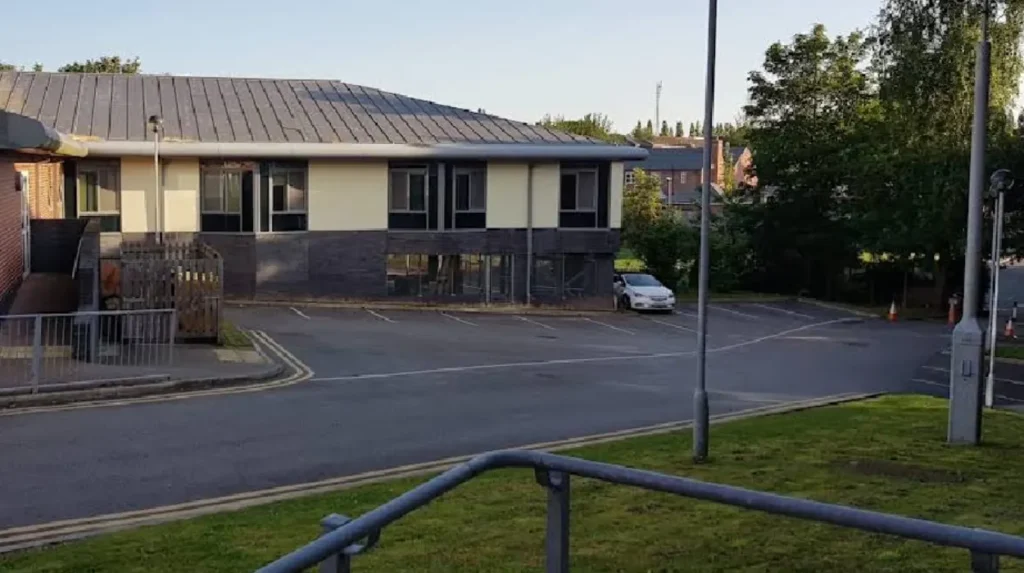
The patient population steadily decreased over the final decade of operation as community placement programs expanded. Specialist services were relocated to modern facilities across Rhyl, uk/local/wrexham/">Wrexham, and Bangor. The last remaining psychiatric wards were closed in August 1995, ending 147 years of continuous medical operations at the Denbigh site.
What Is the Current Status of the Abandoned Site in Denbigh?
The current status of the North Wales Mental Hospital site involves a major residential redevelopment project led by local housing authorities and private developers. Modern construction is restoring historic central buildings while replacing derelict wings.
After its closure in 1995, the complex sat abandoned for over two decades, suffering from severe structural neglect, arson attacks, and weather exposure. Multiple fires destroyed key historic interiors, including the main hall and portions of the residential wards. The site attracted urban explorers and trespassers, leading Denbighshire County Council to issue compulsory purchase orders to secure the land, clear safety hazards, and protect the remaining Grade II* listed structures.
Planning approval was granted for a comprehensive multi-million-pound regeneration scheme aimed at transforming the site into a sustainable neighborhood. The master plan incorporates hundreds of new residential homes alongside restored historic facades, preserved parkland, and commercial spaces. Contractors began clearing unstable ruins and remediating contaminated ground to enable new construction while maintaining the architectural heritage of the original Victorian layout.
The historical archives of the North Wales Mental Hospital are preserved separately at the Denbighshire Archives. This extensive collection includes over 30,000 post-1948 patient case files, administrative minute books, architectural drawings, and staff records. Fully cataloged under the Unlocking the Asylum project funded by the Wellcome Trust, these records serve as a research resource for medical historians studying the evolution of public mental healthcare in Wales.
Frequently Asked Questions
What condition was required for admission to nineteenth-century Welsh asylums?
Admissions to nineteenth-century Welsh asylums were regulated by parish authorities and county magistrates under the Lunacy Acts. Individuals were admitted for severe mania, melancholia, dementia, epilepsy, and general paralysis caused by late-stage infections.
How did language policies impact patient care at Denbigh Asylum?
Language policies were crucial because the hospital was specifically established to serve Welsh-speaking populations who struggled in English institutions. Medical officers, nurses, and administrative workers were required to speak fluent Welsh to ensure accurate diagnostics and compassionate care.
What role did the hospital farm play in daily patient routines?
The hospital farm provided therapeutic manual labor, vocational training, and fresh produce for the institutional kitchen. Male patients worked in agriculture and livestock care as part of their moral treatment regimens. The farm helped the facility remain largely self-sufficient until the agricultural operations were sold off in 1958.
Are there public tours available at the former North Wales Hospital site?
Public tours are not permitted at the former North Wales Hospital site due to active construction, structural hazards, and private ownership. The site is secured to prevent unauthorized access while redevelopment work continues. Historic information and visual records can be legally accessed through the Denbighshire Archives.
Where can researchers access historic patient records from Denbigh Hospital?
Researchers can access historic patient records at the Denbighshire Archives located in Ruthin, Wales. The collection contains over 30,000 indexed case files, wage books, and administrative minute books spanning from 1848 to 1995. Access to specific personal files is managed under modern data protection laws and medical privacy regulations.