
Solva is a coastal village, electoral ward, and community situated on the northern shore of Saint Brides Bay in Pembrokeshire, Wales. The settlement sits entirely within the boundaries of the Pembrokeshire Coast National Park. It lies approximately 3 miles east of the city of Saint Davids and 12 miles northwest of Haverfordwest along the A487 road. The geographical coordinates of the primary settlement are 51.8744 degrees North and 5.1889 degrees West.
The topography of Solva is defined by a deep glacial valley carved into the Pembrokeshire coastline. The village is split into two distinct structural areas known as Upper Solva and Lower Solva. Lower Solva lies along the floor of the valley at the mouth of the River Solva, culminating in a natural inlet. Upper Solva is constructed on the elevated cliff top directly west of the harbour. The community encompasses adjacent rural hamlets, including Middle Mill and Whitchurch.
The surrounding landscape consists of high sea cliffs, rocky promontories, and protected marine environments. Saint Brides Bay forms the broader aquatic boundary to the south, exposing the surrounding coastline to Atlantic weather systems while the internal valley shelter creates a localized microclimate. The community covers a land area that served a population of 865 residents during the 2011 United Kingdom Census. Solva functions as an integral point along the 186-mile Pembrokeshire Coast Path National Trail.
What is the geological significance of Solva Harbour?
Solva Harbour is a geomorphological feature classified as a ria, which represents a drowned river valley flooded by rising sea levels. The harbour inlet was formed during the post-glacial transgressions of the Quaternary period when melting ice raised ocean levels, filling the steep valley cut by the River Solva. The natural valley walls provide significant structural shelter from regional swell, making it a rare safe anchorage along the exposed Pembrokeshire coast.
The sedimentary rock formations surrounding the inlet give their name to the Solva Group, an important stratigraphic sequence in Cambrian geology. The Solva Group dates back approximately 500 million years to the Middle Cambrian epoch and contains fossiliferous mudstones, sandstones, and shales. These rock layers yield fossil remains of early marine organisms, including trilobites and brachiopods, which are studied by geologists to analyze early Paleozoic biological evolution.
The hydrodynamics of the ria create extreme tidal shifts within the harbour basin. During high tide, the inlet fills completely to allow navigation for draft vessels. At low tide, the marine water recedes entirely, exposing sandbanks and mudflats while leaving only the narrow stream of the River Solva flowing through the basin. This dynamic tidal range requires specialized mooring systems for local watercraft and exposes coastal rock platforms that are subjected to continuous marine erosion.
What is the history of Solva as a trading port?
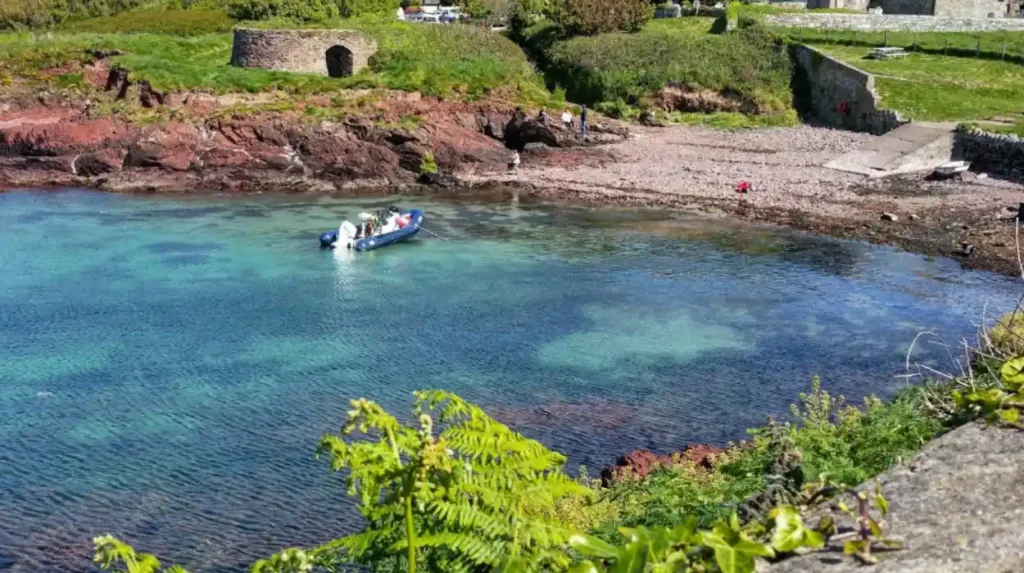
Solva operated as a major commercial trading port in Saint Brides Bay from the medieval period through the late nineteenth century. Historical cartography from 1578 identifies the inlet as Dolvath Haven, highlighting its early adoption as an anchorage for regional vessels. The natural rock barriers at the entrance protected merchant ships from heavy weather, allowing Solva to grow into a primary maritime hub for North Pembrokeshire.
During the eighteenth century, Solva developed infrastructure to handle large-scale shipping traffic, accommodating commercial vessels carrying up to 500 tons. By the end of the 1700s, approximately 30 merchant vessels were registered directly to the port of Solva. The primary exports included locally harvested grain, corn, and agricultural goods destined for markets across Wales, England, and Bristol. Industrial activity was further bolstered by local wooden shipbuilding yards operating along the quay.
A primary economic driver during this era was the import and processing of limestone. Raw limestone was shipped into Solva Harbour from southern Pembrokeshire quarries to feed a series of specialized kilns. The burnt lime produced was used to create agricultural fertilizer and construction mortar, including the mortar utilized in the nearby Saint Davids Cathedral. The preserved stone lime kilns built during this industrial peak remain intact along the harbour wall in Lower Solva today.
How does Solva fit into Pembrokeshire tourism?
Solva transformed from a commercial maritime port into a major tourism hub during the twentieth century as coastal trade declined. The modern local economy is driven by leisure visitors, outdoor recreation, eco-tourism, and domestic holiday accommodations. The village serves as a strategic resting point for hikers traveling along the Pembrokeshire Coast Path, offering immediate access to dramatic cliff routes and coastal ecology.
Leisure boating forms a central pillar of maritime tourism within the sheltered ria. Solva Harbour provides mooring facilities for recreational yachts, motorboats, kayaks, and paddleboards. The tidal nature of the harbour allows for specialized recreational activities such as low-tide crabbing, rockpooling, and open-water swimming during high-water periods. Guided sea angling and coastal wildlife tours regularly depart from the quay to observe marine mammals in Saint Brides Bay.
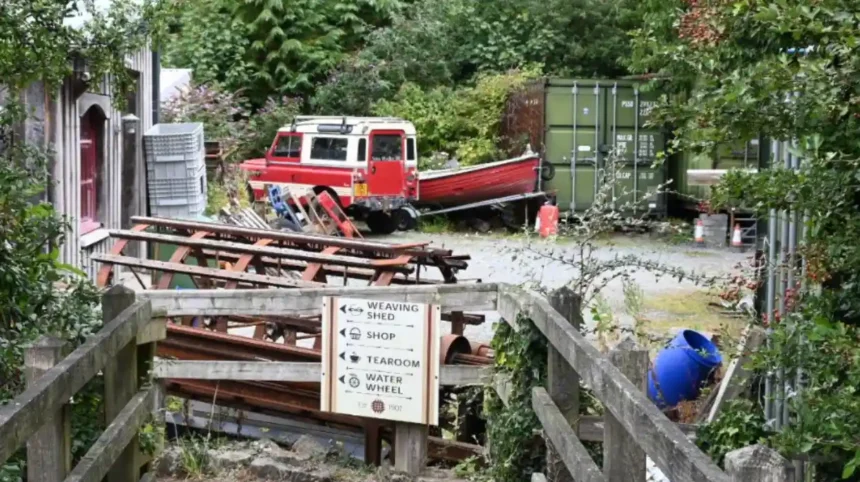
Cultural and heritage tourism also supports the local economy through preserved heritage sites and art galleries. Lower Solva hosts independent craft shops, painting studios, and traditional Welsh food venues. Located one mile inland along the River Solva, Solva Woollen Mill operates as the oldest continuously working woollen mill in Pembrokeshire, attracting visitors to view traditional carpet weaving machinery installed in 1907.
What cultural and community events happen in Solva?
Solva maintains distinct regional traditions organized through active community groups and heritage committees. One notable annual gathering is the Solva Duck Race, held every Easter Monday. Participants release thousands of plastic ducks into the River Solva at Middle Mill, allowing them to float downstream through the valley to the finish line located at the Lower Solva car park footbridge. Funds raised from this event support regional charitable projects.
During the summer season, the community hosts the Solva Regatta, a competitive maritime festival celebrating local rowing and sailing traditions. The regatta features waterborne races within the harbour for adults and children, alongside land-based field activities along the quayside. The event highlights Solva’s maritime roots and serves as a primary gathering point for local boat clubs and coastal residents.
Another prominent event is The Edge Festival, established in 2014 following the filming of Dylan Thomas’s Under Milk Wood in the village. The festival takes place annually in late July or early August, featuring live music, literature, film screenings, and uk/sports/">sports activities. Proceeds generated from the event are distributed to local infrastructure projects, youth organizations, and social initiatives throughout the Solva community ward.
Frequently Asked Questions
What is the difference between Upper Solva and Lower Solva?
Lower Solva lies in the valley floor around the harbour, housing historic buildings, shops, and lime kilns. Upper Solva sits on the western cliff top and contains modern residential areas and panoramic coastal views.
Can you walk from Solva to St Davids along the coast?
Yes, hikers can follow the Pembrokeshire Coast Path directly from Solva to Saint Davids. The coastal path covers roughly 5 miles of rugged cliffs, dramatic rock formations, and coastal wildlife habitats.
Is Solva Harbour dry at low tide?
Solva Harbour is a tidal ria that empties significantly during low tide. The water recedes to expose sandy harbour beds and mudflats, leaving only a central stream flowing through the basin.
What is the oldest working industry in the Solva area?
Solva Woollen Mill, located one mile inland at Middle Mill, is the oldest continuously operating woollen mill in Pembrokeshire. It was established in 1907 and continues to craft traditional woven rugs and carpets using historic machinery.
What movie or TV show was filmed in Solva Wales?
Solva was used as the primary filming location for the 2014 film adaptation of Dylan Thomas’s play Under Milk Wood. The production utilized the historic harbour and traditional streets of Lower Solva for its settings.