

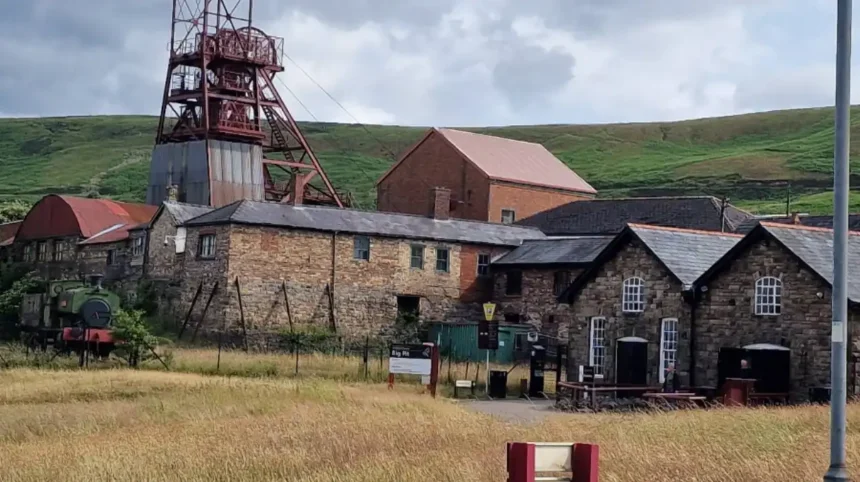
Big Pit Wales is an authentic, preserved industrial colliery site and national museum situated in Blaenavon, Torfaen, South Wales. It represents one of the few surviving working coal mines from the nineteenth century that allows public descent into original subterranean workings. The site serves as a physical record of the Welsh coal industry, which powered global industrialization during the nineteenth and twentieth centuries. Operating under Amgueddfa Cymru, the National Museum Wales, the landmark functions as both an educational research center and a protected monument. Its complete structural preservation offers direct insights into historic extraction methods, mechanical engineering, and labor conditions. The location forms a core component of the UNESCO Blaenavon Industrial Landscape, designated in the year 2000.
- How Did Big Pit Wales Develop From an Active Mine to a Heritage Site?
- What Are the Main Infrastructure Components of Big Pit Wales?
- How Does the Underground Tour Experience Function at Big Pit Wales?
- What Is the Role of Big Pit Wales in the UNESCO World Heritage Site?
- What Environmental and Social Impacts Are Associated With Big Pit Wales?
- Frequently Asked Questions
The historical value of Big Pit Wales stems from its retention of original operational infrastructure. Unlike modern facilities that recreate historical environments through synthetic models, Big Pit Wales utilizes authentic shafts, haulage roadways, and ventilation systems. The pit head winding gear, fan house, and blacksmith shop remain intact, demonstrating the mechanical layout required for heavy mineral extraction. The operational subterranean level provides empirical evidence of geological seam management and underground spatial engineering. As a preserved entity, it maintains strict industrial standards under UK mining regulations to ensure safe public access to deep shaft environments. The location safeguards tangible assets, archives, and oral histories associated with Welsh industrial development.
The institutional framework of Big Pit Wales integrates public education with heritage protection. The site transitioned from a active production colliery into a preserved public asset to halt the loss of industrial architecture following widespread coalfield closures. By maintaining the physical machinery in working order, conservators demonstrate the technical mechanics of coal extraction without modern digital synthesis. The colliery anchors regional tourism while offering primary historical evidence for academic research into energy production, labor economics, and social history.
How Did Big Pit Wales Develop From an Active Mine to a Heritage Site?
Big Pit Wales opened as an active coal extraction shaft in the year 1880 to access deep underground seams. The shaft was deepened in the year 1878 to reach the Old Coal seam located at a depth of 293 feet. Industrial expansion led to peak employment levels in the year 1923, when 1400 coal miners worked at the site. Annual production reached over 250000 tons of high-grade coal during maximum operation, supplying international markets across South America and Europe. Economic shifts, seam depletion, and national restructuring caused the mine to halt commercial production on November 15 in the year 1980. Local government authorities and heritage bodies acquired the property, reopening it as a dedicated museum in the year 1983.
The physical evolution of the site reflects advancements in nineteenth and twentieth-century industrial engineering. Early extraction relied entirely on manual labor, pit ponies, and atmospheric ventilation shafts. Mechanical conveyors were introduced to the underground coal face in the year 1908, reducing reliance on manual haulage. The pithead baths were constructed in the year 1939, improving worker hygiene and sanitation facilities. Post-nationalization in the year 1947 brought further electrical upgrades and modern safety monitoring systems. These layered structural adaptations remain visible today, detailing the transition from manual labor to mechanized extraction.
The transformation of the mine into a national museum required significant engineering adaptation to meet modern visitor safety standards. Engineers installed specialized ventilation fans, upgraded shaft cables, and continuous gas monitoring detectors throughout the underground roadways. In the year 2001, the site joined Amgueddfa Cymru and secured full integration into the national collection system. In the year 2004, the site completed a major renovation supported by the Heritage Lottery Fund, opening new exhibition galleries inside the historic pithead baths. This conversion model preserved the physical structure while creating a sustainable long-term public asset.
What Are the Main Infrastructure Components of Big Pit Wales?
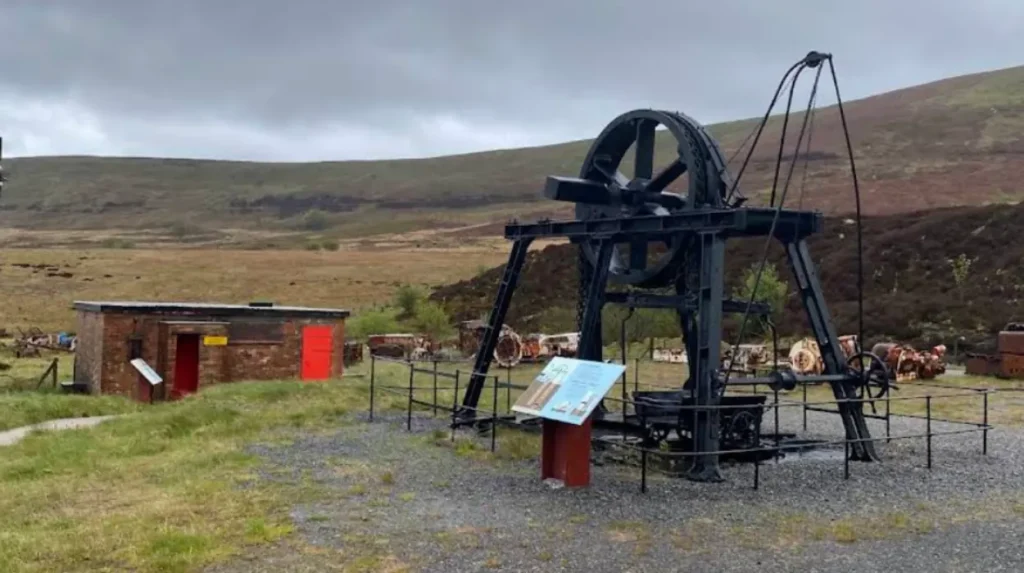
The infrastructure of Big Pit Wales consists of surface buildings, mechanical shafts, and underground roadways. The main shaft descends 90 meters into the earth, controlled by a steel headframe and electric winding machine. The surface area includes the pithead baths, administrative offices, blacksmith shop, and timber yards. Underground, the facility features a network of stone-walled drifts, air passages, engine houses, and stable areas for working animals. Each component performed a specific role in maintaining ventilation, material haulage, and miner safety during operational periods.
The subterranean workings extend through multiple geological strata, including the Horn, No. 2 Yard, Old Coal, and Elled seams. The underground roadways are lined with steel arches and timber supports to prevent roof falls. Mechanical haulage engines pulled coal tubs along narrow-gauge iron tracks from the working face to the central shaft. Large air doors controlled the directional flow of oxygen created by the surface ventilation fan, preventing dangerous accumulations of explosive methane gas. The mechanical layout demonstrates how engineers resolved structural, atmospheric, and transport challenges deep underground.
The surface facilities reflect the social and administrative operations of the mining enterprise. The 1939 pithead baths contained dirty-clothes locker rooms, shower halls, and clean-clothes areas designed to separate industrial contamination from public life. The lamp room managed the distribution and maintenance of flame safety lamps and battery cap lamps. The blacksmith shop fabricated custom iron tools, repaired haulage gear, and shod pit ponies. These interconnected facilities demonstrate that a industrial colliery operated as a self-contained engineering ecosystem.
How Does the Underground Tour Experience Function at Big Pit Wales?
The underground tour at Big Pit Wales allows visitors to descend 90 meters inside an authentic pithead cage. Trained ex-miners lead groups through historic underground workings spanning various extraction eras. Participants receive safety helmets and cap lamps equipped with modern battery packs. Strict safety regulations forbid all electronic devices, including mobile phones and cameras, to eliminate ignition risks underground. The walking route covers atmospheric coal faces, engine rooms, and pony stables, providing a real-world perspective on subterranean labor.
Safety protocols underground conform to strict regulatory guidelines governed by UK mining legislation. Continuous forced-air ventilation runs throughout the tour routes to clear subterranean gases. Automated atmospheric sensors monitor oxygen, carbon monoxide, and methane levels in real time. Ex-miner guides provide continuous supervision, drawing from professional operational experience to manage group safety. The preservation of real underground conditions requires guests to wear hard hats and carry emergency escape breathing apparatus at all times.
Educational presentation during the tour focuses on environmental conditions, historical tools, and labor mechanics. Guides demonstrate how miners used hand picks, coal cutters, and explosive charges to extract minerals. Visitors experience periods of complete darkness to understand the reliance on safety lamps in deep seams. Narration details the lives of child workers, women, and animals employed in mines prior to legislative reforms like the Mines Act of 1842. The immersive tour design delivers a detailed understanding of historic industrial work.
What Is the Role of Big Pit Wales in the UNESCO World Heritage Site?
Big Pit Wales serves as an anchor point for the UNESCO Blaenavon Industrial Landscape World Heritage Site. UNESCO awarded this status in December of the year 2000, recognizing the area as an exceptional surviving example of South Wales industrial development. The designation encompasses ironworks, stone quarries, primitive railways, worker housing, and coal mines. Big Pit Wales represents the mineral extraction component necessary for iron smelting and steam production. Its inclusion guarantees international conservation protection and rigorous structural management.
The surrounding landscape displays a visible industrial footprint developed over two centuries. Coal from Big Pit Wales supplied nearby iron furnaces, such as the historic Blaenavon Ironworks. Raw materials moved along incline railways, tramroads, and canals to ports in Cardiff and Newport for global export. This physical network demonstrates the geographical integration of extraction, manufacturing, and transport systems. As a preserved site, Big Pit Wales provides direct evidence of human modification of natural landscapes for mineral exploitation.
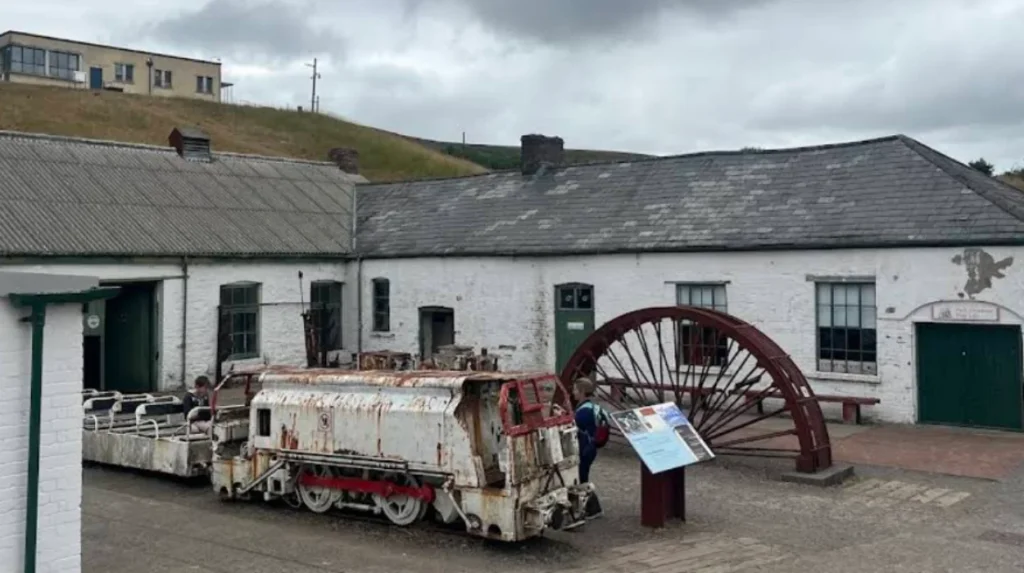
International heritage criteria require Big Pit Wales to maintain high operational integrity. Conservators preserve original structures using traditional materials and techniques to prevent degradation. Educational programs support global understanding of the Industrial Revolution and its economic effects. As an Anchor Point of the European Route of Industrial Heritage, Big Pit Wales links Welsh industrial history with broader European manufacturing networks. This international framework protects physical assets for future historical analysis.
What Environmental and Social Impacts Are Associated With Big Pit Wales?
Big Pit Wales illustrates the deep socio-economic transformations caused by industrialization and subsequent mine closures. South Wales coalfields formed the economic foundation of regional communities during the nineteenth and twentieth centuries. Whole towns developed around pitheads, creating distinct social structures, unions, and cultural institutions. The closure of Big Pit Wales in the year 1980 reflected widespread deindustrialization across the United Kingdom, leading to immediate job losses and local economic disruption. The transition into a public museum protected regional identity while generating heritage tourism jobs.
The historical operations of Big Pit Wales caused notable long-term environmental modifications across the region. Subterranean mining altered geological strata, natural water drainage, and local topography. Slag heaps and waste tips changed the surrounding vegetation and surface contours. Modern conservation management includes water treatment systems to filter mine runoff, preventing iron-rich water from entering local water tables. These efforts highlight the ongoing environmental stewardship required for historic industrial sites.
Frequently Asked Questions
Is Big Pit Wales free to enter?
Admission to Big Pit Wales is free of charge under Amgueddfa Cymru public funding. Visitors must book tickets online in advance to secure underground tour slots. Parking fees apply on site to support ongoing maintenance.
How long does a visit to Big Pit Wales take?
A complete visit typically takes 3 to 4 hours. The underground tour lasts approximately 50 minutes, accompanied by an ex-miner guide. Additional time is needed to explore surface exhibitions, pithead baths, and historic colliery buildings.
What should visitors wear on the underground tour?
Visitors should wear warm clothing and sturdy flat shoes due to damp surfaces and low temperatures underground. Hard hats and safety lights are provided on site before descending. Temperature inside the mine remains around 12 degrees Celsius year round.
Are children allowed on the underground cage descent?
Children are permitted on the underground tour provided they meet the minimum height requirement of 1 meter. Young children must be accompanied by an adult at all times during the descent and walking routes.
Why are electronic items banned underground at Big Pit?
Electronic items, including mobile phones, smartwatches, and cameras, are prohibited underground under strict mining safety regulations. Battery-operated devices pose a potential spark hazard in subterranean shaft environments.