
Key Points
- Further, Bishop of St Davids, Rt Revd Dorrien Davies, called on the Governing Body to “remain vigilant and pro-active” in protecting the 141 Church in Wales schools.
- There has been a proposal from Pembrokeshire County Council to shut down Cilgarren School but revive it as a non-religious primary school. This was described by the Church as a “gratuitous assault.”
- The bishop made reference to cases whereby local authorities have declined financial aid towards counselling and private rooms for vulnerable children.
- “Here to make a difference,” is how the Church in Wales must be according to the Archbishop of Wales, the Most Revd Cherry Vann, in her presidential speech.
- Church schools were praised for their inclusive educational approaches, social justice work and religious diversity.
- Lisa Taylor, Director of Education, lauded the Governing Body meeting as “celebrating schools amid the difficulties.”
St Davids (Wales Times) September 2026 — The future of church schools in Wales cannot be taken for granted, and the Church in Wales must remain “vigilant and proactive” in protecting and maintaining their status in a changing educational landscape, the Bishop of uk/local/st-davids/">St Davids, the Rt Revd Dorrien Davies, has warned the Governing Body.
Its 141 schools continued to deliver high-quality, inclusive education rooted in Christian values, and their voice and experience contributed positively to educational reform in Wales but they must be realistic about the challenges that they were facing, he said on Wednesday.
Bishop warns of local authority pressures
The Bishop, a fluent Welsh-speaker, broke into English three times in an address delivered in Welsh, to elaborate on the challenges and to issue warnings relating directly to the interventions of Pembrokeshire County Council in his diocese.
The council proposes to close the rural Cilgarren School and reopen it as a secular primary school — a move the Church has described as a “gratuitous attack” on the church status — and has similar closure proposals for others in the diocese.
“The eyes of local authorities are upon us and if we lose our grasp on our church schools, we would lose our grasp on the influence our Archbishop has pointed us towards today,” he said, with reference to the Archbishop of the Church in Wales, the Most Revd Cherry Vann’s call for the Church to be “here to make a difference” in her presidential address.
“It is important that the Christian faith burns within our schools,” said Bishop Davies. “The eyes of local authorities are on Pembrokeshire County Council — and if we fail, others will try to succeed.”
Funding cuts hit vulnerable pupils
Church schools were working tirelessly to meet increasingly complex learning needs and poverty-related challenges requiring “significant resources, expertise, and compassion”. They were often going far beyond what anyone could reasonably expect of them, he said.
“Local authorities are withdrawing vital financial support helping young people in personal circumstances that are no fault of their own. One local authority in my diocese was not prepared to finance a room in order for a child to have the privacy of treatment in that school. This is unacceptable.”
“The same goes regarding two young boys whose father died very suddenly. Care of these boys in their grief, sorrow, and confusion was denied to them because the local authority withdrew the finances they needed to give them help and support for the future.”
In both instances, the Bishop, who holds the portfolio for education, had intervened.
Call for strong voice in education policy
Those with responsibility must ensure that schools continued to have a “strong and respected voice in discussions around educational policy and reform. We believe that education is about more than attainment alone. It is about the formation of the whole person. It is about nurturing hope and purpose.”
Children in particular schools faced problems daily that many present at the Governing Body would never meet. “When you’re going into a school, and you are told the percentage of children in the room with you that are victims of abuse of one sort or another, and that the only comfort, consolation, and security they have is in one of our church schools, it makes you feel very humble,” he said.
Schools celebrated for inclusive ethos
The education update at the meeting also included church schools’ empowerment of learners to become “confident advocates for social justice, climate justice, and positive change”. Another strength identified was inclusive and pluralistic religion, values, and ethics provision that respected diverse faiths and world-views.
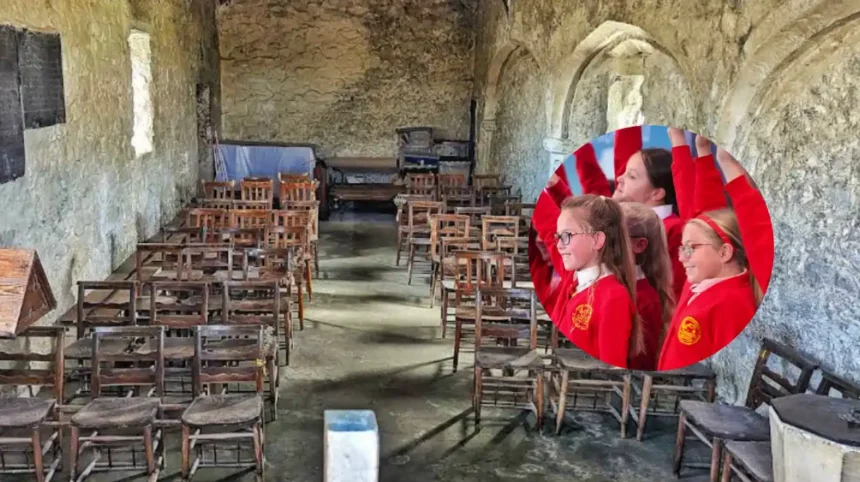
The meeting included video presentations from the head teacher and children from Llangattock Church in Wales Primary School, and contributions from Ysgol Pant Pastynog and St Brides Major. Children from All Saints’ Church in Wales Primary School, Barry, together with ISingPOP, came in person to perform songs.
Lisa Taylor, director of education, said:
“It’s been a fantastic morning where we’ve celebrated our schools, whilst recognising the challenges, and given thanks for everything that our schools do for our learners every day.”
Background to the development
The Church in Wales operates 141 voluntary aided and controlled schools across Wales, many in rural and semi-rural communities where they serve as both educational and community hubs. These schools are governed by local governing bodies but remain under the spiritual oversight of the Church’s diocesan structure, with the Archbishop of Wales providing strategic direction.
Recent years have seen increasing pressure on school budgets across Wales, with local authorities facing their own fiscal constraints. The Church has repeatedly voiced concern that funding cuts disproportionately affect vulnerable pupils, particularly those requiring additional pastoral or therapeutic support. The case of Cilgarren School in Pembrokeshire has become emblematic of wider tensions between local authority efficiency drives and the Church’s desire to preserve its educational mission.
Prediction: How this development may affect Church schools and communities
If local authorities continue to withdraw financial support or pursue secularisation of church schools, the Church in Wales may face a contraction in its educational footprint, particularly in rural areas where alternatives are limited. This could reduce the availability of faith-based education and diminish the Church’s influence in shaping values-led curricula.
For pupils, especially those from disadvantaged backgrounds, the loss of church school provision could mean reduced access to tailored pastoral care and community support services that many church schools currently provide. For the Church itself, a shrinking school network could weaken its public voice in educational policy debates and limit its ability to fulfil the Archbishop’s call to “make a difference” in Welsh society.