

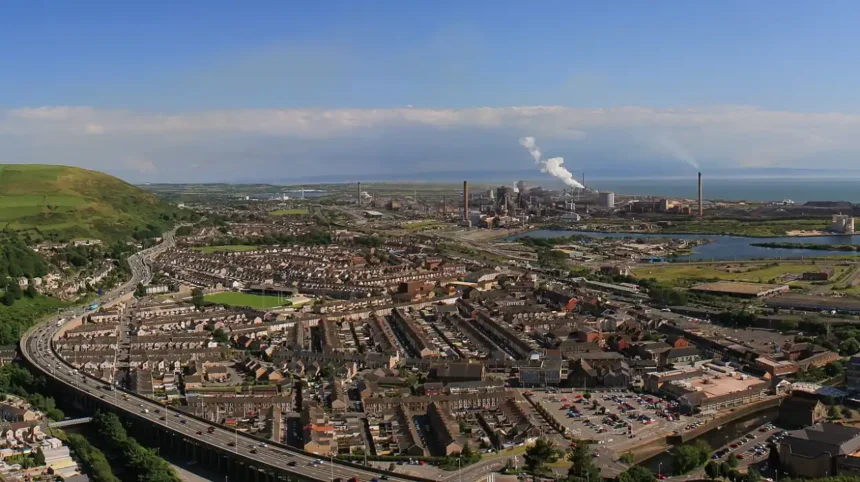
The cultural influence of Wales extends globally through figures who defined modern entertainment across cinema, music, and performance arts. Actors like Sir Anthony Hopkins, born in Port Talbot in 1937, achieved worldwide fame by winning two Academy Awards for Best Actor. Music icon Sir Tom Jones, born in Pontypridd in 1940, sold over 100 million records worldwide during a career spanning six decades. Catherine Zeta-Jones, born in uk/local/swansea/">Swansea in 1969, became an Academy Award winning actress starring in major Hollywood blockbusters. Modern Hollywood actors like Christian Bale, born in Haverfordwest in 1974, expanded this cinematic legacy by portraying iconic roles in global film franchises.
The evolution of Welsh entertainment figures demonstrates a consistent pipeline of talent originating from industrial regions into international acclaim. Port Talbot, a steelworking town in South Wales, notably produced both Sir Anthony Hopkins and Richard Burton, who received seven Academy Award nominations during the mid-twentieth century. The artistic infrastructure of local theaters, choir traditions, and performance groups across South Wales provided early training grounds for these artists. The global reach of these performers established a distinct cultural footprint, linking Welsh identity directly to major international film, television, and recording industries over the last century.
The historical trajectory of Welsh pop culture icons reflects significant economic and social shifts within the nation. The mid-twentieth century saw working-class individuals leverage performative arts as a primary pathway to global recognition. Contemporary figures continue this heritage through sustained dominance in global box office sales, international music tours, and critical artistic awards. Their success reinforces national pride and provides an enduring template for cultural export.
Which Historical Figures From Wales Shaped World History?
Historical figures from Wales influenced international politics, exploration, and legal developments for centuries across global territories. King Henry VII, born at Pembroke Castle in 1457, founded the Tudor dynasty and unified the English crown after the Wars of the Roses. David Lloyd George, who was raised in Gwynedd, served as Prime Minister of the United Kingdom from 1916 to 1922 during World War I. TE Lawrence, widely known as Lawrence of Arabia, was born in Tremadog in 1888 and played a crucial role in the Arab Revolt. Saint David, the patron saint of Wales born in the sixth century, established monastic communities that preserved Celtic Christian culture.
The political and historical legacy of Welsh leaders altered global borders, statutory laws, and international governance systems throughout major historical epochs. King Henry VII instituted administrative reforms that integrated Wales into the legal framework of the Kingdom of England through statutory governance. David Lloyd George led the British Empire through the latter half of the First World War and helped draft the Treaty of Versailles in 1919. TE Lawrence produced military strategic manuals and historical memoirs that reshaped Western understanding of Middle Eastern geopolitics during the early twentieth century. Saint David established religious principles that continue to define Welsh national identity every year on March 1st.
The long-term impact of these historical figures is visible in modern parliamentary democracy, social welfare legislation, and international diplomatic history. The Tudor dynasty initiated global naval expansion and religious reformation across the British Isles. The social reform acts introduced by David Lloyd George formed the foundational blueprint for the modern welfare state and national insurance systems. The legacy of these historical figures continues to be studied across academic institutions, military academies, and historical archives globally.
Who Are the Most Famous Welsh Sports Icons Today?
Welsh athletes have achieved premier international standing across global sports including football, rugby union, motorsport, and athletics. Gareth Bale, born in Cardiff in 1989, won five UEFA Champions League titles with Real Madrid and led the Wales national team to major tournaments. Alun Wyn Jones, born in Swansea in 1985, became the most capped international rugby player in history with 170 test appearances. Geraint Thomas, born in Cardiff in 1986, won the Tour de France in 2018 and secured multiple Olympic gold medals in track cycling. Sir Gareth Edwards, born in Pontardawe in 1947, is widely recognized as one of the greatest rugby union players in history.
The athletic framework of Wales produces elite competitors through specialized regional academies, national sports facilities, and grass-roots athletic clubs. Elite facilities like the Sport Wales National Centre at Sophia Gardens in Cardiff provide foundational training and sports science support to national athletes across multiple disciplines. Football clubs operating in professional leagues, along with top-tier rugby regions, cultivate local talent that transitions into international competition representation. International achievements in global competitions such as the FIFA World Cup, Rugby World Cup, and Olympic Games elevate national visibility and inspire sports participation.
The modern sports landscape in Wales demonstrates how a nation of three million people consistently competes at the highest level of world athletics. International victories generate substantial economic revenue through broadcasting rights, event hosting, and sports tourism across Welsh cities. Gareth Bale’s career elevated Welsh football onto the international stage, encouraging investment in youth sports development and stadium infrastructure. The sustained success of Welsh sports icons solidifies the nation’s reputation as a global sporting powerhouse across team and individual events.
Which Legendary Writers and Poets Came From Wales?

Welsh literary history features world-renowned authors, poets, and dramatists who shaped English and Welsh language literature. Dylan Thomas, born in Swansea in 1914, authored iconic works including Under Milk Wood and Do Not Go Gentle Into That Good Night. Roald Dahl, born in Cardiff in 1916 to Norwegian parents, became one of the best-selling children’s authors in history with titles like Charlie and the Chocolate Factory. RS Thomas, born in Cardiff in 1913, was a prominent poet and priest nominated for the Nobel Prize in Literature. Sarah Waters, born in Neyland in 1966, gained international acclaim for her historical fiction novels.
The literary output of Welsh writers reflects a rich tradition of oral storytelling, poetic structure, and distinct cultural perspectives. Dylan Thomas utilized vivid imagery and lyrical rhythm derived from the cadence of Welsh speech patterns, influencing modern poetry across the English-speaking world. Roald Dahl drew inspiration from his early upbringing in South Wales, developing dark comedic themes and imaginative narratives that sold over 300 million books globally. RS Thomas documented the rural landscapes and spiritual struggles of small Welsh farming communities, preserving twentieth-century rural identity in verse. Sarah Waters modernized historical fiction by exploring hidden histories and complex social themes set in Victorian and mid-twentieth-century Britain.
The international success of Welsh literary figures has established a lasting artistic heritage preserved through national archives, museums, and educational curricula. Dylan Thomas’s birthplace in Swansea remains a major cultural destination for international tourists and literary scholars annually. The works of Roald Dahl have been adapted into stage plays, feature films, and animated series translated into dozens of languages worldwide. This literary tradition ensures that Welsh identity, topography, and linguistic rhythm maintain a permanent presence in global classic literature.
Who Are the Famous Scientific and Engineering Minds From Wales?
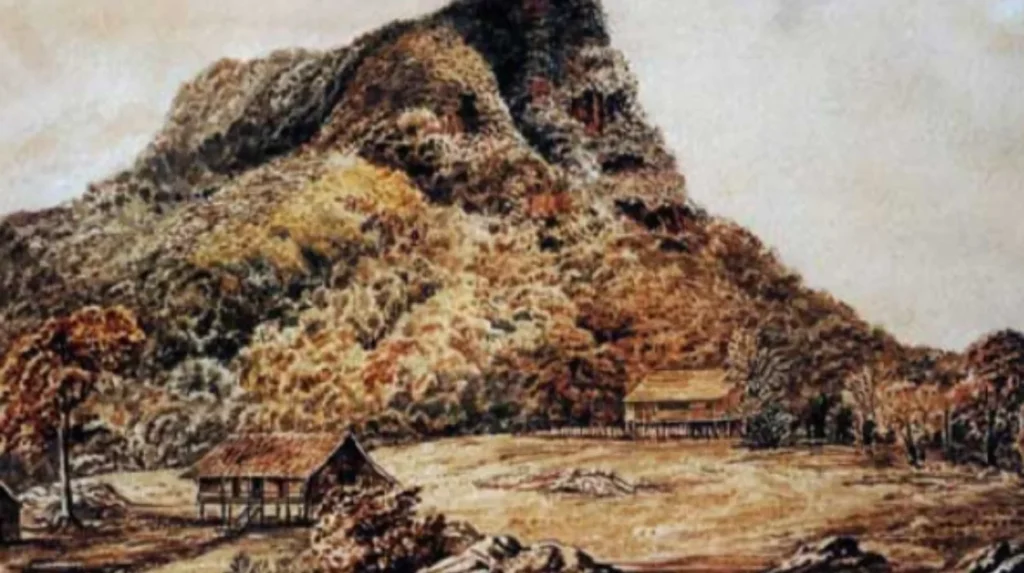
Welsh innovators, scientists, and engineers contributed fundamental discoveries to physics, mathematics, industrial technology, and computer science. Alfred Russel Wallace, born in Usk in 1823, co-developed the theory of evolution through natural selection alongside Charles Darwin. Robert Recorde, born in Tenby around 1510, was a mathematician who invented the equal sign (=) in mathematical notation. Bertrand Russell, born in Trellech in 1872, was a Nobel Prize winning philosopher and mathematician who co-authored Principia Mathematica. Brian Josephson, born in Cardiff in 1940, won the Nobel Prize in Physics for predicting quantum tunneling effects.
The scientific developments pioneered by Welsh researchers formed the technical foundations of modern computation, evolutionary biology, and mathematical operations. Alfred Russel Wallace conducted extensive field research in the Amazon basin and Malay Archipelago, establishing biogeography as a recognized scientific field. Robert Recorde published foundational mathematics textbooks in English, introducing basic algebraic concepts and symbols to standard education. Bertrand Russell introduced formal logic systems that laid the theoretical foundations for modern computer programming algorithms and philosophical analysis. Brian Josephson’s work on superconducting electronics led to the development of highly sensitive sensors used in medical imaging and quantum physics.
The work of these scientific minds continues to impact modern technology, medical diagnosis, and empirical research frameworks globally. The mathematical symbols introduced by Robert Recorde are universal elements of scientific education used in every classroom today. The biological concepts formulated by Alfred Russel Wallace remain integral to biodiversity conservation, genetic research, and ecological study. The legacy of Welsh scientific discovery illustrates an ongoing contribution to global knowledge systems and technological progress.
What Is the Significance of St David in Welsh Culture?
St David is the national patron saint of Wales, residing as a pivotal religious, cultural, and historic figure since the sixth century. He established a strict monastic order at St Davids in Pembrokeshire, advocating for a simple life centered on education, agriculture, and water consumption. His final recorded sermon advised his followers to perform the little things in life, a phrase that remains a cornerstone of Welsh cultural philosophy today. St David’s Day is celebrated internationally every March 1st with cultural parades, traditional attire, and music festivals.
The historical footprint of St David established Pembrokeshire as an international pilgrimage destination throughout the Middle Ages. St Davids Cathedral, constructed on the original site of his monastery, attracted kings, religious leaders, and travelers from across Western Europe for centuries. In modern times, distant areas like Exeter St Davids Station bear his name, demonstrating how his historical legacy influences infrastructure nomenclature far beyond regional boundaries. The flag of St David, featuring a yellow cross on a black field, serves as an unofficial national symbol alongside the Welsh dragon.
The modern celebration of St David serves as a primary vehicle for promoting Welsh language, traditional arts, and political identity globally. Educational institutions across Wales host eisteddfodau, traditional competitive festivals of poetry and music, on his feast day annually. Welsh diaspora communities in North America, Patagonia, Australia, and Asia gather to celebrate their heritage through community dinners and cultural performances. St David remains an enduring unifying symbol that links ancient Celtic history directly with contemporary national identity.
Additional High-Value Linking Opportunities:
- Related Regional Focus: Place a “Read More” block after the historical section to direct readers interested in historical coastal landmarks to St Govan’s Chapel:
- Related Article: Discover St Govan’s Chapel in Wales and Its History
- Contemporary Welsh Institutions: Within sections discussing public services or career developments from famous regional hubs, consider referencing career pathways in major Welsh forces:
Frequently Asked Question
Who is universally considered the most famous Welsh person in history?
Sir Anthony Hopkins and King Henry VII frequently rank as the most universally recognized Welsh figures globally. Sir Anthony Hopkins achieves this through global cinematic reach across modern media platforms, while King Henry VII altered international history by founding the Tudor dynasty that reshaped Western Europe.
Why are so many famous Hollywood actors from Port Talbot, Wales?
Port Talbot possesses a strong community theater culture and historical arts funding that nurtured iconic actors like Sir Anthony Hopkins and Richard Burton. Local drama clubs and choir traditions created an accessible talent pipeline that helped working-class performers transition directly into mainstream international drama schools.
Did any US Presidents have famous ancestry or origins from Wales?
Yes, at least 16 United States Presidents had verified Welsh ancestry, including Thomas Jefferson, Abraham Lincoln, and John Adams. Thomas Jefferson’s family originated from the Snowdonia region in North Wales, making Welsh historical heritage a influential factor in early American constitutional history.
What famous inventions or ideas originated from Welsh minds?
Welsh thinkers invented the equal sign (=) in mathematics, co-developed the biological theory of evolution by natural selection, and pioneered fundamental quantum physics theory. Mathematician Robert Recorde created the equal sign in 1557 to avoid repeatedly writing the phrase “is equal to” in academic texts.